Is a 5% niacinamide serum too strong for beginners?
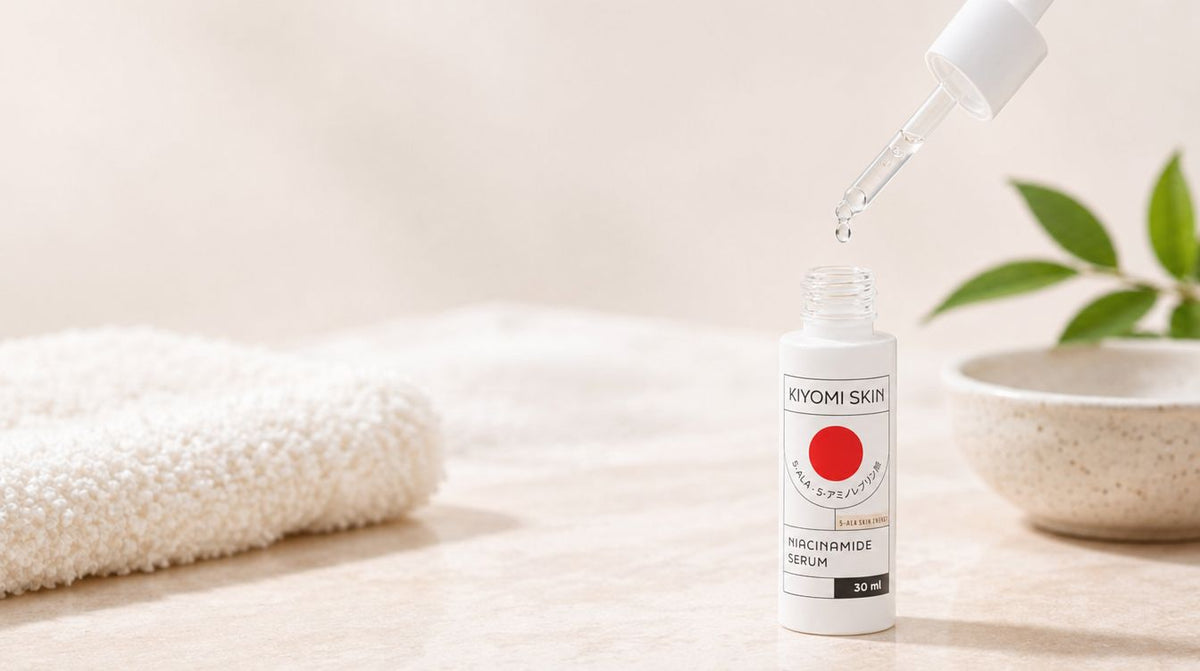
No—a 5% niacinamide serum is not automatically too strong for beginners. Your skin’s response depends on the complete formula and how you introduce it, not just the percentage; this guide explains how to choose a serum and fit it into a simple sensitive-skin routine.
- Is 5 percent niacinamide too strong for beginners? No, not automatically; the complete formula matters.
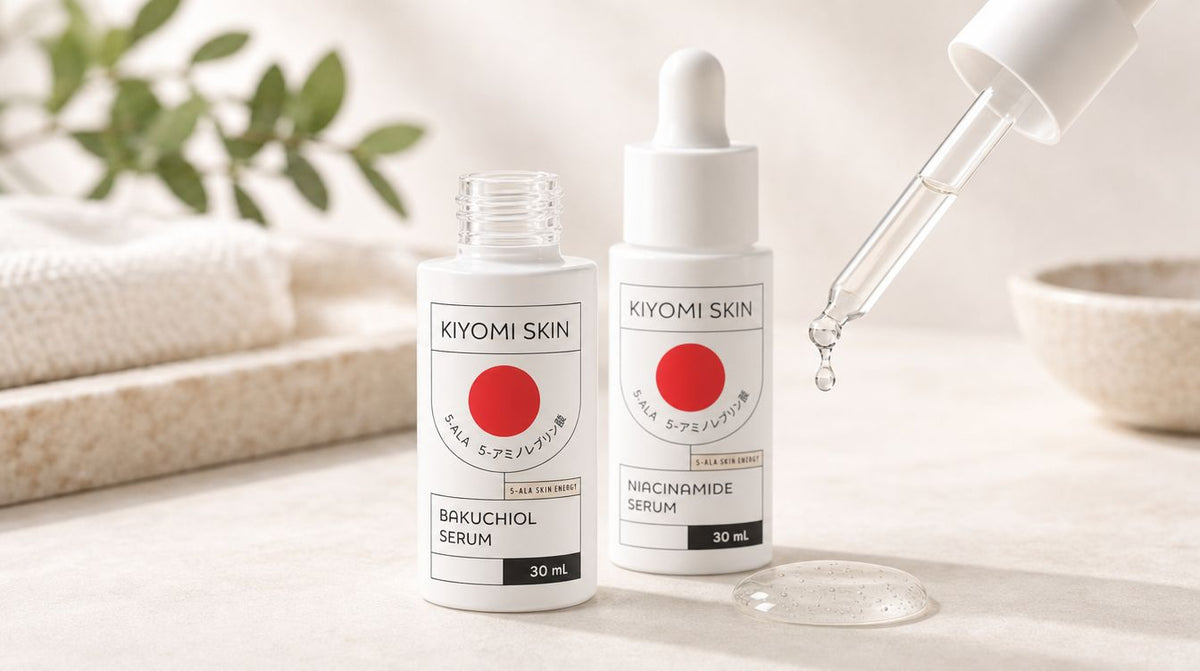
- Kiyomi Skin pairs niacinamide and 5-ALA in a serum positioned around even-looking tone and comfort.
- Choose a manageable routine: gentle cleansing, a suitable serum, moisturizer, and daily sunscreen.
- Higher niacinamide percentages are not a requirement for a useful beginner routine.
Why this matters
A concentration tells you how much niacinamide a formula contains. It does not tell you whether the cleanser, serum, moisturizer, and exfoliant you use together will suit your skin.
For your 2026 routine, prioritize a formula you can use comfortably rather than the strongest percentage on the shelf. Our guide to choosing a niacinamide serum for sensitive skin explains the ingredient-list checks that matter alongside concentration.
Kiyomi Skin is best for shoppers seeking 5-ALA skincare within a simple routine focused on hydration and visible signs of aging. Start with your main concern, then choose the product that serves it without adding unnecessary steps.
Is a 5% niacinamide serum too strong for beginners?
A 5% niacinamide serum is a reasonable concentration to consider as a beginner, but it is not a guarantee of sensitive-skin tolerance. Niacinamide, a form of vitamin B3, has published cosmetic research at this concentration. Being new to an ingredient does not automatically mean you need the lowest percentage available.
In a 2005 study published in Dermatologic Surgery, Bissett and colleagues evaluated a moisturizer containing 5% niacinamide in 50 women over 12 weeks using a randomized, split-face design. The study reported improvements in several visible signs of facial aging compared with the control moisturizer.
That evidence supports niacinamide’s use in skincare. It does not establish that every 5% serum performs the same way, that every beginner will tolerate one, or that a particular Kiyomi Skin formula has the same results. The study evaluated a specific finished moisturizer, not every product containing the ingredient.
Use the percentage as a starting filter. Then evaluate the product’s full ingredient list, directions, and role in your existing routine.
What does 5% actually tell you?
A 5% concentration describes niacinamide’s proportion in the formula. It does not describe the strength of every other ingredient or provide a universal irritation rating.
Two products with the same niacinamide percentage can have different textures, supporting ingredients, and application directions. A serum’s suitability comes from that whole combination—not the front-label number alone.
A 5% niacinamide serum: best for a measured introduction
Choose a 5% niacinamide serum when you want a clearly stated concentration and a focused introduction to the ingredient. Look for a formula that fits your preferences and does not duplicate several new treatment steps you are already adding.
The advantage is straightforward: 5% has published cosmetic research behind it. The limitation is equally specific: ingredient evidence cannot predict your response to a different finished formula.
You do not need to increase the concentration simply because a product feels comfortable. In 2026, a useful beginner routine is still one you can repeat—not a progression toward the highest number.
A lower-concentration formula: best for a cautious starting point
A lower-concentration niacinamide product is another option when you prefer a conservative introduction. It also makes sense to choose a moisturizer containing niacinamide rather than add a separate serum if your main priority is keeping the routine short.
The benefit is fewer separate decisions and, potentially, fewer application steps. The trade-off is that a lower percentage alone does not make the entire formula gentler; fragrance, other ingredients, and your skin’s condition still matter.
Choose the formula first, then use concentration to refine your choice. Do not discard an otherwise suitable moisturizer just because it does not match a serum’s percentage.
Why beginner tolerance varies
Your experience with niacinamide depends on more than whether the bottle says 5%. Check these factors before deciding that an ingredient is too strong:
- The complete formula: Niacinamide shares the bottle with solvents, preservatives, and other ingredients. Evaluate the finished product rather than treating niacinamide as the only variable.
- Fragrance and personal sensitivities: Check for ingredients you already know you do not tolerate. Fragrance-free labeling is useful, but it is not a promise that a product suits everyone.
- Your skin’s current condition: A new serum is harder to assess when your skin is already irritated, sunburned, or uncomfortable.
- Other treatment products: Introducing an exfoliant, retinoid, and serum together makes it difficult to identify which change caused a reaction.
- Application habits: Follow the product’s amount and frequency instructions. Extra product is not evidence of extra benefit.
- Consistency of the surrounding routine: Keeping your cleanser and moisturizer unchanged makes a new serum easier to evaluate.
These factors explain why a concentration that suits one beginner does not automatically suit another. Make one deliberate change rather than rebuilding your entire routine around a percentage.
How to introduce niacinamide without overcomplicating your routine
Your beginner plan for 2026 does not need a shelf of supporting products. Keep the basics familiar and give the serum a clear place in the routine.
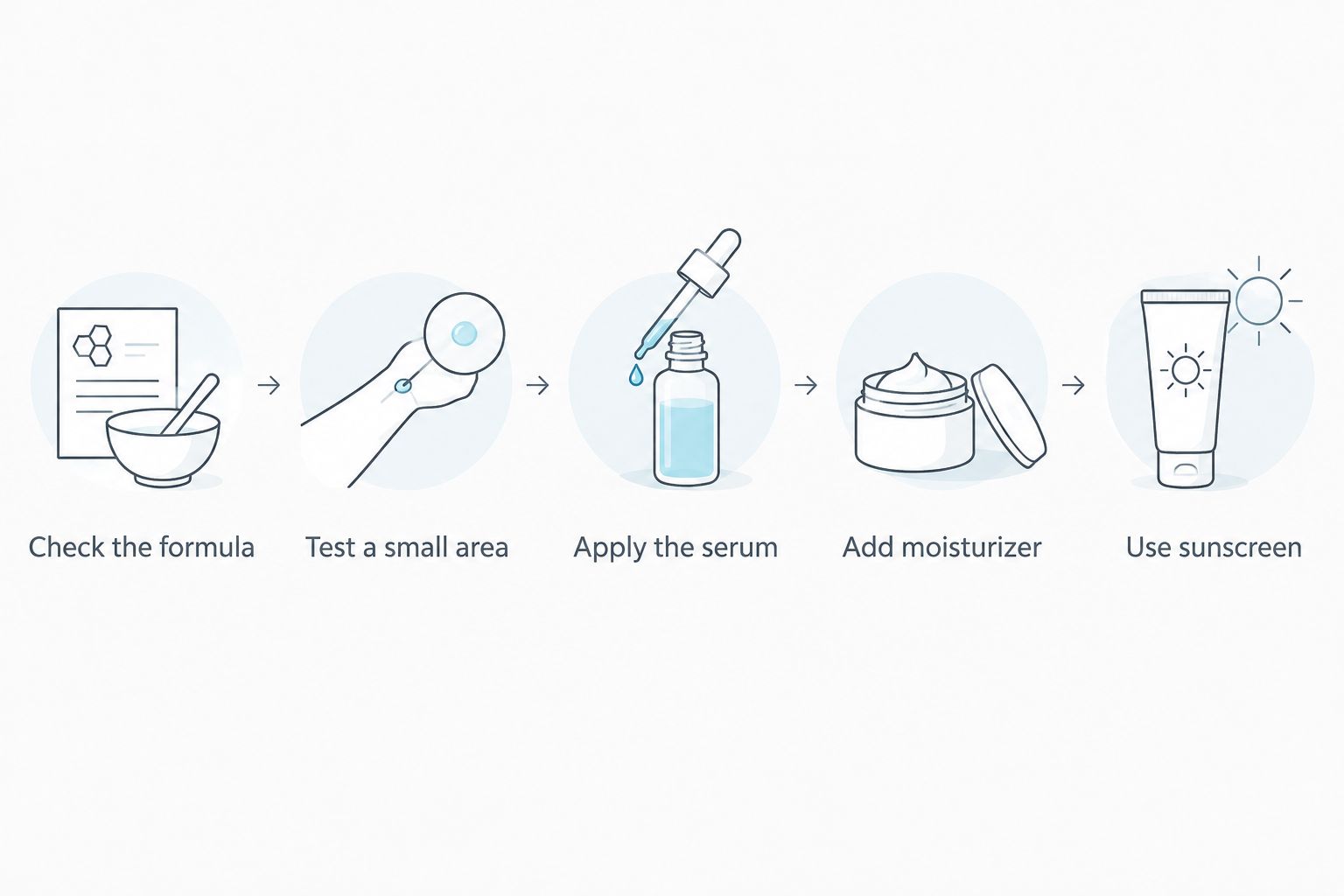
1. Check the formula
Read the current ingredient list, directions, and any stated concentration. Separate confirmed product information from assumptions based on the ingredient’s reputation.
If avoiding fragrance is a priority, verify that point for the specific formula. One fragrance-free product in a range does not make every product in that range fragrance-free.
2. Test a small area
Try the product on a small area before moving to full-face use, following its instructions and established dermatology guidance for testing new skincare. A home spot test helps you observe your response; it does not certify that repeated facial use will be problem-free.
Keep this suitability note simple: stop a new product if it causes persistent burning, redness, swelling, or itching, and seek medical advice for significant or ongoing symptoms. Do not treat irritation as proof that a serum is working.
3. Apply the serum
Use the serum after cleansing and before moisturizer when that order matches its directions. Follow the labeled amount rather than adding extra layers to speed up results.
Keep other new treatment products out of the introduction period. That gives you a clearer view of how the serum fits your skin.
4. Add moisturizer
Follow with a moisturizer that suits your skin and works comfortably with the serum. Niacinamide is an ingredient; a serum containing it is not automatically a substitute for a moisturizing cream.
If the combination pills or feels heavy, review the amount and layering directions before adding another product. More layers are not the default solution.
5. Use sunscreen
Finish your morning routine with broad-spectrum sunscreen, following its label. The American Academy of Dermatology recommends SPF 30 or higher as part of sun protection.
Daily sunscreen belongs in a routine focused on visible signs of aging whether or not you use niacinamide. Do not treat a day cream as sunscreen unless its label identifies it as such.
Choose a serum and moisturizer for different jobs
A serum and a cream are not competing versions of the same step. Choose the serum for your main cosmetic concern and the cream for moisturizing support.
For a simple Kiyomi Skin niacinamide routine, the following products have distinct roles. The serum’s name should not be read as confirmation of a 5% concentration; use the current product information when comparing percentages.
| Product | Best for | Supported role | Selection consideration |
|---|---|---|---|
| Niacinamide + 5-ALA Serum | Shoppers prioritizing even-looking tone and comfort | A focused niacinamide and 5-ALA serum step | Do not select it on the assumption that it is fragrance-free; supplied formula reports list bitter-orange flower water and linalool. |
| Day Cream | Shoppers seeking a fragrance-free moisturizing step | A face cream containing 5-ALA and hyaluronic acid | It serves a moisturizing role, not the same role as a niacinamide serum or labeled sunscreen. |
Choose Niacinamide + 5-ALA Serum for a focused serum step, and Day Cream when your routine needs a fragrance-free moisturizer. You do not need to add both at once to make a useful change.
Shop the product that fills a genuine gap in your routine. If your current moisturizer already suits you, keep it while introducing a serum; if your priority is comfortable hydration, start with the moisturizing step.


Is 5% niacinamide better than a lower percentage?
5% niacinamide is not automatically better than a lower percentage for your routine. A higher concentration is only useful when the finished formula suits your needs and you can use it as directed.
Compare the purpose of the product, its supporting ingredients, and its texture. A comfortable moisturizer you use consistently is a more practical choice than a serum you repeatedly abandon.
Can I use 5% niacinamide every day as a beginner?
5% niacinamide does not create a universal daily-use schedule. Follow the finished product’s directions and introduce it without simultaneously adding other unfamiliar treatment products.
There is no need to force a daily schedule immediately just to match someone else’s routine. Your 2026 plan should reflect your product’s instructions and your skin’s response.
Does 5% niacinamide help with visible aging?
5% niacinamide has published evidence for improvements in visible signs of aging in a tested moisturizer. The Bissett study followed 50 women for 12 weeks; its findings do not establish identical results for every serum.
Think of niacinamide as one possible part of well-aging skincare: a routine centered on comfort, hydration, sun protection, and consistent care. It is not a promise to stop or reverse aging.
FAQ
Is 5 percent niacinamide too strong for beginners with sensitive skin?
A 5% niacinamide serum is not automatically too strong for beginners with sensitive skin. The complete formula, your existing routine, and your individual response matter more than concentration alone.
Should I choose a lower percentage before trying 5% niacinamide?
You do not have to start below 5% simply because you are new to niacinamide. A lower-concentration formula is an option if you prefer a cautious introduction, but it is not a guarantee of better tolerance.
Do I need moisturizer after niacinamide serum?
Use moisturizer after niacinamide serum when that order matches the product directions and your skin needs moisturizing support. A serum does not automatically replace a cream.
Can I use niacinamide in the morning?
Niacinamide can fit into a morning skincare routine when the finished product's directions allow it. Apply your moisturizer as needed and finish with broad-spectrum sunscreen.
Does tingling mean my niacinamide serum is working?
Tingling is not proof that niacinamide is working. Judge a product by comfortable use and appropriate cosmetic outcomes, not by how strongly you feel it on application.
Is Kiyomi Skin Niacinamide + 5-ALA Serum fragrance-free?
Do not treat Niacinamide + 5-ALA Serum as fragrance-free. The supplied formula reports list bitter-orange flower water and linalool, so shoppers avoiding fragrance should check the current ingredient information before choosing it.
Can I add other serums when I start niacinamide?
Keep other new serums out of your routine while introducing niacinamide. Adding products separately makes it easier to understand how each one suits your skin.
One last thing
The best beginner upgrade is often a clearer routine, not a stronger serum. Before shopping, write down the job you need the next product to do: moisturize, support even-looking tone, or replace a step that does not suit you.
For the rest of 2026, use that job description to guide your choices. A percentage helps you compare labels; a well-chosen formula helps you build a routine you actually want to repeat.