Can you use niacinamide serum with hyaluronic acid?
Yes, you can use niacinamide with hyaluronic acid in the same skincare routine, including the same application. The main caveat is the complete formula: compatible ingredients do not guarantee that every serum will suit sensitive skin. This 2026 guide explains how to layer them, when one serum is enough, and how to pair niacinamide with a hyaluronic acid moisturizer.
- Can you use niacinamide with hyaluronic acid? Yes—these ingredients can share a morning or evening routine.
- Hyaluronic acid attracts water; niacinamide supports the skin barrier and more even-looking tone.
- Kiyomi Skin Day Cream supplies hyaluronic acid without requiring a separate hydrating serum.
- Follow product directions, layer lighter textures before richer creams, and finish your morning routine with sunscreen.
Can you use niacinamide serum with hyaluronic acid?
Yes. Niacinamide and hyaluronic acid are compatible skincare ingredients, so you do not need to alternate them or separate them between morning and night. Use the product textures and directions—not an ingredient rivalry—to decide application order.
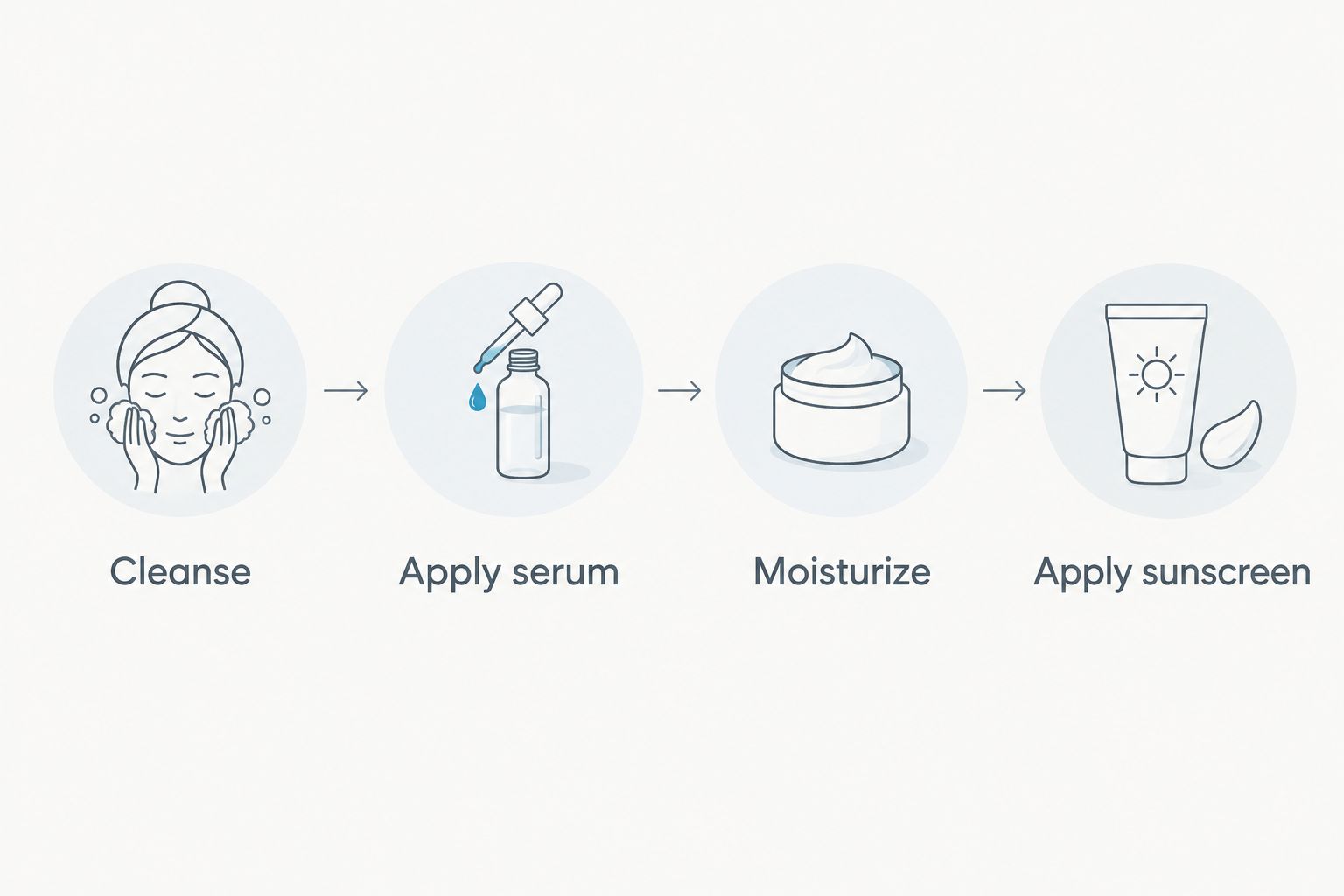
A straightforward routine looks like this:
- Cleanse gently. Remove buildup without scrubbing your face.
- Apply serum. Use your niacinamide serum according to its directions. If you also use a separate hyaluronic acid serum, apply the thinner texture first.
- Moisturize. Follow with a cream that helps retain moisture. A hyaluronic acid moisturizer can supply the hydration step itself.
- Finish with sunscreen. In the morning, use broad-spectrum SPF 30 or higher and follow its application directions.
If you are choosing your first formula, start with our guide to choosing a niacinamide serum for sensitive skin. Ingredient compatibility answers whether products can work together; formula selection answers whether they belong in your routine.
Why this pairing matters
Dryness and uneven-looking tone are different concerns. A routine that addresses both does not need to be complicated, but each product should have a clear job.
Hyaluronic acid is a humectant: an ingredient that attracts and holds water. In skincare, it helps hydrate the skin's outer layers and can temporarily soften the appearance of dryness-related lines. Despite its name, it is not an exfoliating acid.
Niacinamide is a form of vitamin B3 used in skincare to support the skin barrier and improve the appearance of uneven tone. The barrier is the outer protective layer that helps limit water loss and keeps skin comfortable. Results depend on the complete formulation, its concentration, and consistent use.
Pairing these ingredients makes sense when you want hydration alongside care for uneven-looking tone. It does not mean you need two serums, a high-strength formula, or a longer routine.
For your 2026 routine, focus on a gentle cleanser, a suitable treatment, moisturizer, and daily sunscreen before adding optional steps. A shorter routine is easier to repeat and easier to assess when something changes.
Niacinamide serum plus a hyaluronic acid cream
A niacinamide serum followed by a hyaluronic acid moisturizer is a practical way to combine these ingredients. You get a dedicated serum step without adding another serum just to include hyaluronic acid.
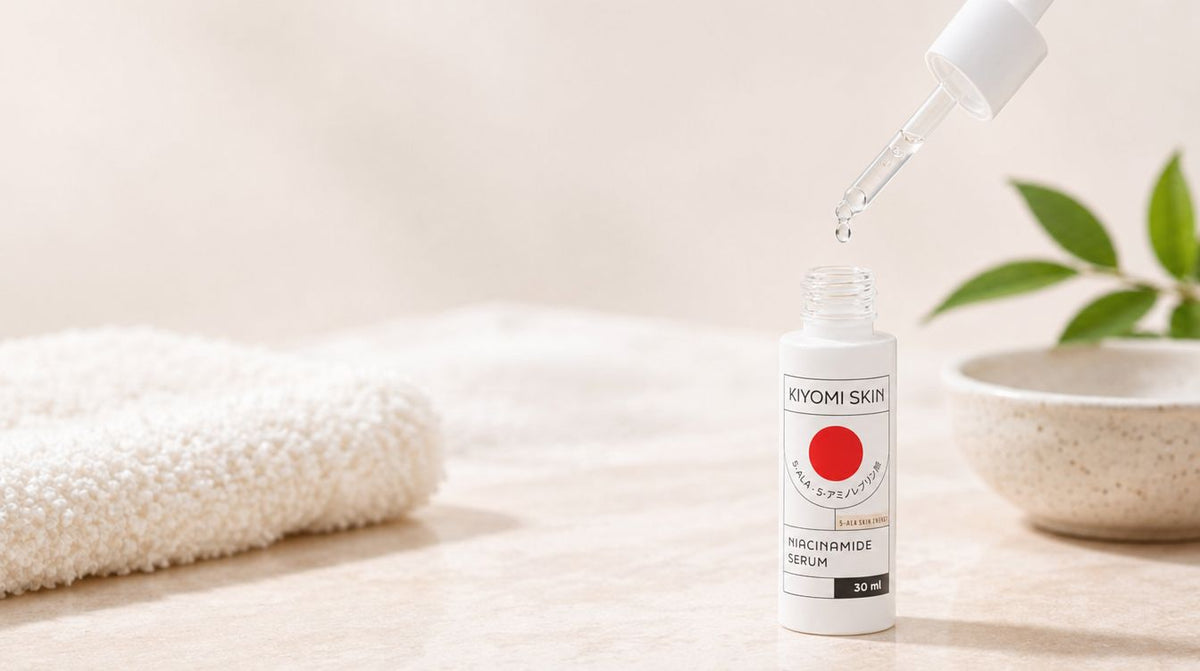
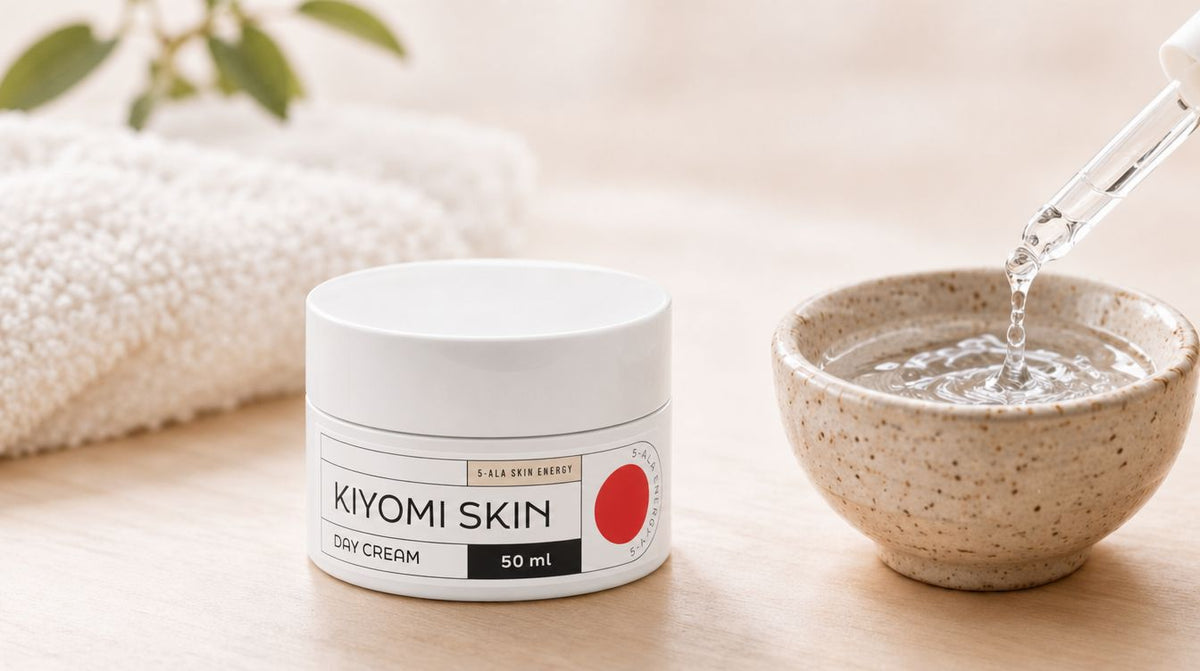
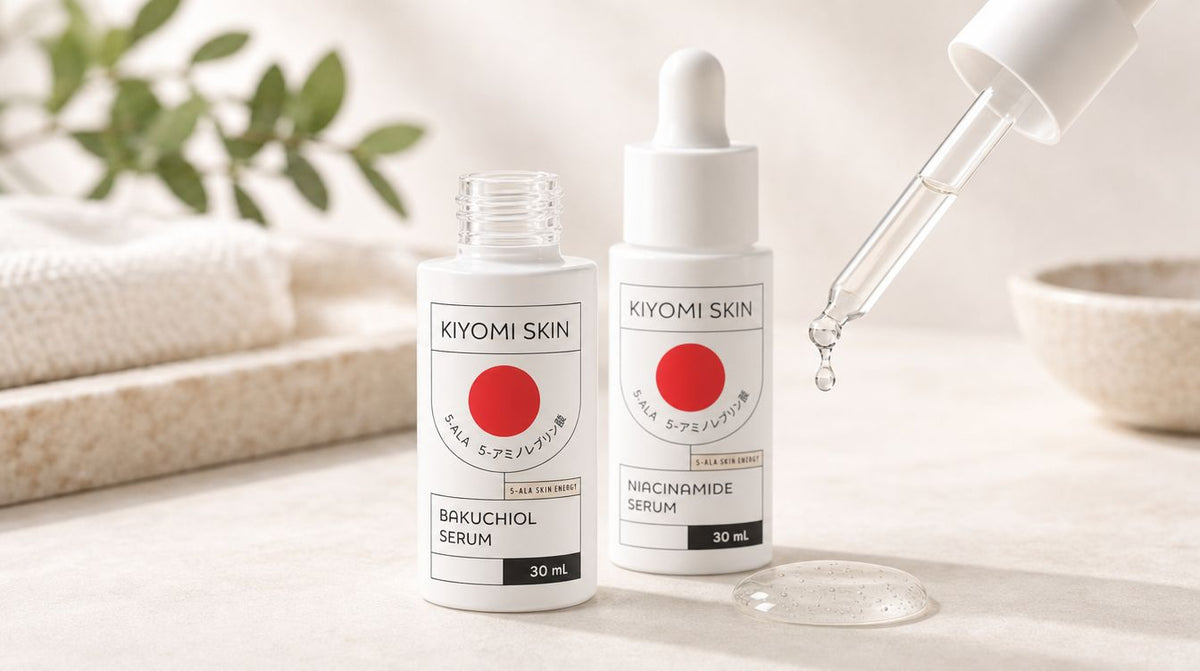
Kiyomi Skin niacinamide skincare is best for shoppers seeking a focused serum step for even-looking tone and comfort. The Niacinamide + 5-ALA Serum fits that role; Day Cream provides a separate moisturizing step with hyaluronic acid and 5-ALA.
| Product | Best for | What it contributes | Selection trade-off |
|---|---|---|---|
| Niacinamide + 5-ALA Serum | A focused serum step for even-looking tone and comfort | Niacinamide and 5-ALA in a 30 ml serum | Do not choose it on a fragrance-free assumption; the tested formula lists bitter-orange flower water and linalool |
| Day Cream | Adding hyaluronic acid through your moisturizer | A fragrance-free, 50 ml face cream with hyaluronic acid and 5-ALA | It fills the moisturizing role, not the role of a dedicated niacinamide serum |
This pairing keeps the routine purposeful: serum first, cream next. You do not need to add a separate hyaluronic acid serum simply because the ingredient appears in the routine's name.
Sensitive-skin note: Introduce one new product at a time and test it on a small area according to its directions before broader use. Stop a product that causes persistent burning, redness, or discomfort; ingredient compatibility and a fragrance-free label do not establish universal tolerance.
Choose the Kiyomi Skin niacinamide serum and Day Cream if these are the two roles your routine needs. Shop the individual formulas below, and keep any cleanser or sunscreen you already use comfortably.


Two separate serums: when the extra step makes sense
Using separate niacinamide and hyaluronic acid serums gives you flexibility. You can keep a hydrating serum you already enjoy and add niacinamide without replacing your moisturizer.
The benefit is control over each step. The trade-off is another layer, which can feel unnecessary or contribute to product pilling—the little rolls that form when layered products rub together.
Start with what you already own. If your moisturizer supplies hyaluronic acid and leaves your skin comfortable, a second hydrating product is optional. If you prefer a lightweight hydrating serum under your existing cream, separate serums are a reasonable choice.
Do not stack products just to repeat an ingredient. More layers do not automatically produce better hydration, and a routine that feels sticky is harder to use consistently.
How to layer niacinamide and hyaluronic acid
Follow the formula's directions first; use texture as the next guide. Ingredient names alone do not reveal whether a product is watery, gel-like, creamy, or oil-based.
For a simple 2026 routine, use these steps:
- Cleanse. Wash gently and rinse thoroughly. Avoid leaving cleanser residue around the nose, hairline, or jaw.
- Apply serum. If you use two separate serums, start with the lighter one unless the directions specify another order. Spread a thin, even layer rather than repeatedly rubbing the same area.
- Moisturize. Apply your cream after the serum has settled enough to spread comfortably. There is no universal waiting interval required just because you combined these ingredients.
- Apply sunscreen. Finish the morning routine with broad-spectrum sunscreen. Keep sunscreen as its own layer rather than mixing it into serum or cream.
Should your skin be damp or dry?
Slightly damp skin can make a hydrating product easier to spread, but soaking-wet skin is unnecessary. Follow any specific dry-skin instructions on your serum, especially when your routine also contains other treatment ingredients.
Think of dampness as an application preference, not a requirement for activating hyaluronic acid. You do not need to repeatedly mist your face or keep it wet between every layer.
Should you mix the serums in your hand?
Layering is the clearer default. It lets you follow each product's directions and see how each texture behaves before adding the next.
Mixing finished products changes how they spread and makes the amount of each harder to judge. You do not need to premix niacinamide and hyaluronic acid to make them compatible, and you should not combine their contents in one bottle.
Why the experience varies
Niacinamide and hyaluronic acid can work together, but the feel of the routine depends on more than those two ingredient names. These factors explain why one pairing feels comfortable while another feels heavy or pills:
- The complete formula. Fragrance components, preservatives, solvents, and other ingredients affect the experience alongside the headline ingredient.
- Product texture. A watery serum and a richer cream spread differently from two gel serums layered together.
- How much you apply. Excess product can leave a tacky film and make later layers harder to distribute evenly.
- Your moisturizer. A serum adds a treatment or hydration step; the cream helps complete the routine and limit moisture loss.
- Other routine steps. Exfoliants, retinoids, and additional treatments change the demands on your skin even when niacinamide and hyaluronic acid are compatible.
When updating your routine in 2026, change one step rather than replacing everything at once. That makes it easier to identify what improves the feel of your skin and what adds unnecessary complexity.
How should you choose products for sensitive skin?
Choose the complete formula, not the ingredient trend. A familiar ingredient in an unfamiliar formula is still a new product for your skin.
Start by identifying the job you need filled. If your face feels dry after cleansing, prioritize a suitable moisturizer and gentle cleansing before building a multi-serum routine. If hydration is already covered and uneven-looking tone is your focus, a niacinamide serum adds a more specific treatment step.
Next, read the ingredient list and product directions. Check for ingredients you already know you react to, and verify fragrance-free wording on the individual formula rather than extending it across an entire brand.
Finally, consider everyday use. A serum that sits comfortably under your moisturizer and sunscreen has a clearer place in your routine than an extra layer you regularly skip. The best pairing is the one that meets your needs without making your routine harder to maintain.
Can you use niacinamide and hyaluronic acid every day?
Yes, niacinamide and hyaluronic acid can be used daily when the products' directions support daily use and your skin tolerates the formulas. They do not require alternating days solely because they are used together.
Daily use also does not mean twice-daily use is necessary. Choose a schedule that fits the product instructions and your existing routine rather than repeating every step automatically.
Do you need both a hyaluronic acid serum and moisturizer?
No, you do not need a separate hyaluronic acid serum if your moisturizer already supplies the hydration you want. A serum is an optional addition, not a prerequisite for using niacinamide successfully.
A moisturizer also does a different job from a lightweight serum. Look at the whole routine before deciding that an additional bottle will solve dryness.
Does 5-ALA change the layering order?
No special layering order is established simply because a serum contains 5-ALA. Apply Kiyomi Skin formulas according to their directions and textures, just as you would assess other finished skincare products.
5-ALA means 5-aminolevulinic acid. Research about an ingredient is not the same as evidence that a finished serum produces a particular result, so its presence alone does not establish deeper penetration, wrinkle reduction, or a need for extra routine steps.
FAQ
Can you use niacinamide with hyaluronic acid in the morning?
Yes, you can use niacinamide with hyaluronic acid in the morning. Follow with moisturizer as needed and broad-spectrum SPF 30 or higher, using each product according to its directions.
Should I apply hyaluronic acid before or after niacinamide?
Apply the thinner-textured serum first unless the product directions specify otherwise. If your hyaluronic acid is in a cream, apply the niacinamide serum before that cream.
Do niacinamide and hyaluronic acid cancel each other out?
No, niacinamide and hyaluronic acid do not cancel each other out in a skincare routine. Their compatibility does not require a special waiting period between applications.
Can I use niacinamide and hyaluronic acid at night?
Yes, you can use niacinamide and hyaluronic acid at night. Apply them according to their directions and finish with a suitable moisturizer.
Is hyaluronic acid an exfoliating acid?
No, hyaluronic acid is a humectant, not an exfoliating acid. It attracts and holds water rather than exfoliating the skin like glycolic or salicylic acid.
Why do my niacinamide and hyaluronic acid products pill?
Pilling can result from excess product, rubbing, or the way layered textures interact. Try thinner layers, let each settle before the next, and remove an unnecessary step if the problem continues.
Can I use a hyaluronic acid cream instead of a separate serum?
Yes, a hyaluronic acid cream can provide that ingredient without a separate serum. Choose the format that fits your hydration needs and feels comfortable with the rest of your routine.
One last thing
Your hyaluronic acid step might already be sitting on your shelf. Before buying another serum, check your moisturizer's ingredient list for hyaluronic acid or sodium hyaluronate, a salt form commonly used in skincare.
For a simpler 2026 routine, give each product one clear purpose. Start with niacinamide serum and a suitable moisturizer, keep daily sunscreen in place, and add another layer only when it meets a real need.