How to choose a fragrance-free serum for sensitive skin
Choose a fragrance free serum by checking both the fragrance-free claim and the full ingredient list, then selecting a formula that addresses your main concern without adding unnecessary steps. Fragrance-free does not mean irritation-proof: botanical extracts, active ingredients, and other formula components still need individual consideration. Test a new serum on a small area before making it part of your sensitive-skin routine.
- Choose a fragrance free serum by checking the complete formula, not just unscented or sensitive-skin wording.
- The American Academy of Dermatology recommends testing new skincare before regular use.
- Niacinamide and bakuchiol serve different skincare goals; neither ingredient establishes a finished serum’s fragrance-free status.
- Keep sensitive-skin care simple: gentle cleansing, a suitable serum, moisturizer, and daily sunscreen.
Why this matters
A serum can fit your hydration or well-aging goals and still contain something your skin dislikes. Your best choice in 2026 is a formula you can use comfortably and consistently, not the one with the longest list of active ingredients.
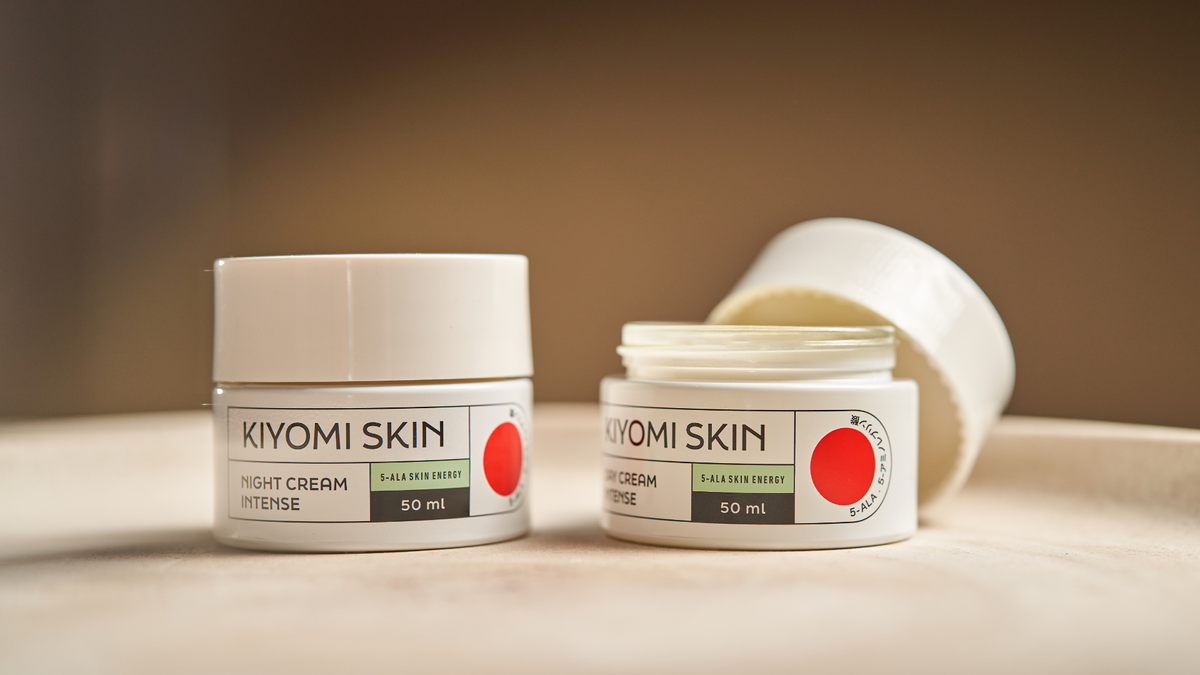
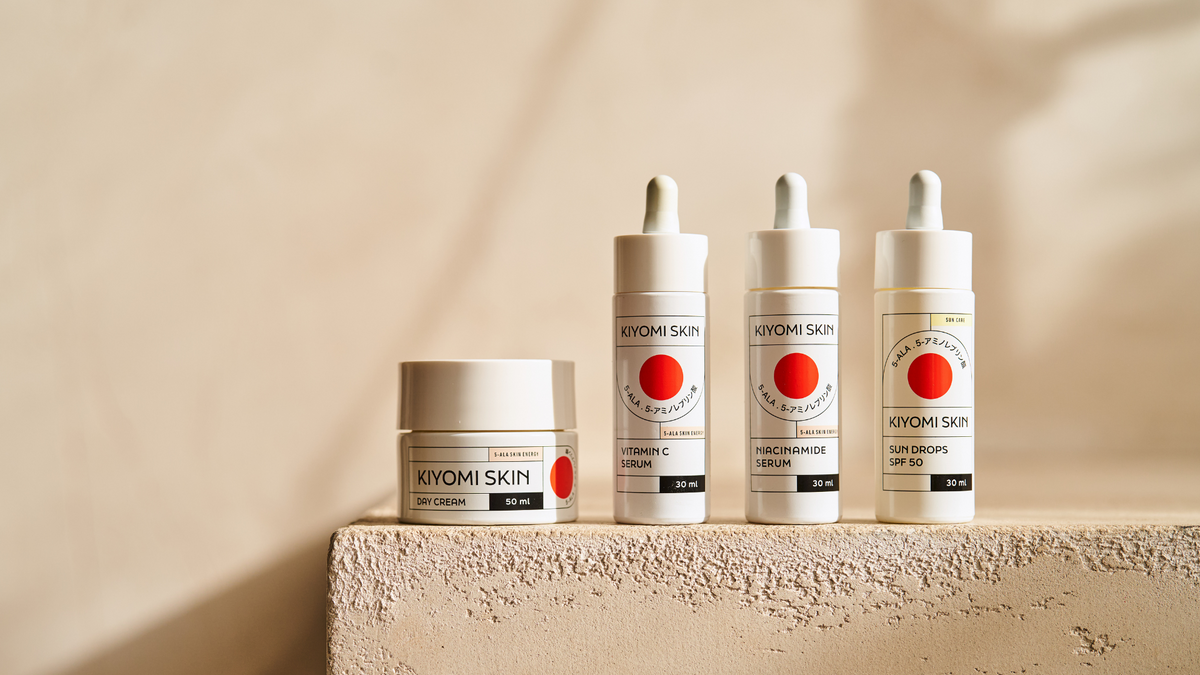
Kiyomi Skin’s Niacinamide + 5-ALA Serum illustrates why formula-level checking matters: its reviewed study ingredient lists include bitter-orange flower water and linalool. Do not treat this serum as a verified fragrance-free choice. Ingredient interest and fragrance suitability are separate decisions.
How do you choose a fragrance-free serum for sensitive skin?
Start with your fragrance requirements, then your skin concern. This order prevents you from choosing an appealing ingredient first and overlooking the rest of the formula.
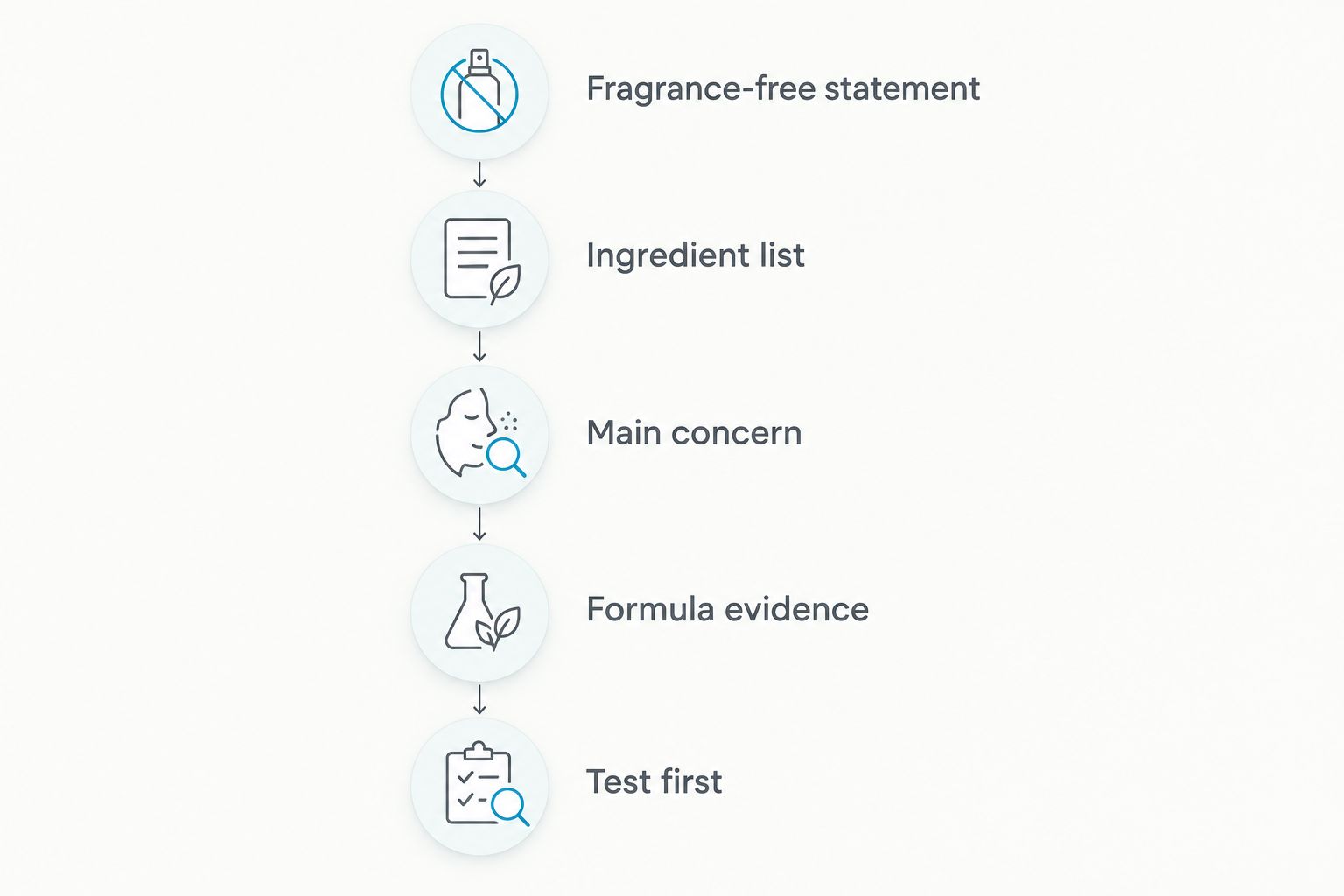
1. Look for an explicit fragrance-free statement
Read the product page and packaging for the exact wording. An unscented product is not necessarily fragrance-free; masking ingredients can reduce a formula’s noticeable smell without making it a suitable choice for someone avoiding fragrance.
A fragrance-free serum also does not have to smell like nothing. Ingredients can have their own odor. Your nose is not a reliable ingredient-screening tool.
2. Read the complete ingredient list
Look for fragrance or parfum, then consider essential oils and fragrant botanical ingredients. Names such as linalool deserve attention if you have a known fragrance allergy, although the ingredient list alone does not explain every ingredient’s function or source.
If a fragrance-free statement appears inconsistent with the formula, ask the manufacturer for clarification. For a diagnosed allergy, follow your dermatologist’s specific avoidance list rather than trying to interpret every botanical name yourself.
3. Choose one main concern
Decide whether your priority is dryness, uneven-looking tone, or the appearance of fine lines. A clear goal makes it easier to select a serum and recognize whether it earns a place in your routine.
Avoid choosing several new serums at once. If irritation develops after multiple changes, identifying the trigger becomes harder.
4. Check evidence for the finished formula
Research about niacinamide, bakuchiol, or 5-ALA is not automatically evidence for every serum containing that ingredient. Concentration, supporting ingredients, formulation, and testing conditions all matter.
Look for studies that identify the actual product, the participants, the testing period, and the outcome measured. A questionnaire about smoother-feeling skin is useful information, but it is not the same as an instrument measurement of wrinkles.
5. Test before regular facial use
The American Academy of Dermatology recommends applying a new skincare product to a small test area twice daily for 7 to 10 days, following the product’s instructions. This home-use check helps you observe a reaction before broader application; it does not diagnose an allergy or guarantee future tolerance.
Stop if you develop burning, itching, swelling, or a rash. Persistent or recurring reactions need professional assessment rather than another serum layered on top.
Fragrance-free, unscented, or sensitive-skin: which label matters?
Fragrance-free is the relevant starting point when your goal is fragrance avoidance. Other front-label language answers different questions, and none replaces checking the formula.
| Label or description | Best for | What it tells you | What it does not establish |
|---|---|---|---|
| Fragrance-free | Shoppers avoiding fragrance | The manufacturer identifies the formula as fragrance-free | Universal tolerance or suitability for every diagnosed allergy |
| Unscented | Shoppers who dislike noticeable scent | The product is presented as having little or no noticeable smell | Absence of fragrance-related or masking ingredients |
| For sensitive skin | Shoppers screening for a sensitivity-focused formula | The product is positioned for sensitive skin | A standardized guarantee that your skin will tolerate it |
| Dermatologically tested | Shoppers seeking testing information | Some form of dermatological testing is claimed | Test design, participant characteristics, or long-term facial tolerance |
For your 2026 shopping checklist, put the full ingredient list beside the label claim. If the two leave questions unanswered, choose a formula with clearer information or ask for clarification before purchasing.
Which serum goal fits your routine?
Hydration, tone, and visible-aging concerns can overlap. You do not need to address all of them with separate products, especially while establishing what your skin tolerates.
Use the comparison below to understand the selection process. These are concern-based options, not a list of verified fragrance-free formulas.
| Serum direction | Best for | Useful selection point |
|---|---|---|
| Hydration-focused serum | Shoppers prioritizing dryness and tight-feeling skin | A formula aimed at hydration fits a simple moisturizing routine |
| Niacinamide + 5-ALA Serum | Shoppers exploring even-looking tone and comfort | Reviewed product research includes questionnaire findings about these concerns |
| Bakuchiol Serum | Shoppers exploring the look of firmness and fine lines | Reviewed product research includes instrumental and questionnaire assessments |
Hydration first: best for dryness-focused routines
If dryness is your main concern, start by assessing your cleanser and moisturizer before adding another active serum. A serum is an optional supporting step, not a replacement for moisturizing.
Choose a hydration-focused formula whose fragrance status you can verify. Then judge whether your skin feels comfortable during regular use rather than assuming a dewy finish means the formula suits you.
Niacinamide: best for an even-tone and comfort focus
Niacinamide is a useful ingredient to investigate when uneven-looking tone is your priority. However, an ingredient’s reputation does not override the other components in the bottle.
For the current US Niacinamide formula, the client confirmed equivalence with the formulation in the reviewed Chemicos reports. A four-week home-use study involving 20 completers recorded agreement about improved even tone and comfort; these were questionnaire findings, not proof of universal tolerance. The separate instrumental study included 10 women and had no control group or reported significance analysis.
Bakuchiol: best for a visible-aging focus
Kiyomi Skin’s Bakuchiol Serum is a skincare option for shoppers focused on the appearance of firmness and fine lines, with fragrance status still requiring confirmation. It is not established as equivalent to retinol by the supplied product studies.
The reviewed four-week instrumental study included 10 participants and measured skin density and elasticity, without a control group or reported significance analysis. A separate four-week questionnaire involved 20 participants who reported improvements in the appearance of fine lines and other cosmetic concerns. Those responses do not turn the instrumental findings into measured wrinkle reduction.
Why sensitive-skin tolerance varies
The same fragrance free serum will not suit everyone. These factors explain why a sensible shortlist still needs individual testing:
- Your specific triggers. Fragrance avoidance addresses one category of potential triggers, not every possible ingredient reaction.
- The complete formula. A featured ingredient cannot predict how you will respond to the finished product.
- Your skin’s current condition. Already irritated skin needs a simpler approach than skin that feels comfortable.
- Other products in your routine. Introducing multiple active products makes reactions harder to interpret.
- How you use the serum. Application frequency and following directions matter; more frequent use is not automatically better.
- The evidence behind the claim. A single patch application and repeated facial use answer different tolerance questions.
Keep those distinctions in your 2026 product comparison. A detailed test description is more useful than a reassuring phrase without context.
How do you add a new serum without complicating your routine?
Keep the supporting routine familiar while you introduce the serum. This gives you a clearer view of how the new formula fits your skin.
For a simple morning routine, use these steps:
- Gentle cleansing: Cleanse without scrubbing, using a product you already tolerate.
- Suitable serum: Apply the new serum according to its directions after completing your small-area test.
- Moisturizer: Follow with a moisturizer that suits your skin.
- Daily sunscreen: Finish with broad-spectrum, water-resistant sunscreen rated SPF 30 or higher, consistent with American Academy of Dermatology guidance.
At night, keep gentle cleansing, your suitable serum, and moisturizer as the basic sequence. Follow the serum’s instructions rather than assuming every formula belongs in both routines.
A Japanese-inspired approach works well here as a principle of simplicity, not a requirement to collect more steps. For your 2026 routine, a manageable sequence is more useful than a shelf of products you struggle to use consistently.
Is a fragrance-free serum better than an unscented serum?
A fragrance-free serum is the better starting point when your goal is to avoid fragrance. Unscented describes the sensory result and does not, by itself, confirm that fragrance-related ingredients are absent.
If you have a diagnosed allergy, check the formula against your clinician’s guidance. Neither label replaces your personal allergen list.
Can a fragrance-free serum still irritate sensitive skin?
A fragrance-free serum can still irritate sensitive skin because fragrance is not the only potential trigger. Active ingredients and other formula components also matter.
Do not interpret persistent stinging as proof that a serum is working. Stop the product and seek advice if the reaction persists or recurs.
FAQ
What’s the best fragrance free serum for sensitive skin?
The best fragrance free serum matches your main concern, has a clearly documented formula, and suits your individual skin. No single serum is established as best for every sensitive-skin shopper.
Does unscented mean the same thing as fragrance-free?
Unscented does not mean the same thing as fragrance-free. A product can have little noticeable smell while still containing masking or fragrance-related ingredients, so check the complete formula.
Is Kiyomi Skin’s Niacinamide Serum fragrance-free?
Kiyomi Skin’s Niacinamide Serum should not be described as verified fragrance-free. Reviewed study ingredient lists include bitter-orange flower water and linalool, and formulation clarification is needed before making that claim.
Is bakuchiol automatically suitable for sensitive skin?
Bakuchiol is not automatically suitable for every person with sensitive skin. Evaluate the complete serum formula, its fragrance status, and your response during careful introduction rather than relying on the featured ingredient alone.
How long should I test a new serum before using it regularly?
The American Academy of Dermatology recommends testing a new skincare product on a small area twice daily for 7 to 10 days, following product directions. This check does not diagnose an allergy or guarantee future tolerance.
Should I use moisturizer after a fragrance-free serum?
Use moisturizer after your serum as part of a simple routine, unless the product instructions specify otherwise. A serum is an optional supporting step rather than a replacement for moisturizing.
Does fragrance-free mean a serum cannot cause an allergic reaction?
Fragrance-free does not mean a serum cannot cause an allergic reaction. If you have a known allergy or recurring reactions, ask a dermatologist to help identify ingredients you need to avoid.
One last thing
A serum’s smell is not a reliable test of its fragrance status. A noticeable ingredient odor does not automatically mean added perfume, and no noticeable scent does not prove a fragrance-free formula.
Before adding a serum to your 2026 routine, save its ingredient list and note when you start using it. That simple record gives you something concrete to review if your skin changes—and keeps your next product choice grounded in your own experience.