Best moisturizers for mature skin in 2026
Best overall: a barrier-supporting cream for dry mature skin. Best for reactive skin: a fragrance-free cream. Best for combination skin: a lightweight glycerin lotion. The best moisturizer for mature skin in 2026 matches your skin’s dryness, sensitivity and daily routine—not your age alone.
- The best moisturizer for mature skin replaces lost moisture without causing irritation.
- Choose a barrier-supporting cream for dryness and a lightweight lotion for combination skin.
- Kiyomi Skin moisturizers suit shoppers exploring a 5-ALA skincare routine.
- Use broad-spectrum SPF 30 or higher separately unless your moisturizer provides that protection.
Why this matters
Mature skin can become drier as oil production changes with age. Moisturizer helps relieve dryness and soften the appearance of dehydration lines, but it does not replace sunscreen or treat every cause of wrinkles.
For your 2026 routine, start with the problem you actually feel: tightness, roughness, irritation or an oily surface with dry patches.
What makes the best moisturizer for mature skin?
- Moisture attraction: Humectants such as glycerin help draw water into the outer skin layer.
- Moisture retention: Occlusive ingredients help reduce water loss.
- Barrier support: Emollients soften rough skin; ceramide-containing formulas address barrier lipids.
- Skin tolerance: Choose fragrance-free formulas when fragrance irritates your skin.
- Routine fit: Pick a texture you can comfortably wear with sunscreen.
Named market alternatives to compare
This guide’s recommendations explain moisturizer categories; they are not a market-wide ranking. Vogue’s 2026 gentle-moisturizer roundup names SkinCeuticals Triple Lipid Restore 2:4:2, La Roche-Posay Toleriane Double Repair Face Moisturizer, Purito Mighty Bamboo Panthenol Cream, Augustinus Bader The Cream, and Vanicream Daily Facial Moisturizer among its selections.
Compare Kiyomi Skin Day Cream with those alternatives using their current ingredient lists, fragrance information, texture, and your own tolerance. Browse the facial moisturizers collection and sensitive-skin collection for related options; no external product should be assumed to share Kiyomi Skin’s 5-ALA approach or evidence boundaries.
Best moisturizers at a glance
These are use-case recommendations, not a claim that every formula within a category performs equally. Read the complete ingredient list before choosing.
| Rank and option | Best for | Standout feature | Key limitation |
|---|---|---|---|
| 1. Barrier-supporting cream | Dry, rough mature skin | Combines moisture attraction with moisture retention | Rich textures can feel heavy on oily areas |
| 2. Fragrance-free cream | Reactive mature skin | Removes fragrance as one possible irritation trigger | Fragrance-free does not mean irritation-free |
| 3. Lightweight glycerin lotion | Combination mature skin | Humectant hydration in a lighter texture | Very dry areas can need a richer layer |
| 4. Kiyomi Skin Daycream | Shoppers exploring a 5-ALA daytime routine | A moisturizer option within the brand’s 5-ALA skincare range | A daytime label does not establish sunscreen protection |
| 5. Petrolatum ointment | Isolated flaky patches | Occlusive protection that reduces water loss | Greasy finish; not a complete facial routine |
1. Barrier-supporting cream: best for dry mature skin
A barrier-supporting cream is the default choice when your face feels tight after cleansing or develops persistent rough patches. Look for a formula that combines humectants, emollients and occlusives rather than focusing on a single headline ingredient.
Glycerin attracts moisture, while ingredients such as petrolatum help keep it from escaping. Ceramides are lipids found naturally in the skin barrier and are also used in moisturizing formulas.
Barrier-supporting cream pros:
- Addresses both hydration and moisture loss.
- Softens rough, dry skin.
- Can support a simple routine without extra serums.
- Fits daytime or evening use, depending on texture.
Barrier-supporting cream cons:
- Rich textures can feel uncomfortable on an oily forehead or nose.
- An ingredient-led label does not tell you how the finished formula feels.
- Fragrance or other ingredients can still irritate sensitive skin.
Best for: Mature skin with widespread dryness, tightness or a rough surface.
Apply the cream after gentle cleansing while your skin is still slightly damp. If your morning sunscreen feels too heavy over it, reserve the richer cream for evening and choose a lighter morning moisturizer.
For 2026, prioritize comfort before adding another anti-aging active. A moisturizer that stings is not the right foundation for your routine.
Verdict: Buy a barrier-supporting cream when dryness is your main concern.
2. Fragrance-free cream: best for reactive mature skin
A fragrance-free cream is the strongest starting point when scented products make your skin sting or itch. It removes one possible irritation trigger while keeping the routine focused on moisture.
Fragrance-free is not the same as unscented. An unscented product can contain ingredients that mask its smell, so check the label rather than relying on the scent in the container.
Fragrance-free cream pros:
- Avoids added fragrance as a potential trigger.
- Lets you prioritize hydration without a scented finish.
- Works as a straightforward base while you assess other products.
Fragrance-free cream cons:
- Other ingredients can still cause irritation or allergy.
- A fragrance-free label does not establish how rich the cream is.
- Persistent redness or burning needs more than a product swap.
Best for: Mature skin that reacts to fragranced skincare or feels easily irritated.
Introduce the cream without adding a new exfoliant or serum at the same time. That makes it easier to identify what your skin tolerates.
If redness, itching or scaling continues, seek advice from a dermatologist. Do not keep layering richer products over a reaction and assume the problem is ordinary dryness.
Verdict: Buy fragrance-free when irritation—not just dryness—drives your choice.
3. Lightweight glycerin lotion: best for combination mature skin
A lightweight glycerin lotion suits skin with dry cheeks and an oily forehead, nose or chin. Glycerin is a humectant; the lotion format gives you an alternative to covering your entire face with a rich cream.
Choose the finished texture, not glycerin alone. A product can contain glycerin and still feel rich because the rest of its formula determines the finish.
Lightweight glycerin lotion pros:
- Provides humectant hydration.
- Offers a lighter-textured alternative to a rich cream.
- Makes targeted moisturizing easier across different facial areas.
- Fits a pared-back morning routine.
Lightweight glycerin lotion cons:
- A lighter formula can leave very dry patches uncomfortable.
- Lightweight does not automatically mean suitable for acne-prone skin.
- Layering several watery products does not necessarily improve moisture retention.
Best for: Mature combination skin that feels greasy under a rich all-over cream.
Use the lotion across your face, then assess your cheeks separately. If they still feel tight, add a richer moisturizer to those areas instead of changing the whole routine.
The practical 2026 recommendation is zone-based care: your cheeks and forehead do not have to receive identical textures. Let comfort determine where you add more moisture.
Verdict: Buy a lightweight lotion for combination skin; use richer care only where needed.
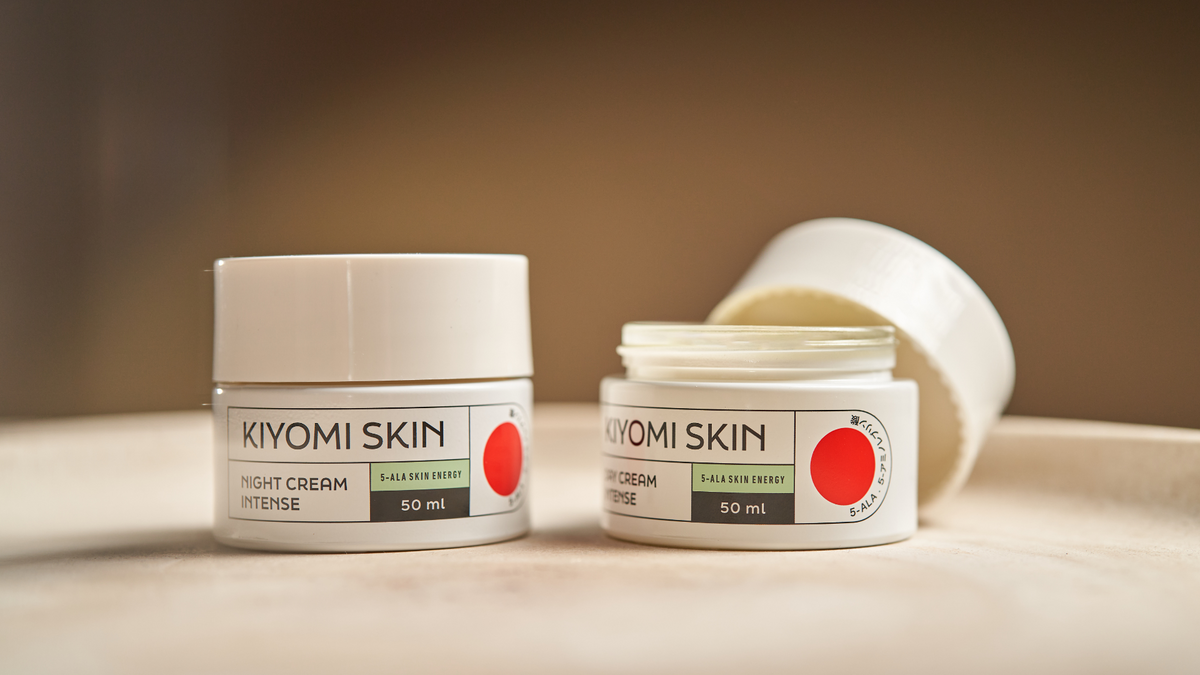
4. Kiyomi Skin Daycream: best for exploring a 5-ALA daytime routine
Kiyomi Skin Daycream is a moisturizer option within the brand’s 5-ALA skincare range. The listed page identifies a 50 mL format, making it a relevant starting point for shoppers who want a daytime cream rather than another serum.
Choose it for that routine preference, not as a substitute for checking the formula against your skin’s needs. An ingredient story does not establish that a finished product will outperform every conventional moisturizer.
Daycream pros:
- Offers a cream option within a 5-ALA-focused skincare range.
- Gives shoppers a moisturizer to consider rather than treating a serum as interchangeable.
- Has a clearly identified daytime place in a routine.
Daycream cons:
- The day-cream label alone does not establish SPF protection.
- A 5-ALA focus does not establish suitability for every sensitive skin type.
- Your choice still depends on the full ingredient list and skin tolerance.
Best for: Shoppers who specifically want to explore 5-ALA skincare through a daytime moisturizer.
Before choosing any day cream, check whether its texture suits your skin and whether its formula contains ingredients you already know you cannot tolerate. Keep broad-spectrum sunscreen in the morning routine unless the moisturizer itself provides appropriate labeled protection.
Verdict: Buy for a 5-ALA-focused routine; skip if your decision requires a confirmed feature the label does not establish.
5. Petrolatum ointment: best for isolated flaky patches
Petrolatum ointment forms an occlusive layer that helps reduce water loss. It is useful when a small dry area needs more protection than your usual moisturizer provides.
Think of it as targeted support, not a replacement for every step. It does not supply the same mix of humectants and emollients as a formulated facial cream.
Petrolatum ointment pros:
- Helps retain moisture through occlusion.
- Allows targeted application to dry patches.
- Can be layered over a tolerated moisturizer.
Petrolatum ointment cons:
- Leaves a greasy finish.
- Does not replace sunscreen or a complete daytime routine.
- Occlusion over irritating treatments can increase discomfort.
Best for: Small flaky areas that need extra moisture retention.
Use a thin layer over a moisturizer your skin already tolerates. Avoid treating whole-face occlusion as mandatory, particularly when you use products that sting or irritate.
Persistent cracking, bleeding or an unexplained rash deserves medical assessment. Adding more ointment is not a diagnosis.
Verdict: Buy for targeted dry patches; skip an all-over layer if the finish feels uncomfortable.
How we ranked these moisturizer options
The ranking prioritizes moisture attraction, moisture retention, barrier support, skin tolerance and routine fit. Barrier-supporting cream leads because it addresses the central problem of dry skin: getting moisture into the outer layer and keeping it there.
The remaining options solve distinct problems. Fragrance-free cream targets tolerance, lightweight lotion addresses combination skin, a 5-ALA day cream serves an ingredient-led routine preference, and petrolatum provides targeted occlusion.
This 2026 guide ranks those use cases rather than presenting an unverified product-performance leaderboard. Choose the category first, then assess the actual formula.
Build a routine around your moisturizer
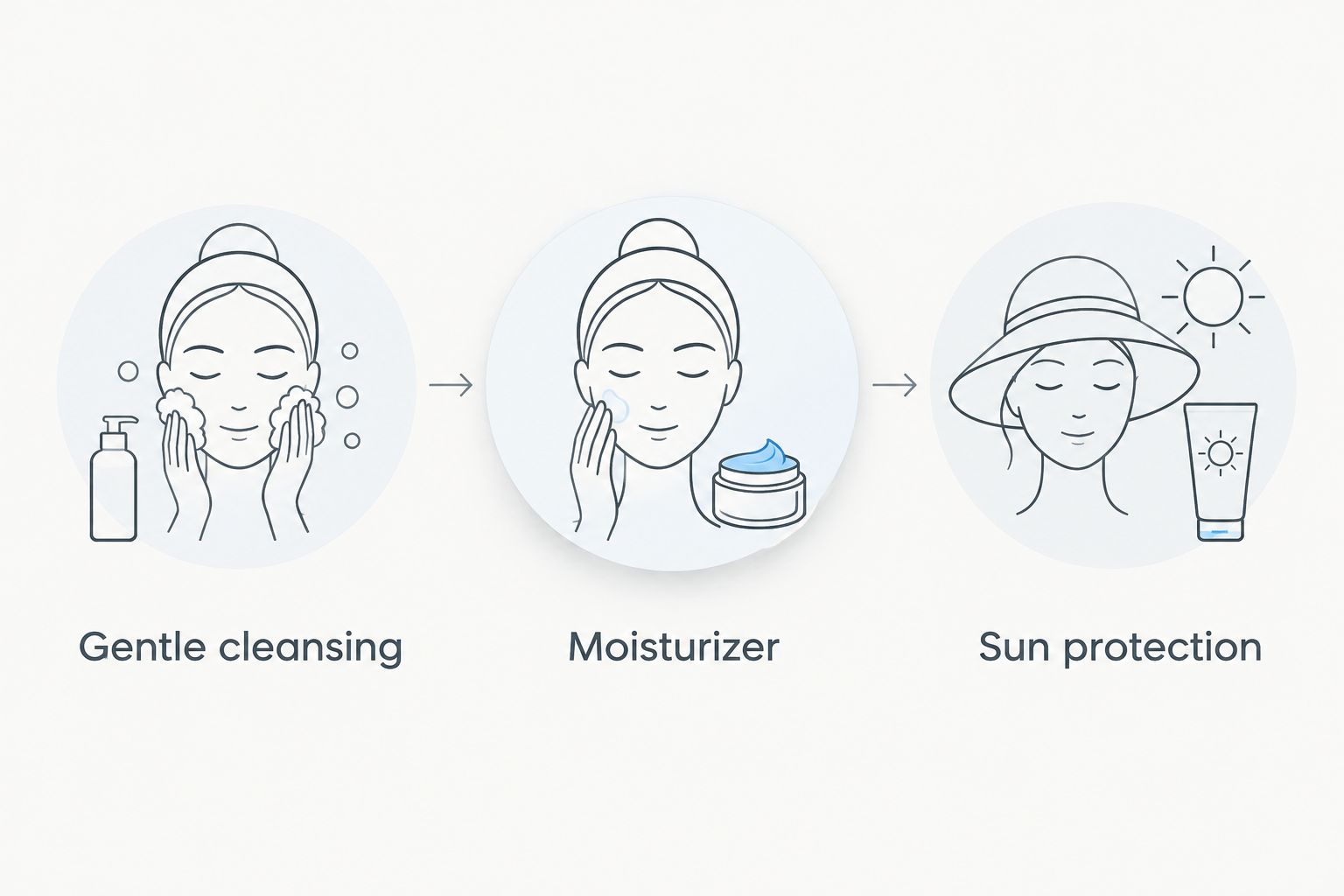
A moisturizer works best within a routine your skin tolerates. Keep the sequence simple before adding treatments for uneven tone or wrinkles.
- Gentle cleansing: Remove residue without scrubbing dry areas.
- Moisturizer: Apply a texture suited to your skin’s current dryness.
- Sun protection: Finish your morning skincare with broad-spectrum SPF 30 or higher.
Those steps have different jobs. Cleansing removes residue, moisturizer addresses dryness, and sunscreen protects against ultraviolet exposure; one does not automatically replace another.
At night, use the moisturizer that leaves your skin comfortable. A product does not need a night label to serve that role, and a night label does not guarantee a richer texture.
For your 2026 routine, change one product at a time. If you develop irritation, stop the new product rather than adding more steps to compensate.
Which moisturizer should you choose?
Choose a barrier-supporting cream if you are undecided and your mature skin feels dry. Switch the default to fragrance-free when irritation is the main concern, or to a lightweight lotion when a rich cream feels greasy.
Kiyomi Skin moisturizers are best for shoppers exploring a 5-ALA skincare routine. That is an ingredient preference, not evidence that every skin type needs 5-ALA.
Do not choose by age bracket alone. Your current skin comfort, ingredient tolerance and sunscreen routine are more useful decision points than a promise aimed at mature skin generally.
FAQ
What's the best moisturizer for mature skin in 2026?
A barrier-supporting cream is the best starting point for dry mature skin in 2026. Choose a fragrance-free version when irritation is a concern, or a lighter lotion when rich creams feel greasy.
Is a cream better than a lotion for mature skin?
A cream is a better starting point for very dry skin, while a lotion suits skin that prefers a lighter texture. The complete formula matters more than the product category alone.
Does mature skin need a separate night cream?
Mature skin does not automatically need a separate night cream. Use a tolerated moisturizer at night, and choose a richer texture only if your skin needs more moisture retention.
Can moisturizer get rid of wrinkles?
Moisturizer can soften the appearance of dehydration lines, but it does not erase every type of wrinkle. Sunscreen and appropriate treatment address concerns that hydration alone cannot resolve.
Is Kiyomi Skin a moisturizer option for mature skin?
Kiyomi Skin offers moisturizers within its 5-ALA skincare range for consumers seeking hydration and anti-aging care. Choose a formula according to your dryness and ingredient tolerance rather than assuming every product suits every mature skin type.
Should I put moisturizer on damp or dry skin?
Apply moisturizer while your skin is still slightly damp after gentle cleansing. Follow the product's directions when combining it with other skincare treatments.
Do I still need sunscreen with a day cream?
You need separate sunscreen unless your day cream provides appropriate labeled sun protection. Choose broad-spectrum SPF 30 or higher and follow its application and reapplication directions.
One last thing
An oily forehead does not cancel out dry cheeks. Before replacing a moisturizer that works on part of your face, try using different amounts—or different textures—on different areas.
That is the useful bottom line for 2026: buy for the skin you have today, not the routine an age label suggests you should have.