Can hyaluronic acid night cream replace a moisturizer?
Yes—a hyaluronic acid night cream can replace your evening moisturizer because a night cream is a type of moisturizer. The important distinction is between a complete cream and a hydrating serum: hyaluronic acid alone does not tell you how well a formula will keep your skin comfortable overnight.
- Can hyaluronic acid night cream replace a moisturizer? Yes—a moisturizing cream can be your final evening step.
- Kiyomi Skin Night Cream contains hyaluronic acid and ceramides; a separate evening moisturizer is not automatically necessary.
- Hyaluronic acid attracts water; the complete formula determines how the cream supports moisture retention.
- Choose sensitive-skin care by the full formula, not by a single ingredient or the word night.
Why this matters
You do not need two creams simply because one says night cream and the other says moisturizer. A simpler 2026 routine starts with understanding what each product actually does.
Can hyaluronic acid night cream replace a moisturizer?
Yes, when the night cream provides the moisturizing step your skin needs. Use this comparison to distinguish products with overlapping jobs from products that serve different purposes.
| Option | Best for | What it contributes | What to consider |
|---|---|---|---|
| Kiyomi Skin Night Cream | An evening moisturizing step | A cream containing 5-ALA, hyaluronic acid, and ceramides | Its ingredient list does not establish a specific duration of hydration |
| Kiyomi Skin Day Cream | A fragrance-free daytime moisturizing step | A fragrance-free cream containing 5-ALA and hyaluronic acid | Moisturizer does not replace sunscreen unless the product carries an appropriate SPF label |
| Hyaluronic acid serum | An optional hydrating layer beneath cream | A generally lighter way to add a water-binding ingredient | A serum is not automatically a replacement for a complete moisturizer |
The product category matters more than the time printed on the jar. A night cream belongs in the moisturizer category; a hyaluronic acid serum belongs in a different category unless its complete formulation also meets your moisturizing needs.
If your current night cream leaves your skin comfortable, there is no automatic reason to apply a second moisturizer over it. If your skin remains tight, review the formula, cleansing habits, and application rather than assuming that more layers are always the answer.
Hyaluronic acid night cream: your evening moisturizer
Hyaluronic acid is a humectant, meaning an ingredient that attracts and holds water. In a cream, it works alongside other ingredients that influence softness, texture, and moisture retention.
A moisturizing formula can also contain emollients and occlusives. Emollients soften and smooth the skin's surface; occlusives help slow water loss. These functions can overlap, and not every cream uses the same combination.
That is why you should evaluate the finished cream rather than choose by hyaluronic acid alone. Two products with the same highlighted ingredient can feel different and suit different preferences.
For your 2026 evening routine, treat a hyaluronic acid night cream as the moisturizer step—not as an extra treatment that always needs another cream afterward. Follow the product's directions and judge whether the complete routine leaves your skin comfortable.
Does a night cream have to feel heavy?
- The name night cream does not define a standardized thickness or ingredient combination.
Some people prefer a substantial texture at bedtime; others want something less noticeable on the skin. Choose the texture you will use consistently rather than assuming that a heavier feeling proves better performance.
Hyaluronic acid serum: an optional layer, not the same product
A hyaluronic acid serum and a hyaluronic acid night cream can share an ingredient without sharing the same role. The serum usually adds a lightweight hydration step, while the cream provides the routine's moisturizing finish.
You do not need both just to make hyaluronic acid work. If a cream already meets your needs, a serum is an optional addition rather than a missing requirement.
A serum becomes useful when you want a separate treatment format or prefer adding hydration beneath a familiar moisturizer. Its limitation is straightforward: the word serum does not establish that the formula will provide enough moisture retention on its own.
Choose the smallest routine that does the job well. Adding a serum, mist, and second cream at the same time makes it harder to tell which step is useful and which one is unnecessary.
Why your moisturizer needs vary
Your ideal evening moisturizer depends on more than the presence of hyaluronic acid. These factors help explain why one cream feels sufficient for one person but not another:
- Your starting skin condition. Skin that feels dry or rough needs a different approach from skin that already feels comfortable after cleansing.
- The complete formula. Humectants, emollients, and occlusives contribute different functions; a highlighted ingredient cannot describe the whole product.
- Your cleansing routine. Hot water, scrubbing, and excessive washing can leave skin feeling tight before you apply cream.
- Your environment. Dry indoor air and seasonal changes can alter how comfortable your usual routine feels.
- Your other skincare steps. Exfoliants and other treatments can affect comfort, making a familiar moisturizer feel different within a changed routine.
- Your texture preference. A formula you dislike wearing is less practical than one you can apply consistently.
Use these factors to troubleshoot the routine before buying another layer. The goal is comfortable skin, not the longest ingredient list or the most elaborate evening ritual.
How to use a hyaluronic acid night cream
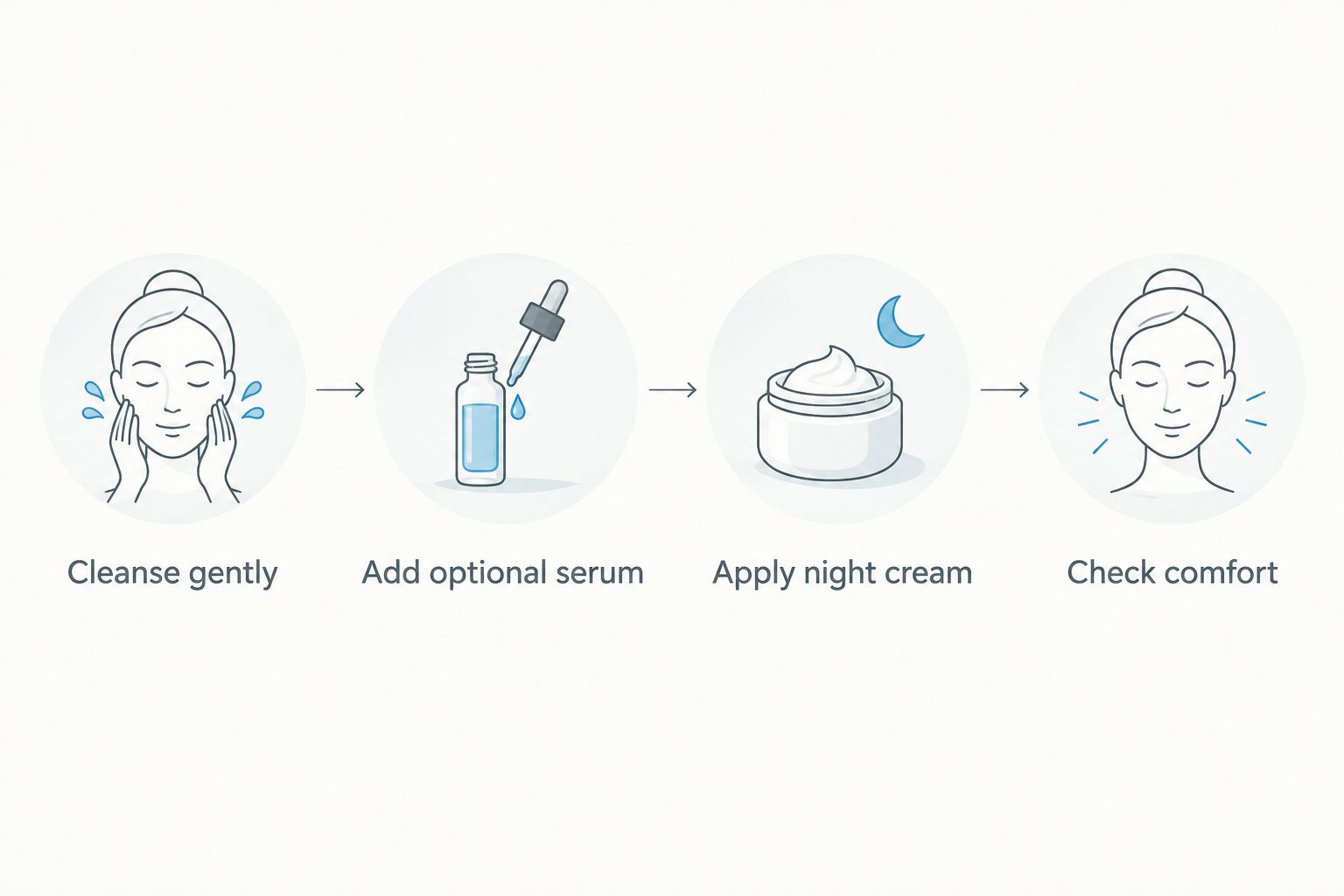
A simple Japanese-inspired routine focuses on purposeful steps. For 2026, organize your evening around cleansing, an optional serum, and moisturizing rather than a fixed number of products.
Cleanse gently
Remove makeup, sunscreen, and daily buildup with a cleanser suited to your skin. Use lukewarm water and avoid scrubbing your face to a squeaky-clean finish.
Double cleansing is an option when needed for removal, not an obligation every evening. If your skin feels tight immediately after washing, review the cleanser and washing method before adding more skincare.
Add optional serum
Apply a serum only if it serves a clear purpose in your routine. Follow its directions, including any guidance about application to dry skin or use with other products.
If your only goal is basic evening hydration, you can move directly from cleansing to night cream. A cream containing hyaluronic acid does not require a separate hyaluronic acid serum underneath it.
Apply night cream
Use your night cream as the final moisturizing step, following the label's application guidance. Spread it gently rather than repeatedly rubbing the same area.
For a basic moisturizing routine, applying cream while skin is slightly damp is a practical way to help retain moisture after washing. Product-specific directions take priority, particularly when another treatment requires dry skin.
Check comfort
Notice whether your skin feels comfortable after application and when you wake. Persistent tightness is a reason to reassess the routine—not proof that you need to stack two creams.
Keep the other steps steady when introducing a new product. That makes the result easier to interpret.
Sensitive-skin note: Introduce one new formula at a time and test a small area before wider use. Stop using a product that causes irritation, and seek professional advice for persistent symptoms; a familiar ingredient does not guarantee that every formula will suit you.
Choosing a cream from our catalog
Kiyomi Skin skincare is best for shoppers seeking a 5-ALA-focused routine with separate day and night moisturizing options. Choose between these creams by their stated role and ingredients, not by assuming that every formula has the same properties.
Our Night Cream comes in a 50 mL size and contains 5-ALA, hyaluronic acid, and ceramides. Ceramides are lipids—fats naturally found in the skin barrier—and their presence gives you another formula detail to consider alongside the humectant.
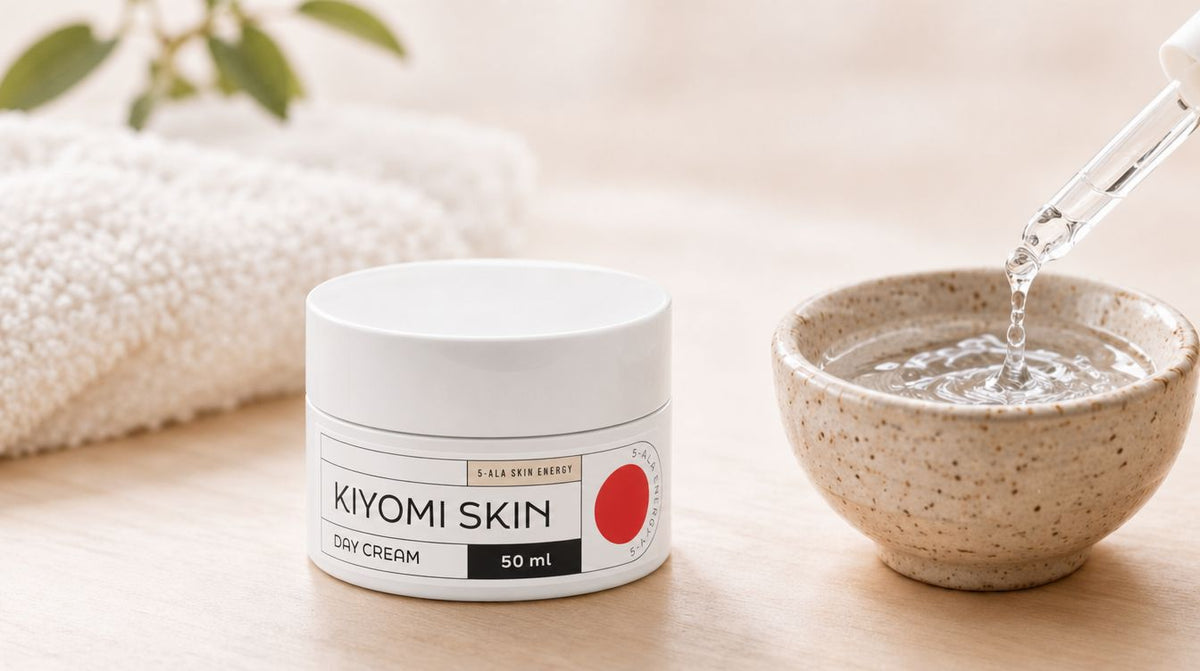
Our Day Cream also comes in a 50 mL size and contains 5-ALA and hyaluronic acid. Its catalog description identifies it as fragrance-free, making that a supported selection point for shoppers who prefer fragrance-free care.
The Night Cream description does not establish fragrance-free status, so do not transfer that claim from the Day Cream to the evening formula. Check the current ingredient information when fragrance avoidance is a priority.
Ingredient roles also differ from finished-product results. Hyaluronic acid's water-binding function explains why it appears in moisturizers; it does not establish a measured hydration increase, wrinkle reduction, or overnight outcome for a particular cream.
Choose the cream that matches the step you want to fill, and shop the options below. You do not need to buy both simply to complete an evening moisturizing routine.


Do I need another moisturizer over night cream?
No—a separate moisturizer is not automatically necessary over a moisturizing night cream. The second cream often repeats a function you have already covered.
If your skin still feels dry, first check whether cleansing, another treatment, or the cream's overall formulation is contributing. Choose a suitable routine rather than adding products without a clear purpose.
Can I use hyaluronic acid night cream during the day?
A night cream can serve as a daytime moisturizer if its directions permit daytime use and its texture suits you. Check the complete formula rather than treating the word night as a universal restriction.
For daytime use in 2026, keep sun protection separate: choose broad-spectrum SPF 30 or higher and follow the sunscreen label. Hyaluronic acid does not provide sunscreen protection.
Does hyaluronic acid night cream help with visible aging?
Moisturizing can make dryness-related fine lines look less noticeable by improving surface hydration. That cosmetic effect is different from stopping aging or establishing a lasting change in wrinkles.
A well-aging routine in 2026 prioritizes consistent cleansing, moisturizing, and daily sun protection. Treat additional ingredient claims as separate questions that require evidence about the actual finished product.
FAQ
Can hyaluronic acid night cream replace a moisturizer?
Yes—a hyaluronic acid night cream can replace your evening moisturizer because it is itself a moisturizer. Choose by the complete formula and whether it meets your skin's needs, not by hyaluronic acid alone.
Do I need a hyaluronic acid serum under night cream?
No, a hyaluronic acid serum is optional under night cream. If your cream already provides the hydration and comfort you want, a separate serum is not required.
Should I apply hyaluronic acid night cream to damp skin?
Slightly damp skin is a practical starting point for a basic moisturizing cream after cleansing. Follow the product's directions, especially when another treatment in your routine requires dry skin.
Is night cream better than regular moisturizer?
Night cream is not automatically better than regular moisturizer; it is one type of moisturizer. The formula, texture, and fit with your routine matter more than the time-of-day label.
Can sensitive skin use a hyaluronic acid night cream?
Sensitive skin can use a suitable hyaluronic acid night cream, but suitability depends on the complete formula. Review the ingredient list and introduce the cream gradually rather than choosing by a single familiar ingredient.
Does Kiyomi Skin Night Cream contain ceramides?
Kiyomi Skin Night Cream contains ceramides alongside hyaluronic acid and 5-ALA, according to its catalog description. It comes in a 50 mL size and serves as an evening moisturizing option.
Does hyaluronic acid night cream replace sunscreen?
No, hyaluronic acid night cream does not replace sunscreen. For daytime protection, use broad-spectrum SPF 30 or higher according to the sunscreen's directions.
One last thing
The most useful change might be removing a duplicate step. If your night cream already moisturizes well, applying another moisturizer is not a requirement for a complete routine.
Before adding something new, give every product a clear job: cleanse, address a specific concern if needed, or moisturize. A routine you understand is easier to keep consistent—and consistency belongs at the center of gentle well-aging care.