Best hyaluronic acid serums for hydration in 2026
Best overall: a simple hyaluronic acid and glycerin serum. Best for dry skin: a hyaluronic acid serum with emollients. Best for oily skin: a lightweight hyaluronic acid gel serum. This 2026 guide ranks formula types so you can choose hydration that fits sensitive skin—not just an ingredient trend.
- The best hyaluronic acid serum for hydration balances water-binding ingredients with a formula your skin tolerates.
- Choose hyaluronic acid with emollients for dry skin; choose a lightweight gel for oily skin.
- Kiyomi Skin’s Moisturizing Serum is a hydration-focused catalog option; verify ingredients before selecting specifically for hyaluronic acid.
- Follow serum with moisturizer, and use broad-spectrum sunscreen during the day.
Why this matters
Hyaluronic acid is a humectant: an ingredient that attracts and holds water. It supports surface hydration, but a serum does not replace every function of a moisturizer.
For sensitive skin, the whole formula matters more than the headline ingredient. Fragrance, additional actives, texture, and your existing routine all affect whether a product fits.
If hydration is your main shopping goal, start with Kiyomi Skin’s Moisturizing Serum. When shopping specifically for hyaluronic acid, confirm it on the current ingredient list rather than treating every moisturizing serum as the same thing.
What makes the best hyaluronic acid serum for hydration?
Use these five criteria to evaluate a serum in 2026:
- Ingredient clarity: Look for hyaluronic acid or a related ingredient name such as sodium hyaluronate. A moisturizing product name alone does not identify its humectants.
- Formula simplicity: Prefer a formula that addresses your goal without adding exfoliation or several unfamiliar actives at once.
- Texture fit: Choose a texture you can comfortably layer beneath your moisturizer and sunscreen.
- Sensitivity fit: Check the complete ingredient list against your known triggers. A sensitive-skin label does not guarantee tolerance.
- Routine compatibility: Favor a serum that works with the products you already use. Persistent stinging or pilling is a reason to reassess.
The strongest default is a straightforward hydrating formula, not the longest list of hyaluronic acid varieties. Concentration and molecular-weight language do not establish how a finished serum performs on your skin.
Hyaluronic acid serum options at a glance
These formula profiles are a starting point, not a substitute for checking a current ingredient list. A lightweight gel can contain glycerin, and an emollient serum can contain both humectants.
Named hyaluronic acid serum alternatives to compare
If you are comparing familiar hyaluronic acid serums, review the current formula, texture, price, and directions for each rather than assuming they perform the same way. Commonly named options include CeraVe Hydrating Hyaluronic Acid Serum, The Ordinary Hyaluronic Acid 2% + B5 (with Ceramides), La Roche-Posay Hyalu B5 Serum, and Drunk Elephant B-Hydra Intensive Hydration Serum.
Kiyomi Skin’s Moisturizing Serum is the hydration-focused Kiyomi option in this guide. Check its current ingredient list before treating it as a like-for-like hyaluronic acid serum, then introduce only one new formula at a time.
| Rank and formula profile | Best for | Standout feature |
|---|---|---|
| 1. Hyaluronic acid and glycerin serum | A straightforward daily hydration routine | Combines two established humectants |
| 2. Hyaluronic acid serum with emollients | Dry skin that prefers a softer, richer finish | Pairs water-binding ingredients with skin-softening ingredients |
| 3. Lightweight hyaluronic acid gel serum | Oily skin or routines with richer moisturizers | Adds a light hydration layer |
A product’s position here reflects its intended use, not a claim that one ingredient combination has defeated every alternative in a clinical trial.
1. Hyaluronic acid and glycerin serum: best for daily hydration
A serum combining hyaluronic acid and glycerin is a practical starting point when you want hydration without building a complicated routine. Both ingredients are humectants, so the formula focuses on helping the skin’s surface hold water.
Choose a version without extra treatment ingredients if your first goal is finding a comfortable baseline. You can address other concerns separately once you know what your skin tolerates.
Hyaluronic acid and glycerin serum pros
- Keeps the ingredient focus on hydration.
- Fits a simple serum-and-moisturizer routine.
- Provides a useful starting profile when comparing labels.
Hyaluronic acid and glycerin serum considerations
- Humectants do not provide every function of a complete moisturizer.
- Other ingredients in the bottle still determine its suitability for sensitive skin.
Best for: You want a daily hydration serum and do not need another exfoliating or treatment step.
Verdict: Buy this formula profile as your default, after checking the complete ingredient list.
2. Hyaluronic acid with emollients: best for dry skin
An emollient softens and smooths the skin’s surface. A serum that combines humectants with emollients makes sense when you prefer more cushioning than a watery serum provides.
Look at the formula as a whole rather than searching for one mandatory companion ingredient. Your moisturizer still matters, especially when dryness leaves your skin feeling rough or tight.
Hyaluronic acid with emollients pros
- Combines water-binding and skin-softening ingredients.
- Offers an alternative to very thin, watery textures.
- Fits routines built around comfort and consistent moisturizing.
Hyaluronic acid with emollients considerations
- A richer finish can feel excessive beneath an already rich moisturizer.
- An emollient serum is not automatically suitable for every sensitive-skin shopper.
Best for: Your skin feels dry, and you prefer a soft finish rather than a nearly weightless layer.
Verdict: Buy this profile if richer textures suit you; skip it if your existing routine already feels heavy.
3. Lightweight hyaluronic acid gel: best for oily skin
A lightweight gel serum suits shoppers who want hydration without another rich layer. It also works as a texture choice when your moisturizer or sunscreen already provides the finish you prefer.
Oily skin and dehydration are not interchangeable. You can want hydration while still preferring products that feel light, but shine alone does not tell you which serum you need.
Lightweight hyaluronic acid gel pros
- Offers a light-feeling hydration step.
- Fits beneath richer products when the formulas layer well.
- Gives texture-sensitive shoppers an alternative to creamy serums.
Lightweight hyaluronic acid gel considerations
- A gel can still contain fragrance or ingredients you do not tolerate.
- A light texture alone will not address every cause of dryness or tightness.
Best for: You prefer minimal residue or already use a moisturizer with a substantial finish.
Verdict: Buy this profile for texture preference, not because gel automatically means gentler or more effective.
Where Kiyomi Skin fits in a hydration-first routine
Kiyomi Skin’s Moisturizing Serum is the catalog starting point for shoppers prioritizing hydration. Choose it by reviewing the current formula and directions, then decide whether it matches your specific ingredient preferences.
Keep the distinction clear: “moisturizing serum” describes a product’s focus, while “hyaluronic acid serum” identifies an ingredient. Confirm the ingredient before making that narrower selection.
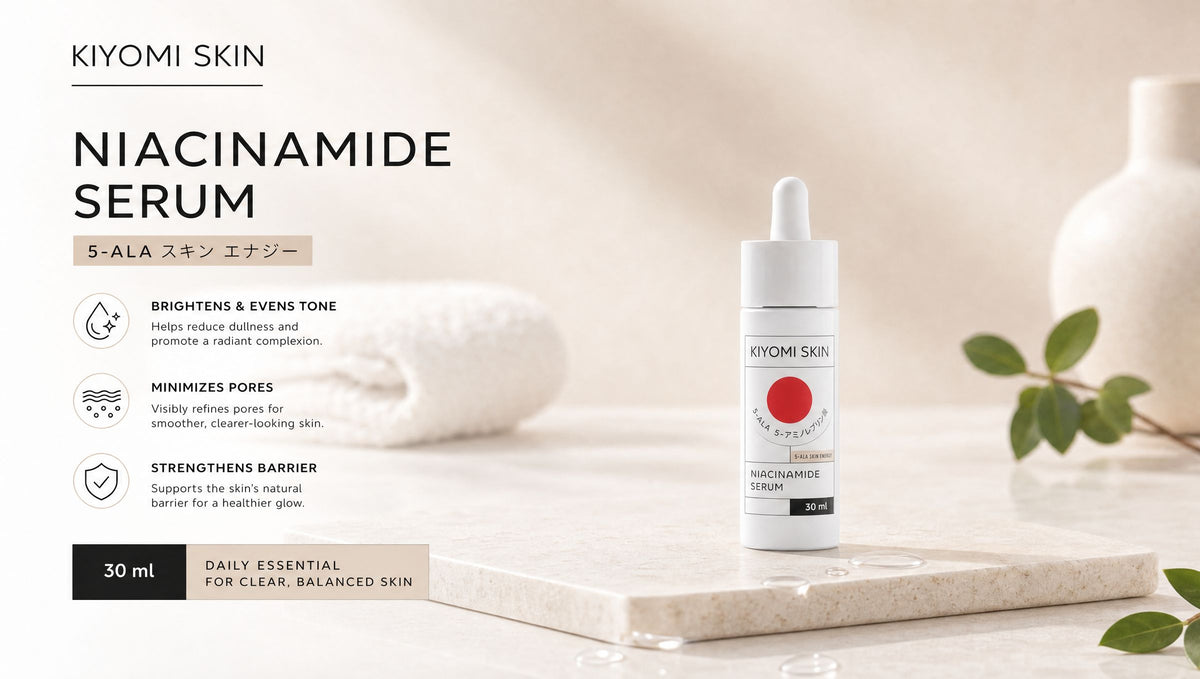
If even-looking tone is also on your shopping checklist, you can explore the Niacinamide Serum. Treat it as a separate formula choice rather than assuming that niacinamide and hyaluronic acid are interchangeable.
The reviewed Niacinamide formula reports list bitter-orange flower water and linalool. Do not treat this option as fragrance-free; check those ingredients against your own sensitivities before choosing it.
Kiyomi Skin builds its catalog around 5-ALA, but ingredient science and finished-product evidence answer different questions. The presence of 5-ALA does not establish a particular hydration result, deeper delivery, or universal tolerance.
For your 2026 routine, choose one serum around your primary goal. A focused routine makes it easier to notice whether a new product agrees with your skin.
How to use a hydrating serum in a simple routine
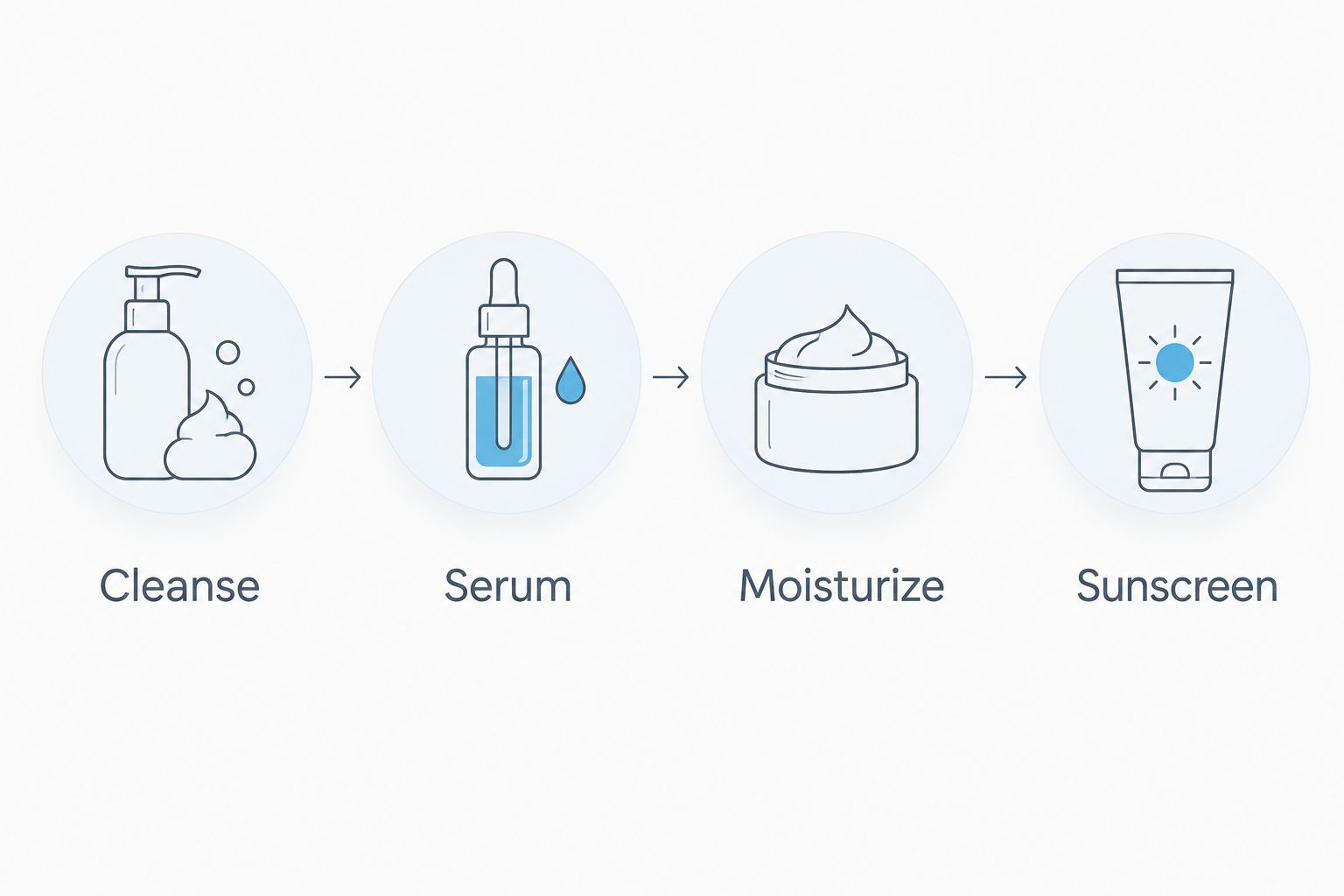
A useful routine has three core steps: Cleanse, Serum, Moisturize. During the day, add Sunscreen as the final skincare step.
Cleanse
Use a cleanser your skin tolerates, and avoid scrubbing to make a serum work harder. Pat gently rather than rubbing your face dry.
Serum
Follow the serum’s directions for amount and application. Slightly damp skin is a practical option for many hydrating formulas, but do not override instructions that specify otherwise.
Introduce one new product at a time. If you develop persistent burning, redness, swelling, or an itchy rash, stop using the new product and seek medical advice when needed.
Moisturize
Apply a moisturizer after your serum. A serum and a moisturizer have different roles; adding more serum is not the same as completing the moisturizing step.
If your skin still feels tight, reassess the whole routine. Cleansing habits and your moisturizer deserve attention before you add another active ingredient.
Sunscreen
Use broad-spectrum SPF 30 or higher during the day, following the sunscreen’s application and reapplication directions. This is standard sun-protection guidance, not a claim that sunscreen prevents a reaction to any particular serum.
For well aging in 2026, consistency matters more than an elaborate sequence. Hydration supports how your skin looks and feels; it does not stop or reverse aging.
How to read the label without chasing ingredient claims
Start with the full ingredient list, not the front of the bottle. Sodium hyaluronate is a salt form of hyaluronic acid, so a product does not need the exact words “hyaluronic acid” in its ingredient list to contain a related humectant.
Then look beyond that ingredient. Fragrance, exfoliating acids, and other actives change the product you are choosing, even when hydration is the headline.
“Multiple molecular weights” describes ingredient characteristics, not a guaranteed result. It does not prove deeper penetration or establish that a formula is better for sensitive skin.
The same discipline applies to “dermatologically tested.” A single patch test and a repeated facial-use study measure different things; neither guarantees that everyone will tolerate a product.
For a 2026 purchase, prioritize a clear ingredient list and suitable directions over impressive-sounding ingredient language.
How these formula profiles were ranked
The ranking prioritizes a straightforward hydration focus, texture fit, ingredient clarity, and compatibility with a simple routine. It is a selection framework, not a head-to-head product test.
The hyaluronic acid and glycerin profile takes the default position because it keeps the focus on humectants. Emollient and gel profiles then separate the decision by your preferred finish, rather than pretending every shopper needs the same bottle.
Which hydrating serum should you choose?
Choose a simple hyaluronic acid and glycerin serum if you are undecided. Choose an emollient version if you prefer a richer finish, or a gel if you want a lighter layer beneath your existing products.
When exploring Kiyomi Skin, begin with the Moisturizing Serum for a hydration-focused product search. Confirm the current ingredients before choosing it specifically as a hyaluronic acid serum.
Your best 2026 choice is the formula that fits your skin, your moisturizer, and your daily habits—not the one that asks you to add the most steps.
FAQ
What’s the best hyaluronic acid serum for hydration?
A simple hyaluronic acid and glycerin serum is the default formula profile recommended here. Choose an emollient version for a richer finish or a lightweight gel if you prefer less residue.
Is hyaluronic acid suitable for sensitive skin?
Hyaluronic acid can be part of a sensitive-skin routine, but the complete formula determines whether a serum suits you. Check your known triggers and introduce new products separately; no ingredient guarantees universal tolerance.
Should I apply hyaluronic acid serum to wet or dry skin?
Follow the product’s application directions. Slightly damp skin is a practical option for many hydrating serums, but soaking-wet skin is not a requirement.
Do I still need moisturizer after a hyaluronic acid serum?
Yes, keep a moisturizer in your routine. A humectant serum does not replace every function of a moisturizer, especially when your skin feels dry or tight.
Is sodium hyaluronate the same as hyaluronic acid?
Sodium hyaluronate is the sodium salt of hyaluronic acid. Both are used as humectants in skincare, but the ingredient name alone does not establish the performance of a finished serum.
Is a higher hyaluronic acid percentage always better?
No, a higher percentage alone does not establish better hydration or tolerance. The complete formula, texture, and supporting ingredients matter when choosing a serum.
Can I use niacinamide with a hyaluronic acid serum?
Niacinamide and hyaluronic acid can appear in the same routine. Introduce products separately and follow their directions so you can assess each formula’s tolerance and layering.
One last thing
More serum is not the automatic answer to skin that still feels tight. Before adding another bottle, check whether your cleanser leaves you uncomfortable and whether your moisturizer provides the finish you need.
That small change in perspective keeps hydration practical: choose a suitable serum, support it with moisturizer, and give comfort priority over a crowded shelf.