How long does hyaluronic acid take to hydrate skin?
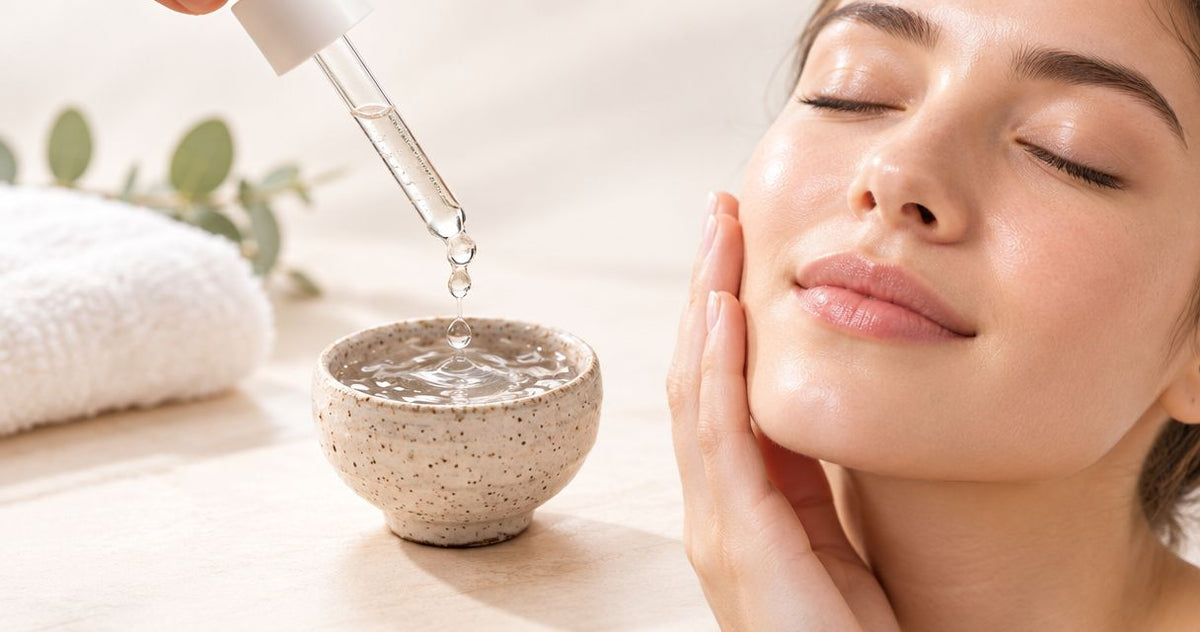
Hyaluronic acid can begin hydrating your skin’s surface shortly after application, so a softer, less tight feel can come before visible changes. There is no universal number of minutes for results: the complete formula, your skin’s condition, and the moisturizer you use afterward determine what you notice and how long it lasts.
- How long does hyaluronic acid take to hydrate skin? Surface hydration begins shortly after application; visible results vary.
- Hyaluronic acid attracts water; moisturizer helps limit water loss. Use both functions in your sensitive-skin routine.
- Kiyomi Skin Day Cream combines hyaluronic acid with fragrance-free moisturizing care for a straightforward hydration step.
- Judge hydration by comfort and softness, not stickiness, tingling, or an instant glass-skin finish.
Why this matters
You do not need to wait for a dramatic transformation to decide whether a hydrating routine meets your needs. Less tightness after cleansing and a more comfortable feel are useful observations, even when your skin looks much the same.
The better question is whether that comfort lasts through your usual day. Our guide to hyaluronic acid serums for hydration explains the serum category; this guide focuses on timing, layering, and choosing a practical routine in 2026.
How long does hyaluronic acid take to hydrate skin?
Hyaluronic acid begins working as a water-binding ingredient when the formula reaches your skin; it does not need weeks to start attracting water. That immediate ingredient function is different from a promise that your skin will look visibly plumper within a particular number of minutes.
Hyaluronic acid is a humectant—an ingredient that attracts and holds water. In skincare, it helps hydrate the outermost skin layer, called the stratum corneum. You cannot judge that water content precisely by touch alone.
| What you notice | What it tells you | What it does not establish |
|---|---|---|
| A wet or slippery feeling during application | The formula is spreading across your skin | How much hydration will remain afterward |
| Less tightness after application | Your skin feels more comfortable | A measured change in skin water content |
| A smoother-looking surface | Hydration can soften the appearance of dry texture | Permanent removal of fine lines |
| Comfort that lasts between applications | The overall routine is meeting your practical needs | That hyaluronic acid alone caused the result |
For your 2026 routine, separate when hydration starts from how long the benefit lasts. The first concerns the ingredient’s water-binding function; the second depends on the finished formula and your daily routine.
Does hyaluronic acid work immediately?
Hyaluronic acid starts binding water during application, but an immediate sensation is not a standardized hydration measurement. A serum’s slip, a cream’s richness, and a cooling finish come from the whole formula, not just hyaluronic acid.
How long until dry-looking fine lines look softer?
Dry-looking fine lines can look softer as surface hydration improves, but there is no universal timetable. Hydrating the surface does not establish a change in deeper wrinkles or collagen.
How long does hydration last after one application?
Hydration lasts for different periods depending on the formula, your skin barrier, and your environment. Look for sustained comfort rather than assuming that a product’s initial wet feel predicts all-day performance.
What changes first: feel, appearance, or lasting comfort?
The first change you notice is often sensory: skin feels less tight or the product leaves a smoother finish. Those observations matter, but they answer a different question from whether your skin stays comfortably hydrated between applications.
Visible changes need a consistent comparison. Look at the same area under similar lighting, without comparing freshly moisturized skin with a photograph taken under harsher light. A glossy product finish can look like extra hydration without telling you how comfortable your skin will feel later.
Use this practical order when assessing your 2026 hydration routine:
- Comfort: Does your skin feel less tight after cleansing and moisturizing?
- Texture: Does dry-looking roughness appear less noticeable?
- Consistency: Does your skin stay comfortable during ordinary daily activities?
- Usability: Does the routine sit comfortably under sunscreen and makeup?
You do not need every category to change at once. A routine you can use consistently is more useful than a dramatic finish you dislike wearing.
Why hyaluronic acid hydration varies
Hyaluronic acid is one part of a formula, not an independent timer. These factors explain why the same ingredient does not produce an identical experience for everyone:
- The complete formula. Humectants attract water, emollients soften the surface, and occlusive ingredients help slow water loss. Their combination matters more than a single highlighted ingredient.
- Your starting skin condition. Dry, flaky skin and skin that already feels comfortable present different starting points. Persistent irritation also needs different attention from ordinary dryness.
- Your cleansing habits. Hot water, scrubbing, and harsh cleansing can leave skin feeling tight. Adding more serum does not correct an unnecessarily drying cleansing step.
- Your moisturizer. A separate cream can help a lightweight hydrating serum fit into a more complete moisturizing routine. Some creams already combine both functions.
- Your surroundings. Low humidity, indoor heating, and air conditioning affect skin dryness and the comfort you need from a moisturizer.
- How you apply the routine. Product amount, layering, and consistency affect the finish. Follow the formula’s directions instead of assuming that more layers produce better hydration.
A simple hyaluronic acid routine for 2026
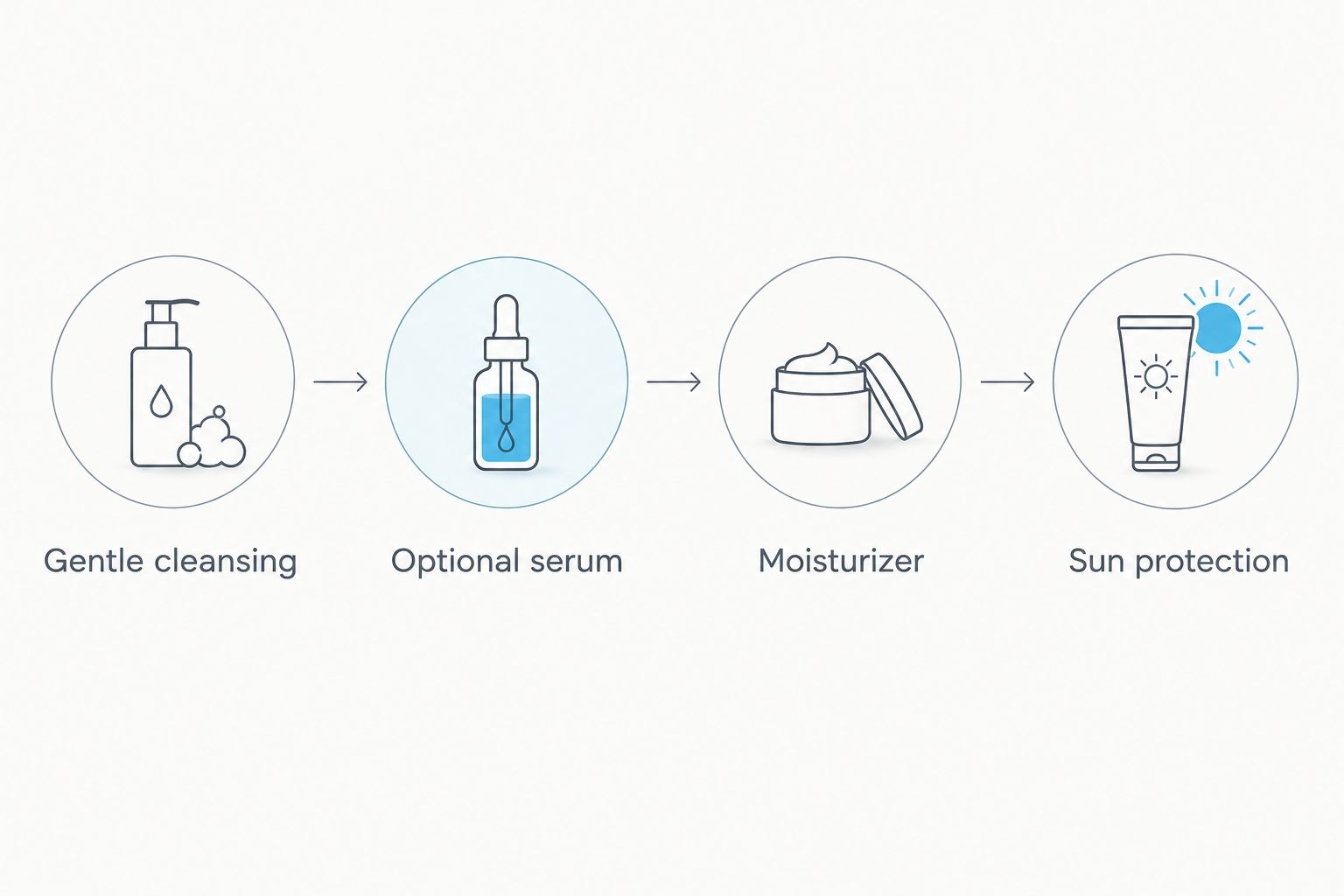
You do not need a long routine to give a water-binding ingredient a useful place in your day. Start with cleansing, hydration where needed, moisturizing, and daytime sun protection.
1. Gentle cleansing
Use lukewarm water and a cleanser that removes daily buildup without leaving your skin persistently tight. Pat gently rather than rubbing with a towel.
If your skin feels uncomfortable immediately after every wash, reconsider the cleansing step before adding another serum. Hydration works best as part of a comfortable routine, not as compensation for repeated over-cleansing.
2. Optional serum
If you use a hyaluronic acid serum, follow its application directions. Applying a suitable hydrating formula to slightly damp—not dripping—skin is a practical option when the label does not direct otherwise.
Keep the layer comfortable. There is no need to keep spraying water or applying serum until your skin feels saturated, and there is no universal waiting period before moisturizer.
3. Moisturizer
Apply your moisturizer after the hydrating step. If your cream already contains hyaluronic acid and meets your needs, a separate hyaluronic acid serum is optional.
This is the simplest way to reduce unnecessary layering. Choose the fewest steps that keep your skin comfortable, rather than treating a serum as mandatory.
4. Sun protection
In the morning, finish with a broad-spectrum sunscreen rated SPF 30 or higher, following its directions for application and reapplication. Sunscreen supports a healthy-aging routine, but it does not replace moisturizer when your skin needs one.
At night, leave out the sunscreen step. Keep the rest of the routine focused on cleansing and comfortable moisturizing care.
Choosing a hyaluronic acid moisturizer
Kiyomi Skin Day Cream is best for shoppers seeking hyaluronic acid in a fragrance-free daily moisturizer. The formula pairs hyaluronic acid with 5-ALA, giving you a moisturizing option without requiring a separate serum step.
For evening care, Night Cream contains hyaluronic acid, ceramides, and 5-ALA. Ceramides are lipids naturally found in the skin barrier; their presence in a formula is an ingredient fact, not proof of a particular finished-product result.
| Product | Best for | Supported formula details | Selection consideration |
|---|---|---|---|
| Day Cream | A fragrance-free daytime moisturizing step | Hyaluronic acid and 5-ALA; described as fragrance-free | Use separate sunscreen for daytime sun protection |
| Night Cream | An evening moisturizer containing ceramides | Hyaluronic acid, ceramides, and 5-ALA | Check the complete ingredient list for your personal sensitivities |
Kiyomi Skin hyaluronic acid skincare should be evaluated by the complete formula and your experience using it. Ingredient research does not establish a specific hydration onset or duration for either finished product, and 5-ALA’s presence does not establish faster hydration.


Choose your starting point by the step you need: Day Cream for fragrance-free daily moisturizing, or Night Cream for an evening formula containing ceramides. You do not need to buy both to begin a simpler routine.
How to tell whether your routine needs adjusting
For a useful 2026 routine check, observe your skin at ordinary moments: after cleansing, after moisturizing, and later during your day. Keep the cleanser and other products consistent so you can understand what changes when you introduce something new.
If skin feels comfortable initially but tight later, review the moisturizer rather than automatically adding more hyaluronic acid. If products roll into little flakes, simplify the layers and follow each product’s recommended amount; pilling is a compatibility or application issue, not proof that hydration has failed.
Use 1 new product at a time so changes are easier to identify. For sensitive skin, test a small area first; fragrance-free does not guarantee tolerance, and persistent burning, redness, or discomfort is a reason to stop the new product and seek professional advice if symptoms continue.
The goal is not to make your skin feel coated. It is to build a repeatable routine that leaves skin comfortable without unnecessary steps.
FAQ
How long does hyaluronic acid take to hydrate skin?
Hyaluronic acid can begin hydrating the skin’s surface shortly after application. There is no universal minute-by-minute result because the complete formula, skin condition, and moisturizing routine affect what you notice.
Should I put hyaluronic acid on wet or dry skin?
Follow the product’s directions; slightly damp skin is a practical option for a hydrating serum when the label does not specify otherwise. Your skin does not need to be dripping wet, and repeated misting is unnecessary.
Do I need moisturizer after a hyaluronic acid serum?
A moisturizer helps complete a routine built around a lightweight hyaluronic acid serum by helping limit water loss. If your moisturizer already contains hyaluronic acid and keeps your skin comfortable, a separate serum is optional.
How many minutes should I wait before applying moisturizer?
There is no universal waiting period between a hyaluronic acid serum and moisturizer. Follow the product directions and let the serum spread evenly before applying the next layer.
Can I use hyaluronic acid every day?
Hyaluronic acid can be part of daily skincare when the finished formula suits your skin and its directions support daily use. Choose frequency according to the product rather than the ingredient name alone.
Does hyaluronic acid remove wrinkles immediately?
Hyaluronic acid does not permanently remove wrinkles immediately. Surface hydration can soften the appearance of dryness-related lines, which is different from demonstrating changes in collagen or deeper wrinkles.
Do I need a hyaluronic acid serum if my cream contains it?
You do not need a separate hyaluronic acid serum if your cream already meets your hydration needs. Kiyomi Skin Day Cream contains hyaluronic acid in a fragrance-free moisturizing formula, making it an option for a simpler routine.
One last thing
The best next purchase might be no extra serum at all. If your existing hyaluronic acid moisturizer leaves your skin comfortable, keep using it rather than adding another layer just to chase faster results.
For 2026, make lasting comfort your benchmark—not a stopwatch. Shop Kiyomi Skin moisturizing care when you need that step, and build the rest of your routine around what your skin actually needs.