Can niacinamide serum cause breakouts?
Yes, niacinamide serum can be followed by breakouts, but new pimples do not prove that niacinamide itself caused them. The complete formula, irritation, other products, and an unrelated acne flare all need consideration; do not assume a worsening breakout is normal purging.
- Can niacinamide serum cause breakouts? Yes, but the complete formula and your routine matter more than the ingredient name.
- Niacinamide is not an exfoliating acid; new pimples are not an expected purging phase.
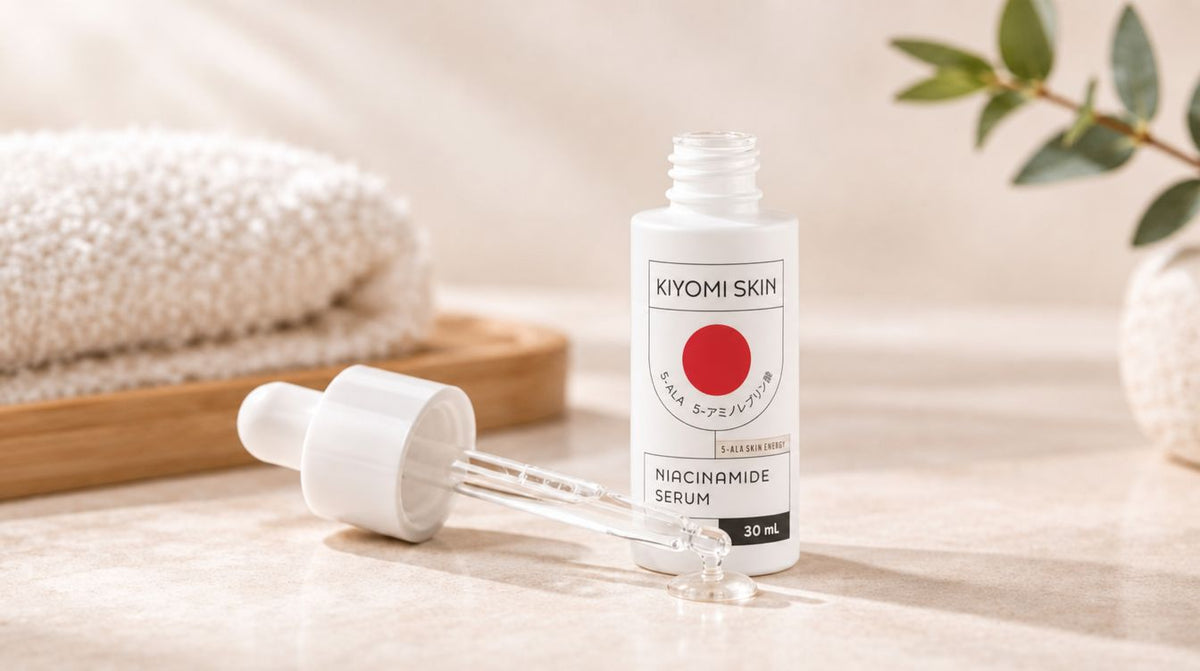
- Kiyomi Skin Niacinamide + 5-ALA Serum is an option for shoppers seeking even-looking tone and skin comfort.
- Pause a suspected product, simplify your routine, and distinguish pimples from an itchy or burning rash.
Can niacinamide serum cause breakouts?
A niacinamide serum can disagree with your skin even though niacinamide is commonly used in products for acne-prone and sensitive skin. A serum contains more than its headline ingredient. Its texture, supporting ingredients, and the products you apply alongside it all affect your experience.
Start with the pattern below rather than guessing from a single pimple. If you are choosing a replacement, our guide to choosing a niacinamide serum for sensitive skin explains what to examine beyond the front label.
| What you notice | What it suggests | Best next step |
|---|---|---|
| Blackheads, whiteheads, or familiar-looking pimples | An acne breakout; timing alone does not identify the cause | Pause the new serum and keep the rest of your routine stable |
| Burning, stinging, redness, or flaky patches | Irritation rather than a necessary adjustment phase | Stop the suspected product and use previously tolerated basics |
| An itchy rash or swelling | A possible contact reaction, not ordinary purging | Stop use and seek medical advice |
| Pimples after several new products | Too many changes to identify the responsible product | Return to your established routine before introducing anything else |
These patterns guide your next move; they do not diagnose the cause. The useful question is not just whether niacinamide can cause breakouts, but whether this particular serum suits your skin.
Why this matters
A well-aging routine should support comfortable, hydrated skin without asking you to push through a reaction. Treating every new bump as purging makes it harder to recognize a formula that does not suit you.
For your 2026 routine, make consistency the priority. Keep the cleanser and moisturizer you already tolerate, introduce a serum separately, and judge the whole experience: comfort, appearance, and whether your skin remains settled between applications.
Niacinamide has established uses in skincare for supporting the skin barrier and improving the appearance of uneven tone. Those ingredient-level benefits do not establish that every niacinamide serum treats acne, prevents irritation, or delivers the same results.
Is niacinamide purging real?
Niacinamide itself is not an exfoliating acid or a retinoid, so a purging phase is not an expected requirement. Purging is an informal term used for an early acne flare associated with some treatments that affect skin-cell turnover.
Read the complete ingredient list. A product described as a niacinamide serum can also contain exfoliating acids or other active ingredients, which changes how you should assess a new breakout.
Even when a formula contains an acne treatment associated with early worsening, you should not automatically label every reaction purging. Itching, persistent burning, swelling, and a spreading rash need a different response from an occasional familiar pimple.
The practical distinction is simple: a serum does not need to make your skin worse to work. Avoid adding exfoliants or scrubs to clear a suspected reaction faster; that introduces another variable when you need fewer.
Why reactions to niacinamide serum vary
The same ingredient name can appear in very different formulas. These factors explain why one serum fits your routine while another does not:
- The complete formula. Fragrance components, preservatives, solvents, and other ingredients all belong in the assessment. A reaction cannot be assigned to niacinamide from the front label alone.
- Concentration. More niacinamide is not automatically a better match. Choose a formula for its intended use and your tolerance rather than treating a larger percentage as a quality score.
- Other active ingredients. Retinoids, exfoliating acids, and acne treatments can make it difficult to tell which change caused irritation, especially when introduced together.
- Application habits. Applying more than directed or increasing frequency quickly changes your exposure. Follow the product instructions rather than assuming extra layers produce better results.
- Your skin's current condition. Already irritated, peeling, or recently over-exfoliated skin needs a simpler approach than settled skin.
- Changes outside the serum. A new sunscreen, hair product, makeup product, or hormonal acne flare can coincide with starting niacinamide. Record the timing before assigning blame.
For a 2026 product shortlist, compare formulas and instructions before comparing headline percentages. That gives you information you can act on, rather than a number that says little about the complete product.
What should you do if a niacinamide serum breaks you out?
Pause the suspected serum and return to products you previously tolerated. Do not immediately replace it with another new active; you need a stable baseline to understand what happened.
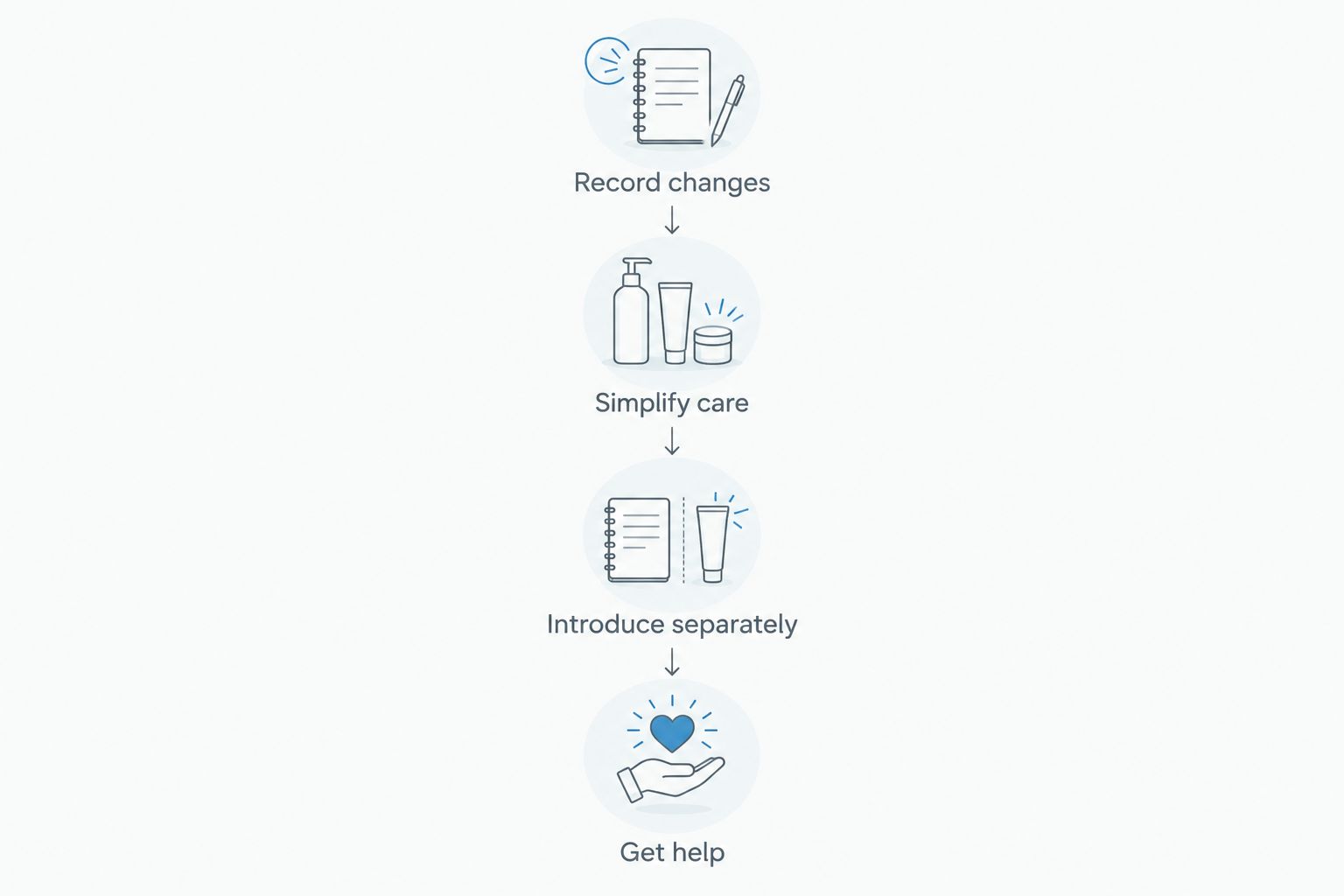
1. Record what changed
Write down when you started the serum, how often you applied it, and what appeared first. Include changes to makeup, sunscreen, haircare, and prescription skincare.
Take photographs in similar lighting without filters. The purpose is to track the pattern, not to diagnose a reaction from a photograph or prove that a single ingredient caused it.
2. Keep cleansing and moisturizing simple
Use a familiar gentle cleanser and moisturizer, and continue a sunscreen you tolerate. Avoid scrubbing, picking, and introducing an exfoliating treatment while your skin is unsettled.
Choose broad-spectrum sunscreen with SPF 30 or higher, consistent with American Academy of Dermatology guidance. Sunscreen supports daily sun protection; it does not prevent or treat an allergic reaction to a serum.
3. Introduce products separately
Once your skin is settled, introduce only one new product at a time. Follow its directions and avoid changing your cleanser, serum, and moisturizer together.
For a new skincare product, the American Academy of Dermatology recommends testing a small area 2 times per day for 7–10 days, using the normal amount and application duration. This home-use check helps identify a reaction before wider application, but it does not rule out later irritation or predict facial breakouts.
4. Know when to get help
Seek a dermatologist's advice for persistent breakouts, painful deep spots, scarring, or a reaction that does not settle after stopping the suspected product. Do not deliberately retry a product that caused swelling, hives, or a significant rash.
Get urgent medical help for breathing difficulty or swelling involving the lips, tongue, or throat. Those symptoms are not a skincare adjustment phase.
How should you choose a niacinamide serum in 2026?
Choose a serum around your main goal: more even-looking tone, comfortable hydration, or a simpler routine. Then check the complete formula, application instructions, and evidence for that exact product.
A useful label review answers these questions:
- Does the product contain additional exfoliating ingredients or retinoids?
- Does the ingredient list include something you already know you react to?
- Is fragrance-free status explicitly supported for this formula?
- Are product claims based on a finished-product study or only on ingredient research?
- Does the suggested routine fit the products you already use?
“Noncomedogenic” means a product is intended not to clog pores; it is not a guarantee against every breakout. Likewise, a sensitive-skin label cannot promise that an individual will tolerate every ingredient.
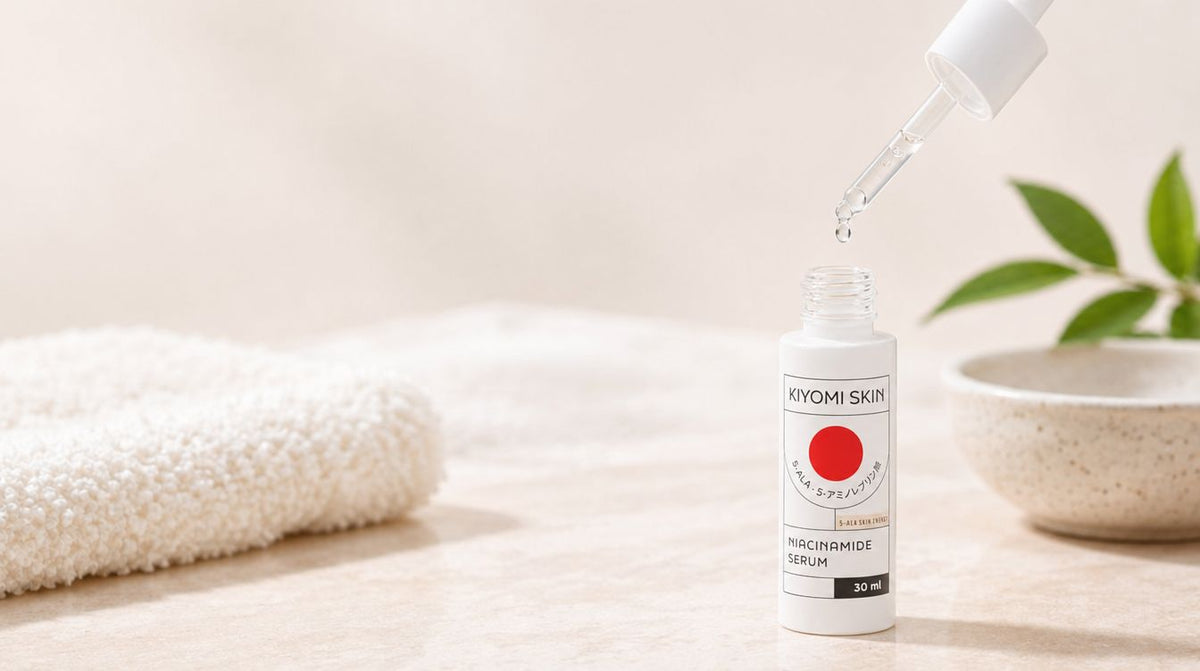
For Kiyomi Skin niacinamide skincare, the relevant choice is whether you want a targeted serum step or a moisturizing foundation. Kiyomi Skin Niacinamide + 5-ALA Serum is an option for shoppers seeking even-looking tone and skin comfort. It is a cosmetic skincare choice, not a substitute for acne treatment.
Build a simple serum-and-moisturizer routine
Start with the role each product fills. A serum adds a targeted step; a moisturizer supports hydration and comfort. You do not need to add several serums simply because each has an appealing ingredient story.
| Product | Best for | Supported reason to choose it | Selection consideration |
|---|---|---|---|
| Niacinamide + 5-ALA Serum | Shoppers prioritizing even-looking tone and comfort | Combines niacinamide with 5-ALA in a facial serum | Do not treat it as fragrance-free or as an acne medication |
| Day Cream | Shoppers seeking a fragrance-free moisturizing step | Contains 5-ALA and hyaluronic acid in a face cream | A moisturizer does not replace sunscreen or a targeted acne treatment |
The Niacinamide + 5-ALA Serum formula documentation lists bitter-orange flower water and linalool, so this article does not classify it as fragrance-free. Day Cream's supplied product information explicitly describes that formula as fragrance-free.
Both products fit different jobs. The serum offers a targeted skincare step, while the cream provides a moisturizing foundation; neither choice guarantees individual tolerance. If you already have a comfortable moisturizer, keep it while introducing the serum rather than changing both products together.
Kiyomi Skin's 5-ALA skincare pairs ingredient science with everyday product formats. Research about an ingredient does not, by itself, prove what a finished formula does on human skin, so choose by the product's documented purpose rather than promises about cellular energy or reversing aging.
Keep the application order straightforward
For a simple 2026 morning routine, cleanse as needed, apply your chosen serum according to its directions, moisturize, and finish with sunscreen. At night, remove sunscreen and makeup, cleanse gently, and apply your tolerated skincare in the order directed.
You do not need a fixed waiting period between every layer unless the product instructions specify one. Let each product spread comfortably, and avoid mixing products together in your palm unless their directions explicitly allow it.
Shop the serum for a targeted step or the cream for moisturizing care—not because a longer routine is automatically better. These are the relevant options to compare when your goal is a manageable routine rather than another layer of experimentation.


Can you use niacinamide with retinol or exfoliating acids?
Niacinamide is not inherently incompatible with retinol or exfoliating acids, but compatibility does not establish that your skin needs every product in the same session. The complete formulas and your existing tolerance matter.
If a retinoid or exfoliant is already part of your routine, keep its schedule stable while assessing a new serum. Follow your clinician's directions for prescription treatments rather than adjusting them to accommodate a cosmetic product.
How long should you wait out a niacinamide breakout?
There is no required niacinamide purging period to wait out. Pause a suspected serum rather than continuing through worsening pimples on the assumption that discomfort proves it is working.
Skin does not return to baseline on a universal timetable. Persistent or worsening acne needs assessment, especially when it is painful or leaving marks or scars.
FAQ
Can niacinamide serum cause breakouts even if I have used niacinamide before?
Yes, a different niacinamide serum can disagree with your skin even if another formula suited you. Compare the complete ingredient lists, application instructions, and other changes in your routine.
Does niacinamide make acne worse before it gets better?
Worsening acne is not an expected requirement for niacinamide to work. Check whether the serum contains another active ingredient, and do not automatically call new pimples purging.
Is burning after niacinamide serum normal?
Burning is not a benefit or proof that niacinamide is working. Stop the suspected product; persistent or significant symptoms need medical advice.
Should I choose the highest niacinamide percentage?
No, the highest percentage is not automatically the best choice. The complete formulation, your skincare goal, and your tolerance matter more than a percentage alone.
Can I use moisturizer after niacinamide serum?
Yes, moisturizer generally follows a serum unless the product instructions say otherwise. Keep a moisturizer you already tolerate while introducing a new serum.
Is Kiyomi Skin Niacinamide + 5-ALA Serum fragrance-free?
This article does not classify Niacinamide + 5-ALA Serum as fragrance-free. Its formula documentation lists bitter-orange flower water and linalool.
Will a home patch test tell me whether a serum causes acne?
No, a small-area home test does not reliably predict facial acne or guarantee future tolerance. It helps you check for a visible reaction before applying a product more widely.
One last thing
The most useful detail to keep from this 2026 guide is the product's complete name, not just the word niacinamide. Photograph the ingredient list and record when you introduced it; that gives you and your dermatologist something specific to assess if your skin changes.
Choose one purposeful addition, keep your moisturizing foundation steady, and let comfortable consistency guide your routine. A settled routine gives you a clearer basis for choosing your next serum than repeatedly switching products after every new spot.