How long does it take for eye cream to reduce puffiness?
Eye cream has no universal timeline for reducing puffiness: the result depends on whether you have temporary fluid-related swelling, irritation, or persistent under-eye bags. Hydration can improve how dry skin looks without reducing swelling, and an eye cream cannot remove the structural causes of persistent bags. In 2026, judge a product by evidence for its exact formula—not a promised countdown.
- How long does eye cream take to reduce puffiness? There is no universal, evidence-backed timeline.
- Kiyomi Skin Eye Cream contains 5-ALA and ceramides; those ingredients do not establish a depuffing deadline.
- Match your approach to temporary swelling, dryness, or persistent under-eye bags before choosing a product.
- Compare your eye area under consistent conditions rather than treating one good morning as proof.
How long does it take for eye cream to reduce puffiness?
There is no single number of minutes, days, or weeks that applies to every eye cream. A credible timeline requires a study of the specific finished formula that measures puffiness—not just hydration, smoothness, or how refreshed participants feel.
Start by identifying what you see. These concerns overlap in the mirror, but they do not respond to the same approach.
| What you notice | Best first approach | Potential benefit |
|---|---|---|
| Puffiness that changes between waking and later in the day | Review sleep, allergies, and other triggers; consider a cool compress | Addresses temporary swelling rather than dryness alone |
| Dry-looking, creased skin beneath the eyes | Gentle moisturizing eye care | Supports a smoother-looking, more comfortable surface |
| Persistent bags with a similar shape throughout the day | Professional assessment if you want treatment options | Helps distinguish structural bags from temporary swelling |
| Swelling with itching, redness, or discomfort | Identify possible irritation or allergy | Directs attention to the cause |
For a moisturizing eye-care step, Eye Cream contains 5-ALA and ceramides and comes in a 15 ml format. Choose it for its place in your routine, not an unsupported promise to flatten bags by a particular morning.
Why this matters
You can spend weeks evaluating the wrong outcome. A cream that softens dry-looking creases might be useful even when the contour beneath your eyes stays unchanged.
The reverse matters, too. If morning swelling settles as your day progresses, that change alone does not demonstrate a product effect. Separate skin hydration from actual puffiness reduction before deciding whether your routine works.
For your 2026 routine, use a clear goal: comfortable skin, a smoother-looking surface, or less visible swelling. Those are different outcomes, and a good product description should not treat them as interchangeable.
Temporary morning puffiness: address the trigger first
Temporary puffiness often changes with fluid distribution, sleep, salt intake, and allergies. An eye cream does not address every one of those drivers. Notice whether swelling improves after you get up and whether it follows particular habits or exposures.
A clean, cool compress is a practical first step for temporary swelling. Keep it comfortable rather than icy, and avoid placing ice directly against delicate skin.
Best for: puffiness that varies noticeably rather than a fixed under-eye contour. The benefit is a simple approach focused on swelling; the limitation is that any improvement can be temporary and does not establish a lasting skincare result.
If you apply cream and use a cool compress together, you cannot tell which step contributed to the change. Keep that distinction in mind when comparing your mornings.
Dry-looking under-eyes: assess comfort and texture separately
Dryness can make fine surface lines more noticeable and leave the eye area looking less smooth. Moisturizing care addresses that surface concern. It does not necessarily change the volume of tissue beneath the eye.
Look for signs that match the goal: less tightness, more comfortable skin, and a smoother appearance. Those observations are more useful than asking a moisturizing product to perform like a treatment for structural bags.
Best for: shoppers whose main concern is dry-looking skin around the eyes. The advantage is a focused, manageable skincare step; the limitation is that a hydrated eye area can still look puffy.
Avoid comparing a freshly moisturized close-up with an earlier photo taken under harsher lighting. Product sheen and shadows can change the appearance of texture without showing a lasting difference.
Persistent under-eye bags: cream has a different role
Under-eye bags can reflect age-related changes in the tissues supporting the eyelids, including changes in fat position. These structural features are different from a temporarily swollen morning eye area.
An eye cream can still serve a moisturizing role around persistent bags. It cannot remove displaced fat or substitute for an assessment of treatment options.
Best for: gentle surface care alongside realistic expectations. If changing the shape of persistent bags is your main goal, a qualified dermatologist or eye-care clinician can help identify the cause and explain suitable options.
Do not keep increasing the amount of cream because the contour stays the same. More product does not overcome a mismatch between what the formula does and what causes the bags.
Why the time to visible improvement varies
The most useful explanation is not simply that everyone's skin is different. Specific factors change both your starting point and what a visible improvement means.
- The cause of the puffiness. Temporary fluid-related swelling, allergy-related swelling, and structural bags are different problems.
- The complete formula. Ingredient research does not establish the performance or timing of every product containing that ingredient.
- The outcome being measured. Hydration, skin smoothness, dark circles, and swelling require different assessments.
- Your skin's response. Irritation can add redness and swelling, making a new routine counterproductive.
- Daily conditions. Sleep, allergies, and salt intake can change the appearance of your eye area independently of skincare.
- How you compare results. Different lighting, head angles, and times of day can create misleading before-and-after impressions.
For 2026 product comparisons, prioritize a precise claim over an impressive-sounding deadline. A study showing increased skin hydration does not establish how quickly the same product reduces puffiness.
Choose eye care for the job you actually need
Kiyomi Skin Eye Cream is best for shoppers seeking an eye-care formula with 5-ALA and ceramides. That is a formula-based recommendation, not a claim of proven puffiness reduction.
Ceramides are lipids that occur naturally in the skin barrier. Their presence helps explain the moisturizing focus of a formula, but it does not provide a depuffing timeline. Likewise, evidence about 5-ALA as an ingredient is separate from evidence about the finished eye cream.
Keep eye care and facial moisturizing in their intended roles:
| Product | Best for | Supported formula details | Selection boundary |
|---|---|---|---|
| Eye Cream | A dedicated eye-care step | 5-ALA and ceramides; 15 ml format | No product-specific puffiness timeline is established here |
| Day Cream | Daily facial moisturizing alongside eye care | Fragrance-free formula with 5-ALA and hyaluronic acid; 50 ml format | A facial moisturizer is not evidence of an eye-area treatment |
Choose the Eye Cream for eye care and the Day Cream for facial moisturizing. The pair gives each step a clear purpose without asking either product to promise a change in under-eye anatomy.


How should you apply eye cream and assess the result?
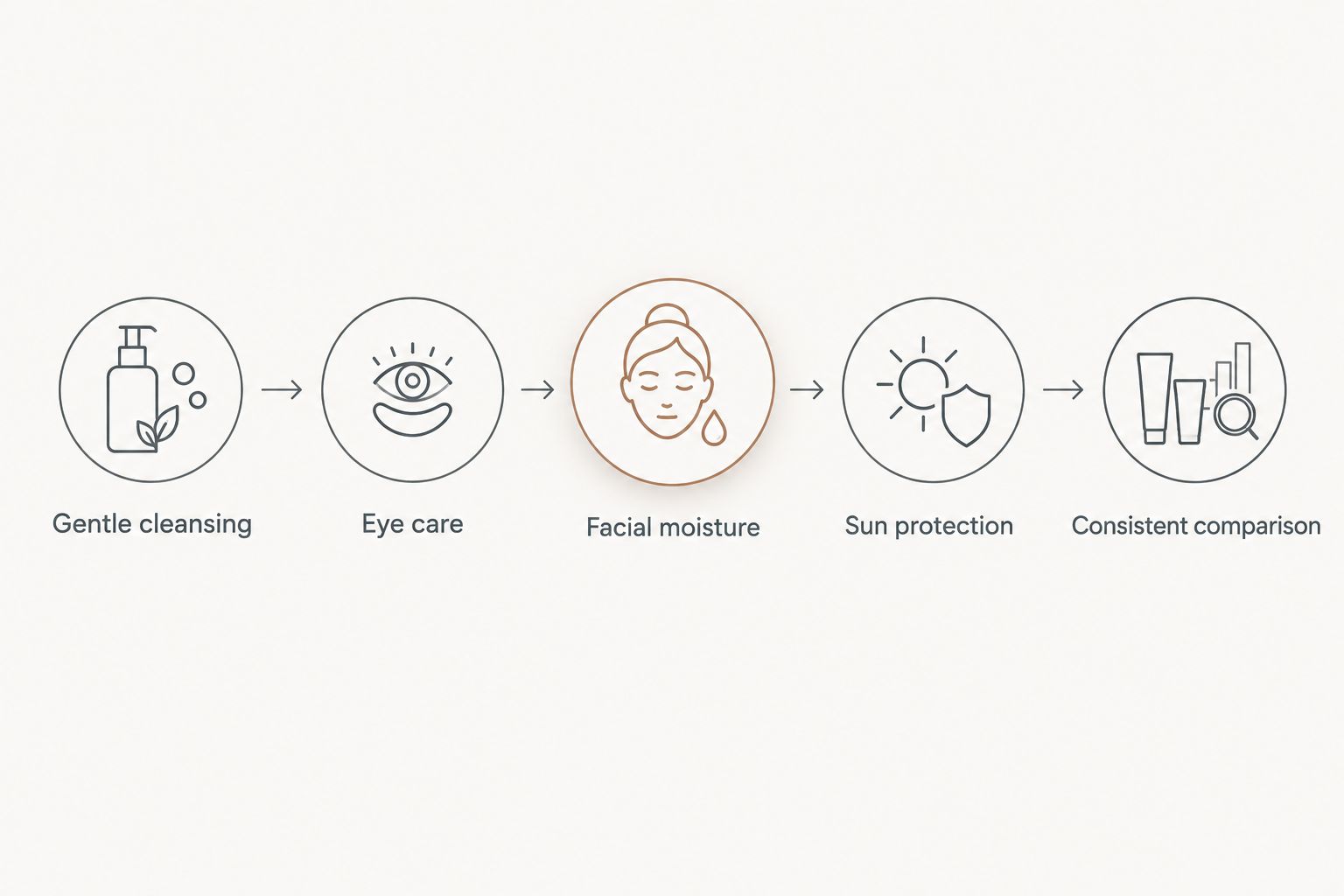
Keep your application gentle and your comparison method consistent. This simple sequence helps you distinguish a useful moisturizing step from changes caused by the rest of your day.
- Gentle cleansing. Remove makeup and cleanse without scrubbing the eye area. Follow your cleanser's directions, especially around the eyes.
- Eye care. Apply eye cream according to its label, using light contact rather than pulling the skin. Keep it out of the eyes.
- Facial moisture. Apply your facial moisturizer to its intended areas. Do not assume every face product is suitable for eyelids.
- Sun protection. Finish your morning routine with broad-spectrum SPF 30 or higher on exposed skin, following sunscreen directions and avoiding eye contact.
- Consistent comparison. Assess your eye area at the same point in your routine and under similar lighting. Record swelling separately from dryness or texture.
For sensitive skin, introduce a new product without changing several other steps at once. Stop using a product that causes burning, redness, or increased swelling; seek urgent care for swelling with breathing difficulty, eye pain, or vision changes, and get persistent or unexplained swelling assessed.
Your 2026 progress notes do not need a complicated scoring system. A short description of morning swelling, dryness, comfort, and any irritation is enough to keep those outcomes separate.
Can eye cream reduce puffiness overnight?
There is no universal overnight result for eye cream. Temporary morning swelling can change on its own, so a better-looking eye area after one application does not establish that the formula reduced puffiness.
An overnight moisturizing step can still fit your routine. Judge it by the outcome the product supports rather than treating the next morning as a guaranteed deadline.
Does more eye cream make puffiness go away faster?
More eye cream does not establish faster puffiness reduction. Follow the label rather than adding extra layers, particularly close to the lash line where product can migrate into the eyes.
A consistent application is easier to evaluate. Increasing the amount every time you dislike the mirror makes the routine less predictable without resolving the cause of swelling.
When should you stop waiting for a cosmetic result?
Stop waiting for a cosmetic result when swelling is persistent, unexplained, worsening, or accompanied by other symptoms. A professional assessment is more useful than repeatedly replacing eye creams when the underlying issue is not dryness.
For stable under-eye bags, decide whether your goal is surface comfort or a change in contour. That decision tells you whether skincare alone matches what you want.
FAQ
How long does eye cream take to reduce puffiness?
Eye cream has no universal timeline for reducing puffiness. Timing depends on the cause of swelling and evidence for the exact formula; hydration results do not establish a depuffing result.
What's the best first step for puffy eyes in the morning?
Start by distinguishing temporary morning swelling from persistent under-eye bags. A clean, cool compress is a practical option for temporary puffiness, while recurring swelling deserves attention to triggers such as allergies.
Can eye cream permanently remove under-eye bags?
Eye cream cannot remove the structural causes of persistent under-eye bags, such as protruding fat. Moisturizing care can still support the appearance and comfort of the surrounding skin.
Is Kiyomi Skin Eye Cream proven to reduce puffiness within a specific time?
No specific puffiness-reduction timeline is established here for Kiyomi Skin Eye Cream. Its stated ingredients include 5-ALA and ceramides, but ingredient presence alone does not establish a finished-product result.
Should I refrigerate my eye cream for better results?
Follow the product's storage instructions rather than assuming refrigeration improves its performance. A separate clean, cool compress lets you use cooling without changing how the formula is stored.
Can I use face moisturizer instead of eye cream?
Use a face moisturizer around the eyes only if its directions allow that use and you tolerate it there. A facial formula's moisturizing benefits do not establish suitability for eyelids or puffiness reduction.
Does tingling mean my eye cream is working?
Tingling is not evidence that an eye cream is reducing puffiness. Stop using a product that causes burning, redness, or increased swelling rather than treating irritation as progress.
One last thing
Less visible puffiness is not always a skincare result—and better hydration is not a failed result just because bags remain. Before shopping again, decide which change you actually want to see.
For your 2026 routine, keep the goal simple: gentle cleansing, targeted eye care, facial moisture, and daily sun protection. Shop the eye-care and moisturizing options above to build around those jobs, then assess each step on its own merits.