Does hyaluronic acid day cream need added SPF?
Your hyaluronic acid day cream does not need SPF built into the formula, but your daytime routine needs sunscreen when your skin is exposed to daylight. Use a broad-spectrum SPF 30 or higher over a moisturizer without labeled sun protection, or choose a moisturizer that provides that protection itself. Hyaluronic acid supports hydration; it does not replace sunscreen.
- Does hyaluronic acid day cream need SPF? Your daytime routine does; the moisturizer itself does not.
- The American Academy of Dermatology recommends broad-spectrum SPF 30 or higher for sun protection.
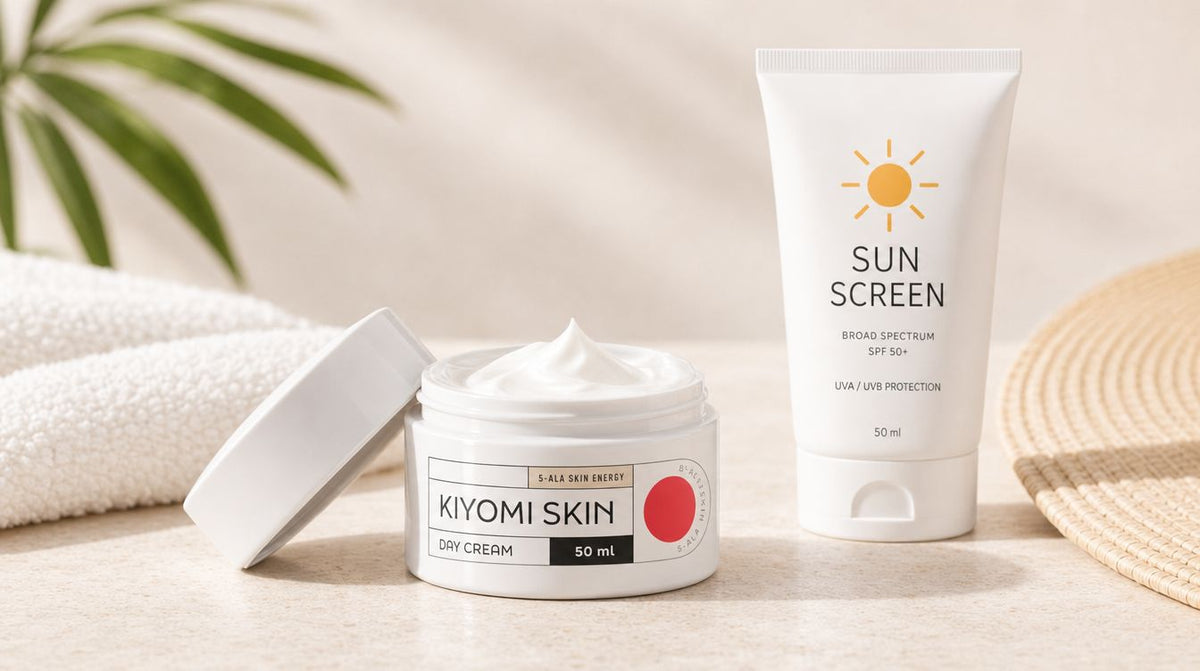
- Kiyomi Skin Day Cream provides a fragrance-free moisturizing step; choose sunscreen separately based on its labeled protection.
- Apply moisturizer before sunscreen, and never mix the formulas together.
Why this matters
Hydration and sun protection solve different problems. Hyaluronic acid helps attract and hold water, while sunscreen reduces exposure to ultraviolet radiation that contributes to sunburn and visible skin aging.
For sensitive skin, separating those jobs gives you flexibility: choose a comfortable moisturizer, then a sunscreen you will apply consistently. A hydrating finish is not evidence of UV protection.
Does hyaluronic acid day cream need added SPF?
No, SPF does not have to be part of the moisturizer. What matters is whether your finished morning routine includes adequate, labeled sun protection.
| Morning option | Best for | Main advantage | Main limitation |
|---|---|---|---|
| Kiyomi Skin Day Cream followed by sunscreen | Shoppers seeking a fragrance-free cream with hyaluronic acid and 5-ALA | Lets you select hydration and sunscreen separately | Requires a separate sun-protection step |
| Day Cream Intense followed by sunscreen | Shoppers interested in a fragrance-free moisturizer with 5-ALA and Japanese herbal extracts | Offers another moisturizing option within the same simple routine | The moisturizer name does not establish an SPF rating |
| A moisturizer labeled broad-spectrum SPF 30 or higher | Shoppers who prefer a combined morning product | Combines moisturizing and sun-protection steps | You must apply the full labeled amount, not just a light cosmetic layer |
The American Academy of Dermatology recommends broad-spectrum, water-resistant sunscreen with SPF 30 or higher. Broad-spectrum means protection against both UVA and UVB radiation; SPF primarily describes protection against sunburn-producing UVB.
Choose protection by the sunscreen label, not by the words “day cream.” That distinction applies to your 2026 routine regardless of whether your moisturizer contains hyaluronic acid, ceramides, or botanical ingredients.
What hyaluronic acid does—and what SPF does
Hyaluronic acid is a humectant: an ingredient that attracts and holds water. In a well-formulated moisturizer, it works alongside other ingredients that help soften skin and limit moisture loss.
That makes hyaluronic acid relevant when your skin feels dry or tight. Better hydration can also make dryness-related lines look less noticeable, but that cosmetic effect is different from protecting skin against ultraviolet exposure.
Sunscreen serves the protection role. UVA contributes to photoaging, while UVB is a major cause of sunburn; both can damage skin. A broad-spectrum sunscreen addresses those exposures in a way that a moisturizing ingredient alone does not.
You do not need sunscreen specifically because hyaluronic acid is an exfoliating acid—it is not. The word “acid” describes its chemistry, not a peeling action. Daily sun protection belongs in your routine because of UV exposure, not because hyaluronic acid requires a special corrective step.
Does a moisturizing finish mean a cream protects against sunlight?
A moisturizing finish does not establish any SPF protection. Neither a dewy appearance nor a comfortable layer tells you how a formula performs against UV radiation.
Look for an actual SPF value and broad-spectrum labeling. Ingredients, texture, and product names cannot substitute for that information.
Is SPF in makeup enough over day cream?
SPF 30 or higher remains the sunscreen benchmark, but makeup is often applied for coverage rather than in the amount required for its labeled protection. A separate sunscreen makes the protective step easier to apply deliberately.
Treat SPF makeup as an addition to your routine, not a reason to spread your sunscreen more thinly. Foundation should not determine whether exposed areas receive protection.
How to layer hyaluronic acid day cream and sunscreen
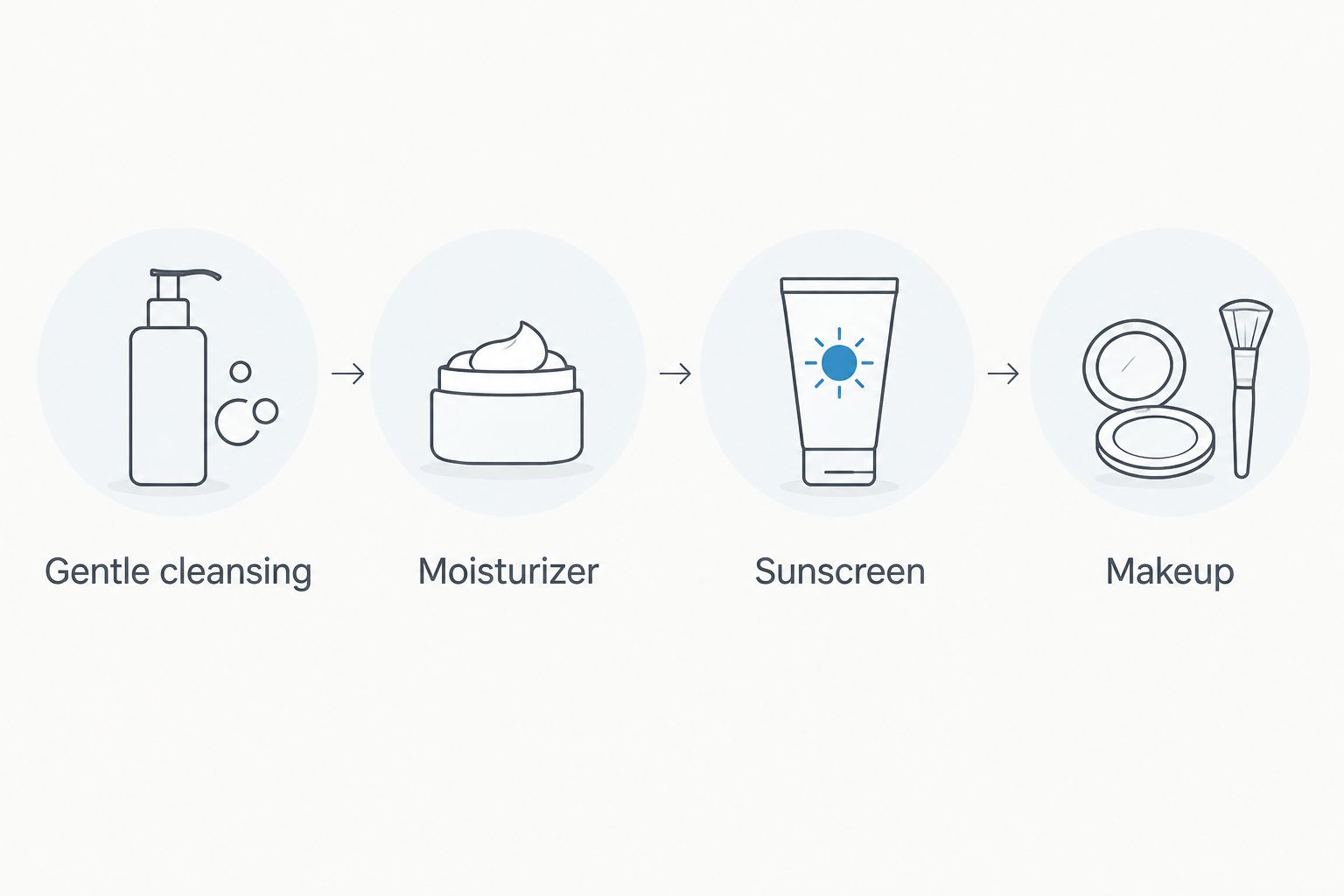
Build your 2026 morning routine around a short sequence: cleanse as needed, moisturize, and finish skincare with sunscreen. An optional serum belongs before moisturizer unless its directions specify otherwise.
- Gentle cleansing: Start with clean skin and avoid scrubbing. Use a cleanser that leaves your skin comfortable rather than trying to create a tight, squeaky-clean feeling.
- Moisturizer: Apply your hyaluronic acid day cream according to its directions. Spread it evenly, without adding so much that a heavy layer remains on the surface.
- Sunscreen: Apply broad-spectrum SPF 30 or higher as directed. Cover exposed skin, including easy-to-miss areas such as the ears, neck, and hairline.
- Makeup: Add makeup after the sunscreen has formed an even layer. Use gentle application rather than vigorous rubbing.
There is no universal waiting period between moisturizer and sunscreen. Let the moisturizer settle enough that applying sunscreen does not drag, roll, or disturb it, then follow the sunscreen's own directions.
Do not mix sunscreen into your day cream in your palm. Mixing changes the tested formula and can interfere with even application. Layering keeps the products separate and lets you use each as directed.
For outdoor exposure, the American Academy of Dermatology advises applying sunscreen about 15 minutes before going outside. Reapply approximately every 2 hours outdoors, and after swimming or sweating according to the label.
Choosing a moisturizing step for sensitive skin
Kiyomi Skin Day Cream is best for shoppers seeking a fragrance-free hyaluronic acid moisturizer to pair with a separate sunscreen. Its catalog description identifies hyaluronic acid and 5-ALA, making it a direct fit for the moisturizing step discussed here.
Day Cream Intense is another fragrance-free option, described with 5-ALA and Japanese herbal extracts. Choose between them using the current formula information, your moisturizing preferences, and how each fits your existing routine—not an assumption that “Intense” means more sun protection.
Neither a moisturizing ingredient nor 5-ALA establishes sunscreen performance. Ingredient science and finished-product evidence answer different questions; an SPF claim needs testing of the sunscreen formula itself.
For sensitive skin, introduce a new formula gradually and stop using it if irritation develops. Fragrance-free is a useful selection criterion, not a guarantee that every person will tolerate every ingredient.


The practical choice is the moisturizer you can comfortably wear beneath your sunscreen. Shop Kiyomi Skin moisturizing care for that step, then select sun protection by its broad-spectrum claim, SPF rating, and use directions.
Why your moisturizer-and-SPF routine varies
The sunscreen standard stays consistent, but the most comfortable way to reach it depends on your day. Use these factors to choose the routine rather than adding products automatically.
- Your hydration needs: If sunscreen alone leaves your skin feeling dry, a separate moisturizer gives you a dedicated hydrating layer. If a moisturizing sunscreen feels sufficient, an additional cream is not automatically necessary.
- Your formula preferences: A separate fragrance-free moisturizer lets you choose hydration independently of the sunscreen's filters, finish, and texture.
- Your exposure: Outdoor time, swimming, and sweating make application and reapplication planning especially important. A morning application is not an all-day outdoor plan.
- Your layering behavior: A moisturizer that rolls underneath sunscreen makes even application harder. Adjust the moisturizing layer or choose a different pairing rather than reducing the sunscreen amount.
- Your product label: Broad-spectrum protection, SPF, water resistance, and application directions determine how to use sunscreen. The moisturizer's ingredient list cannot supply those instructions.
For a simple 2026 routine, solve the biggest friction first. If you regularly skip sunscreen because your layers feel heavy, simplify the optional products before compromising the sun-protection step.
Can I skip moisturizer if my sunscreen contains hyaluronic acid?
SPF 30 or higher sunscreen can serve as your only morning moisturizing product if the formula provides enough comfort for your skin. A separate day cream is useful when you need more hydration, not because everyone must apply both.
Judge the combination by how your skin feels and whether you can apply sunscreen evenly. Tightness suggests your routine needs a moisturizing adjustment; a comfortable finish means another layer is optional.
This is where a simple Japanese-inspired approach helps: give each step a purpose. You do not need a serum, mist, cream, and sunscreen merely to make the routine feel complete.
Do I need sunscreen with day cream on cloudy days?
SPF 30 or higher remains appropriate on cloudy days when you are exposed to daylight outdoors. Clouds do not block all ultraviolet radiation, so weather is not a reliable substitute for sun protection.
Window exposure also matters because ordinary glass does not block all UVA. If you spend substantial time beside a sunny window, include that exposure when planning your routine rather than treating “indoors” as a single condition.
Sunscreen is only one part of the plan. Shade, protective clothing, and a broad-brimmed hat reduce exposure without requiring another skincare layer.
How much SPF do I need over hyaluronic acid day cream?
SPF 30 or higher, with broad-spectrum protection, is the American Academy of Dermatology's recommendation. A higher rating does not remove the need to apply enough or to reapply during outdoor exposure.
Follow the amount and directions on your sunscreen label. Do not reduce the application to avoid shine, and do not add ratings together: SPF in a moisturizer plus SPF in makeup does not create their combined numerical value.
For your 2026 routine, prioritize consistent coverage over complicated layering. Even a carefully chosen sunscreen cannot protect areas you leave uncovered.
FAQ
Does hyaluronic acid day cream need SPF built in?
No, hyaluronic acid day cream does not need built-in SPF if you apply a separate broad-spectrum SPF 30 or higher sunscreen. Hydration and sun protection can come from separate products.
Should I put sunscreen before or after hyaluronic acid moisturizer?
Apply sunscreen after hyaluronic acid moisturizer and before makeup. Let the moisturizer settle enough to avoid disturbing the sunscreen as you spread it.
Can I mix sunscreen with my day cream?
No, keep sunscreen and day cream separate. Mixing changes the tested sunscreen formula and can interfere with an even protective layer.
Does hyaluronic acid make my skin more sensitive to the sun?
Hyaluronic acid is a moisturizing humectant, not an exfoliating acid that creates a special sunscreen requirement. Use sunscreen because of UV exposure, regardless of whether your moisturizer contains hyaluronic acid.
What SPF should I use over a hydrating day cream?
Choose broad-spectrum SPF 30 or higher, consistent with American Academy of Dermatology guidance. Follow the label for application, water resistance, and reapplication.
Do I need to reapply moisturizer whenever I reapply sunscreen?
No, sunscreen reapplication does not automatically require another moisturizer layer. Reapply sunscreen as directed, especially during outdoor exposure, swimming, or sweating.
Is Kiyomi Skin Day Cream fragrance-free?
Yes, Kiyomi Skin Day Cream is described as fragrance-free and contains hyaluronic acid and 5-ALA. Choose a separately labeled sunscreen for the sun-protection step.
One last thing
“Day cream” describes when you use a moisturizer, not how it protects against sunlight. Before your next morning application, check for an actual broad-spectrum SPF label rather than relying on the front-of-pack name.
Keep your 2026 routine easy to repeat: comfortable hydration, labeled sun protection, and sensible exposure habits. That is a practical well-aging routine—not a promise to stop aging, and not a reason to keep adding more products.