Is cleansing oil better than foam cleanser for dry skin?
Cleansing oil is often the better starting point for dry skin when you need to remove makeup or water-resistant sunscreen, but it is not automatically gentler than foam. A mild, fragrance-free foaming cleanser can also suit dry skin; choose by the complete formula, what you need to remove, and whether your face feels comfortable after rinsing.
- Is cleansing oil better than foam cleanser for dry skin? Often for makeup removal, but formulation matters more than bubbles.
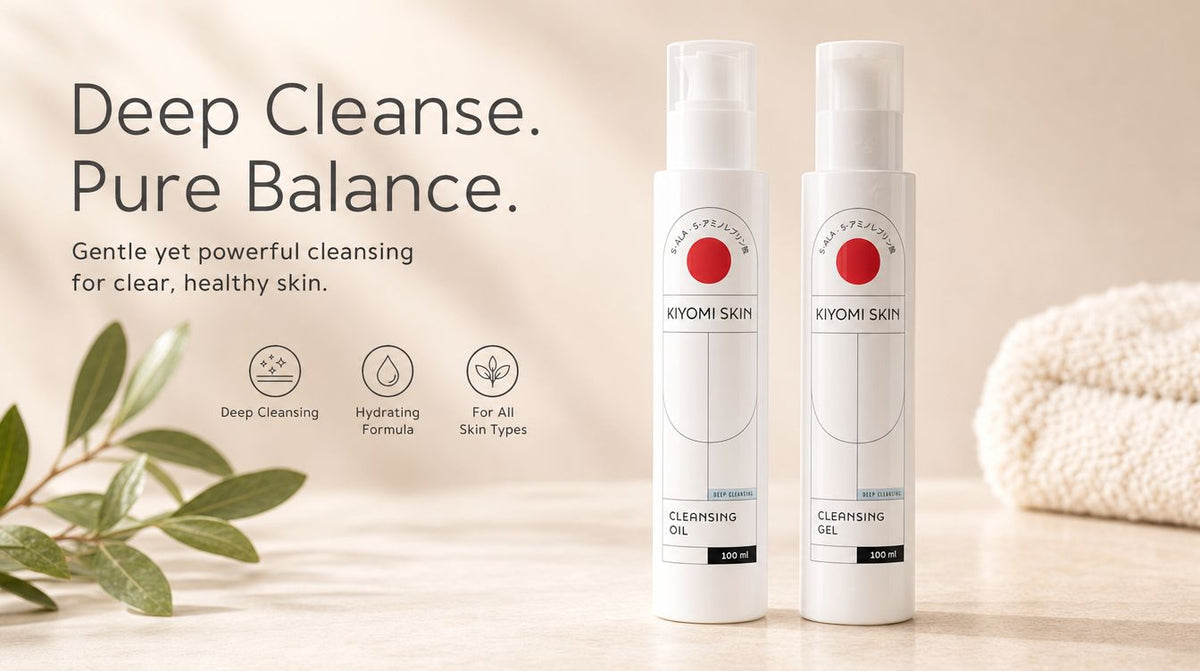
- Kiyomi Skin offers fragrance-free Cleansing Oil and gently foaming Cleansing Gel for different cleansing preferences.
- Choose cleansing oil for oily residue; choose mild foam when you prefer a lathering wash.
- Follow cleansing with moisturizer, and double cleanse only when your first wash leaves something behind.
Is cleansing oil better than foam cleanser for dry skin?
Cleansing oil has an advantage for dissolving oily makeup and sunscreen residue. Foam has no automatic disadvantage: the cleansing ingredients and your washing technique matter more than the amount of lather.
For your 2026 routine, compare the job each cleanser performs rather than treating oil as nourishing by definition or foam as drying by definition.
| Option | Best for | Main advantage | Main trade-off |
|---|---|---|---|
| Cleansing Oil | Dry-skin shoppers removing makeup and oily buildup | Fragrance-free oil-cleansing option in a 100 ml size | Requires thorough rinsing; follow the product's application directions |
| Cleansing Gel | Shoppers who prefer a gently foaming face wash | Fragrance-free, gently foaming cleanser in a 100 ml size | Foaming texture alone does not establish how your skin will feel afterward |
Kiyomi Skin Cleansing Oil is best for shoppers seeking a fragrance-free oil cleanser for makeup and buildup removal. Choose Cleansing Gel instead when you prefer a lathering wash and it leaves your skin comfortable.
Why this matters for dry, sensitive skin
Dry skin needs cleansing that removes unwanted residue without leaving your face feeling stripped. The skin barrier—the outer layer that helps retain moisture—depends partly on lipids, or fats, between skin cells. Harsh washing can disturb that barrier and make existing dryness feel worse.
This matters for healthy-looking aging skin, too. Dryness can make fine lines look more noticeable, so a comfortable cleansing routine supports the moisturizing steps that follow. Cleansing is preparation, not a wrinkle treatment.
A useful 2026 shopping rule is simple: buy for the cleansing task, then judge the after-feel. A cleanser should remove what you wore without requiring repeated scrubbing or leaving you eager to escape a tight, squeaky sensation.
Cleansing oil: best for makeup and oily residue
Oil-based cleansers help loosen oil-soluble material, including oily makeup and sebum. Rinse-off cleansing oils also contain ingredients that help the formula mix with water and wash away. That makes a formulated cleansing oil different from applying a kitchen oil and wiping it off.
For dry skin, the practical benefit is easier removal of stubborn residue without relying on vigorous rubbing. The goal is clean skin with less friction—not leaving a heavy layer of cleansing oil behind as a substitute for moisturizer.
Choose this route when your main challenge is removing foundation, layered makeup, or water-resistant sunscreen. Follow the label for application and rinsing, especially around the eyes; a facial cleanser is not automatically intended for every eye-makeup removal task.
The limitation is equally practical. If the cleanser leaves unwanted residue after correct rinsing, reassess the amount, technique, or formula rather than scrubbing harder. An oil texture does not prove that a cleanser will suit every dry or sensitive complexion.
Gentle foam: best for a lathering cleanse
Foam forms when cleansing ingredients interact with water and air. Those cleansing ingredients are called surfactants: they help lift oil and dirt so you can rinse them away. Some surfactant systems feel harsher than others, but bubbles alone do not identify them.
A gently foaming gel is a reasonable choice when you prefer lather and do not need a separate makeup-removal step. You do not need to abandon a cleanser that cleans effectively and leaves your face comfortable simply because it foams.
Kiyomi Skin Cleansing Gel is described as gently foaming and fragrance-free. That makes it an option for shoppers who want a foaming texture without added fragrance, rather than evidence that all gel cleansers behave alike.
The trade-off is that a pleasant lather does not tell you whether one wash will remove everything you wore. Assess the result after rinsing. If stubborn makeup remains, use a suitable removal step instead of extending the wash or increasing pressure.
Why cleansing results vary
Your best cleanser depends on more than whether the bottle says oil, gel, or foam. These factors explain why the same category can feel different from one formula or routine to another:
- Cleansing ingredients: The complete surfactant system matters more than a single ingredient or the volume of bubbles.
- What you wore: Light daily residue creates a different cleansing task from layered makeup or water-resistant sunscreen.
- Fragrance and individual triggers: Fragrance-free is a useful selection criterion, but it does not establish universal tolerance.
- Water and friction: Hot water, washcloth scrubbing, and repeated rubbing can make a mild cleansing routine feel harsher.
- Extra cleansing steps: A second wash adds cleansing exposure. It needs a reason, not just a place in a routine.
- Moisturizing afterward: A cleanser removes residue; a leave-on moisturizer has a different role in supporting hydration.
In 2026, use these factors as your comparison checklist. A product's texture is one clue, not the final verdict.
How to build a comfortable cleansing routine
Start with the smallest routine that removes what you wear and leaves your skin comfortable. You can add a targeted serum later without turning cleansing into a long ritual.
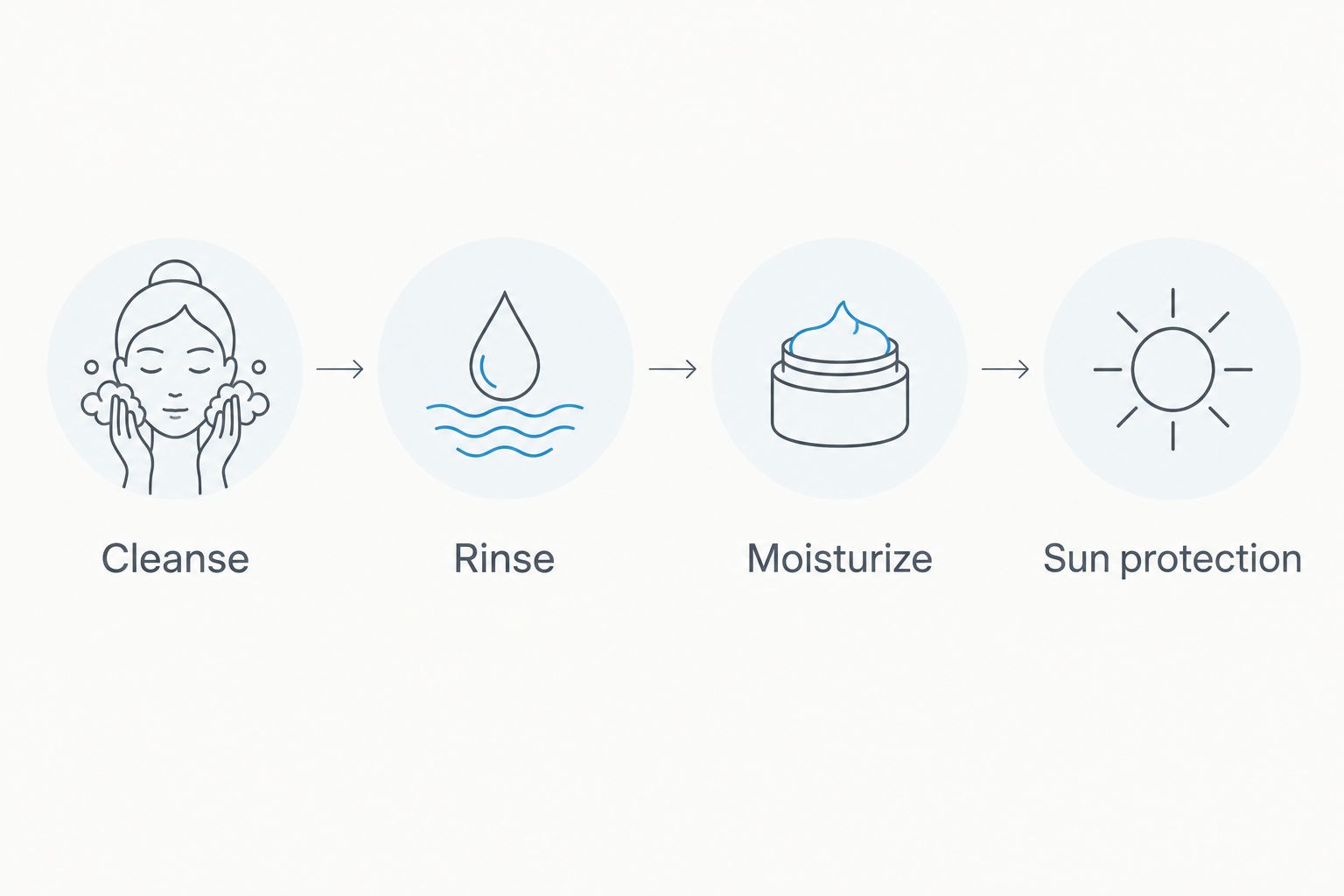
Cleanse
Choose cleansing oil when you need help removing oily makeup or sunscreen residue. Choose a gentle foaming wash when it meets your removal needs and you enjoy the texture. Follow the cleanser's directions rather than copying another formula's application method.
Use your fingertips and light pressure. More force is not a better cleanse, and a longer massage is not proof that you removed more dirt.
Rinse
Rinse thoroughly with lukewarm water and gently pat your face with a soft towel. Avoid chasing a squeaky finish; the goal is removal of unwanted residue, not a stripped sensation.
If visible makeup remains, address that specific problem with an appropriate removal step. Do not automatically repeat the entire wash because your skin does not feel squeaky.
Moisturize
Apply your moisturizer after cleansing, while your skin is still slightly damp if the product directions allow. This is the leave-on step for supporting moisture, rather than asking a rinse-off cleanser to do everything.
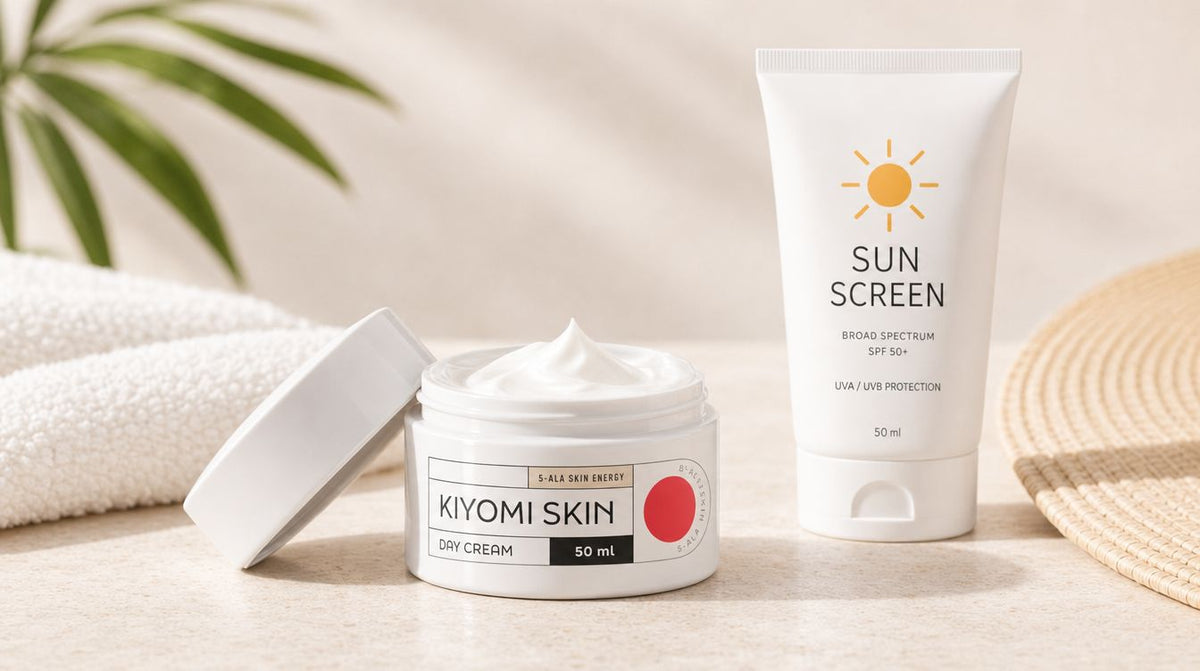
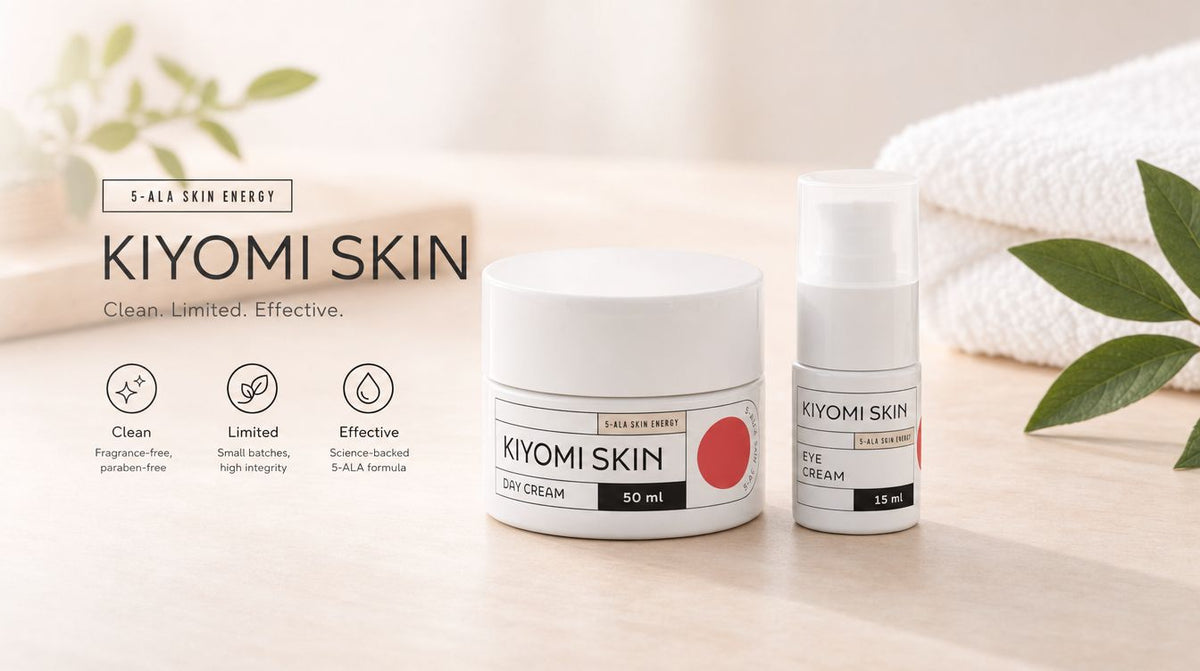
Day Cream is a fragrance-free option containing 5-ALA and hyaluronic acid, supplied in a 50 ml size. Its role in this routine is moisturizing; its ingredients do not establish that either cleanser performs better.
Sun protection
Finish your morning routine with a broad-spectrum sunscreen rated SPF 30 or higher, following its label for application and reapplication. A day cream is not a substitute for sunscreen unless its labeling specifically establishes sun protection.
A brief sensitive-skin note: introduce one new formula at a time and test it on a small area before broader use. Stop using a product that causes irritation, and seek professional advice for persistent redness, burning, or cracking.
Do you need to double cleanse if your skin is dry?
Dry skin does not automatically need double cleansing. Use an oil cleanser followed by a gentle water-based cleanser when the first wash does not adequately remove what you wore or leaves residue you do not want.
Double cleansing describes a sequence, not a requirement for healthy skin. If one cleanser does the job, adding another does not make the routine more complete. If you wear stubborn makeup, a deliberate removal step can be more useful than washing repeatedly with the same cleanser.
For a simple Japanese-inspired routine in 2026, keep the emphasis on purposeful steps. Cleanse to remove residue, moisturize for comfort, and use sunscreen during the day. More products are optional.
How can you tell whether your cleanser is too drying?
A cleanser that repeatedly leaves your face tight, uncomfortable, or visibly flaky deserves a routine review. Look at washing temperature, rubbing, frequency, and the formula before assuming you need a different cleanser category.
Change one variable at a time so you can identify what improves comfort. For example, stop scrubbing and use lukewarm water before adding another cleansing step. Do not judge a cleanser only by how your face feels after several leave-on products have covered the initial tightness.
Should you choose a cleanser because it contains 5-ALA?
Choose your cleanser first for cleansing performance, formula suitability, and comfort. 5-ALA is an ingredient used in Kiyomi Skin skincare, but ingredient science is not the same as evidence about a finished cleanser.
A rinse-off product also has a different job from a leave-on serum or moisturizer. Do not use claims about cellular energy or another product's study to predict how a cleanser will affect your skin. For this decision, fragrance status, removal needs, and post-rinse comfort are more directly useful.
Shop the cleansing texture that fits your routine
Choose Cleansing Oil for an oil-based removal step or Cleansing Gel for a gently foaming wash. Both are described as fragrance-free; neither choice requires building a complicated routine around it.
These Kiyomi Skin cleansing options let you select by texture and cleansing task. Keep the moisturizer you already enjoy, and add a second cleanser only if it solves an actual removal problem.


FAQ
Is cleansing oil better than foam cleanser for dry skin?
Cleansing oil is often more useful for removing oily makeup and sunscreen residue, but it is not automatically gentler than foam. A mild, fragrance-free foaming cleanser can also suit dry skin when it cleans effectively without leaving tightness.
Can I use a foaming cleanser if my skin is dry?
Yes, dry skin can use a mild foaming cleanser. Judge the complete formula and how your skin feels after rinsing rather than treating lather as proof that a cleanser is harsh.
Do I need a foaming cleanser after cleansing oil?
You do not automatically need a foaming cleanser after cleansing oil. Add a second cleanse when the first wash leaves makeup or unwanted residue, following the products' directions.
Does cleansing oil replace moisturizer?
Cleansing oil does not replace moisturizer. A rinse-off cleanser removes residue, while a leave-on moisturizer supports hydration after washing.
Should dry, sensitive skin choose fragrance-free cleansing products?
Fragrance-free cleansing products are a useful starting point for dry, sensitive skin, especially when fragrance is a known trigger. Individual formula tolerance still matters.
Is a squeaky-clean feeling good for dry skin?
A squeaky-clean feeling is not a cleansing goal for dry skin. Look for effective removal with a comfortable after-feel rather than tightness or the urge to moisturize immediately for relief.
Should I change a comfortable foaming cleanser to cleansing oil in 2026?
You do not need to replace a comfortable, effective foaming cleanser simply to follow a 2026 trend. Consider cleansing oil when it addresses a specific need, such as removing oily makeup with less rubbing.
One last thing
Your best cleanser is not necessarily the one that leaves your skin feeling the most different. Effective cleansing can feel uneventful: residue comes off, your face feels comfortable, and you move on to moisturizer. Keep that as your standard before adding another wash.