Can eye cream remove dark circles completely?
No—eye cream cannot reliably remove dark circles completely. It can improve the appearance of dryness-related shadows and, depending on the formula, address some discoloration, but it cannot erase every cause of under-eye darkness. Your results depend on whether pigment, visible blood vessels, puffiness, or facial structure creates the dark appearance.
- Can eye cream remove dark circles completely? No—pigment, visible vessels, and structural shadows need different approaches.
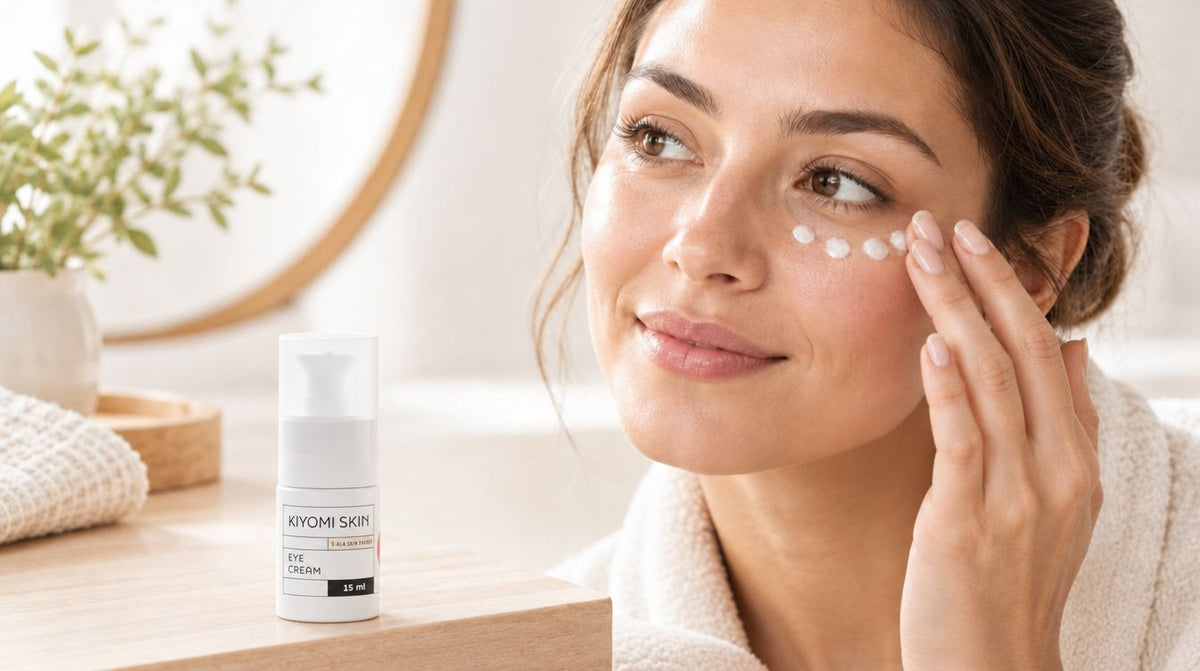
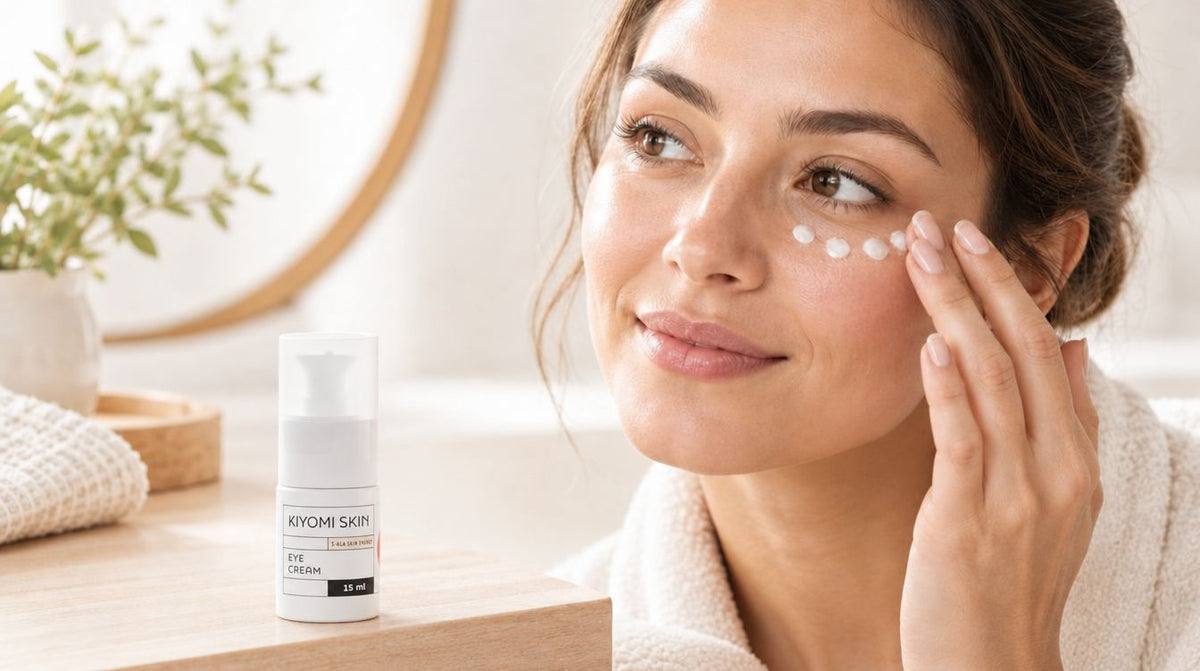
- Kiyomi Skin Eye Cream offers 5-ALA and ceramides for shoppers seeking targeted eye care.
- Choose under-eye care by the cause of darkness, not by promises of complete removal.
- Gentle cleansing, moisturizing, and daily sunscreen support a practical sensitive-skin routine.
Why this matters
Buying a stronger cream does not solve a mismatch between a product and the cause of darkness. A moisturizer addresses dry skin; it does not fill a hollow beneath your eye.
For your 2026 routine, start with a realistic goal: comfortable skin and an improved appearance, rather than a promise of perfectly uniform color. That makes choosing—and evaluating—eye care much simpler.
Can eye cream remove dark circles completely?
Eye cream is supportive skincare, not a universal dark-circle treatment. These two products fit different roles in a simple routine:
| Product | Best for | Supported formula details |
|---|---|---|
| Eye Cream | Shoppers seeking dedicated eye-area care | 5-ALA and ceramides; 15 mL format |
| Day Cream | Shoppers seeking a fragrance-free facial moisturizer | 5-ALA and hyaluronic acid; 50 mL format |
The distinction matters because dark circles describe an appearance, not a single diagnosis. Brown discoloration, bluish tones, and shadows from a hollow can look similar in a mirror while responding differently to skincare.
You can also have more than one contributor. For example, dry skin can sit over a naturally hollow under-eye area; improving dryness leaves the underlying shadow in place.
Pigment-related circles: improvement depends on the cause
Brown-looking circles can involve excess pigment, including pigmentation associated with sun exposure or repeated inflammation. An eye product formulated to address uneven tone serves a different purpose from a basic moisturizer.
The benefit of a targeted approach is that it addresses color rather than simply adding moisture. The limitation is that appearance alone does not establish why the pigment developed, and a cosmetic product does not guarantee clearance.
Avoid selecting an aggressive facial treatment and assuming it belongs near your eyes. Choose products explicitly intended for the area where you will apply them. If discoloration persists, a dermatologist can help distinguish pigmentation from other contributors before you add more steps.
Visible vessels: moisturizing does not erase underlying color
Thin under-eye skin can make underlying blood vessels more noticeable, producing blue or purple-looking darkness. That appearance is different from a brown patch caused primarily by pigment.
Moisturizing can improve dry texture around the eyes, but it does not remove the vessels beneath the skin. The practical benefit is better skin comfort and surface appearance, not guaranteed correction of the underlying color.
Do not assume a brightening claim covers every blue-toned circle. Read what a formula actually claims to address, and separate temporary cosmetic improvement from a change in the source of the darkness.
Structural shadows: cream cannot fill a tear trough
A tear trough is the groove between the lower eyelid and cheek. When that groove creates a shadow, an eye cream cannot replace the missing volume or change the underlying facial structure.
Lighting often makes structural shadows more obvious. Overhead light can emphasize a hollow that looks less pronounced in soft, frontal light; that difference does not mean your skincare suddenly worked or stopped working.
For structural darkness, moisturizing still has a useful role in maintaining the skin's surface. Its limitation is equally clear: a smoother surface does not eliminate an anatomical shadow. Seek an individual clinical assessment if the hollow itself is your main concern.
Dryness and puffiness: separate texture from darkness
Dryness can make fine surface lines and uneven texture more noticeable. Moisturizing is a sensible first step when tightness or flaking accompanies the tired-looking appearance.
Puffiness is different. A raised area beneath the eye can cast a shadow, so reducing the appearance of dry texture does not necessarily address the puffiness creating that shadow.
This is why a useful 2026 eye-care goal is specific: improve comfort, manage dry texture, or investigate persistent discoloration. Asking one cream to accomplish all three makes results harder to judge and product claims easier to misunderstand.
Why eye-cream results vary
Your under-eye appearance depends on more than the ingredient highlighted on the front of a jar. These factors explain why the same product does not create the same visible result for everyone:
- The source of darkness. Pigment, visible vessels, and structural shadows are different targets.
- Overlapping causes. A product can improve dryness while leaving pigment or a hollow unchanged.
- The complete formula. Ingredient research does not establish the performance or tolerability of every finished product containing that ingredient.
- Skin irritation and rubbing. Irritation can contribute to discoloration, and repeated rubbing can aggravate delicate skin.
- Sun exposure and daily habits. Sun protection helps limit UV-related pigmentation, while consistent care makes changes easier to evaluate.
- Lighting and comparison conditions. A bathroom spotlight and daylight from a window can make the same under-eye area look different.
A useful product decision starts with the first factor. Identify what you want to improve before comparing ingredient lists or adding another treatment.
How to choose gentle eye care in 2026
Start with the job you need the product to do. If your main concern is dry, uncomfortable skin, prioritize a moisturizing formula intended for the eye area rather than the longest list of active ingredients.
Ceramides are lipids naturally present in the skin barrier—the outer layer that helps retain moisture. Hyaluronic acid is a humectant, meaning it attracts and holds water. These ingredient roles explain why they appear in moisturizing skincare; they do not prove that a particular product removes dark circles.
Kiyomi Skin Eye Cream is best for shoppers seeking ceramide-based eye care, not complete dark-circle removal. Its listed ingredients include 5-ALA and ceramides. Treat 5-ALA as an ingredient feature, not evidence that this finished formula changes under-eye pigmentation, blood vessels, or facial structure.
For the rest of your face, Kiyomi Skin Day Cream offers a fragrance-free formula with 5-ALA and hyaluronic acid. It fills the facial-moisturizing role without requiring you to turn every step into a targeted treatment.
Sensitive-skin note: introduce one new product at a time, follow its directions and eye-area restrictions, and stop if irritation develops. Seek medical advice for persistent symptoms or sudden, one-sided darkness with swelling, pain, or vision changes.


A simple routine for comfortable under-eye skin
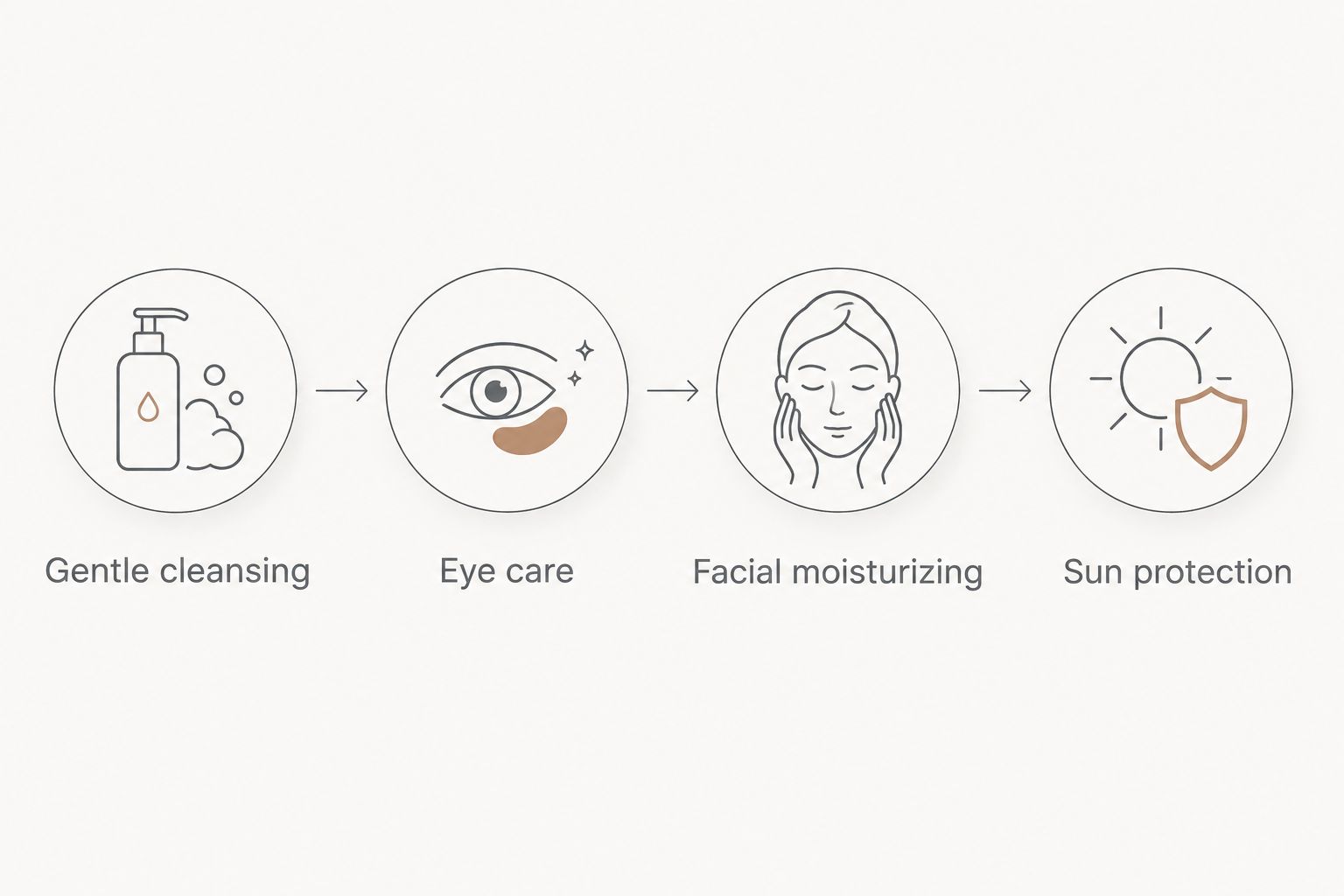
A Japanese-inspired routine does not need to be long. Give each step a clear purpose, and avoid adding a second treatment simply because the first one has not erased a structural shadow.
- Gentle cleansing. Remove makeup and daily buildup without scrubbing the under-eye area. Follow the cleanser's directions, including any instructions about eye contact.
- Eye care. Apply your eye product according to its label. Keep it out of your eyes and do not assume that more product produces a better result.
- Facial moisturizing. Use your face moisturizer where directed to support comfortable, hydrated skin. An eye cream and a face cream serve related but distinct application needs.
- Sun protection. During the day, use broad-spectrum sunscreen with SPF 30 or higher, following its eye-area directions. Sunglasses add practical protection around the eyes.
When outdoors, reapply sunscreen every 2 hours and after swimming or sweating, following the label. Sunscreen helps prevent UV-related damage and pigmentation; it is not an instant dark-circle eraser.
At night, keep cleansing and moisturizing consistent. You do not need to add a new exfoliant or serum near your eyes to make the routine feel complete.
How long should you give an eye cream to work?
There is no universal timeline for dark-circle improvement because the cause and the formula differ. A product's tested timeline, when available, applies to the tested formulation, participants, and outcome—not automatically to every eye cream.
Separate skin feel from visible color. A moisturizing product can change how dry skin feels without establishing that pigmentation or structural darkness has changed.
For a fair 2026 comparison, photograph your under-eye area in the same lighting, at the same angle, and without makeup. Keep the rest of your routine stable so you are not trying to interpret several changes at once.
Is an eye cream better than concealer for dark circles?
Eye cream and concealer do different jobs. Eye cream provides skincare; concealer provides temporary cosmetic coverage while you wear it.
Concealer is the more direct option when your immediate goal is to make darkness less visible. Its trade-off is that it does not treat the cause, while eye care can support dry skin without offering comparable coverage.
Neither option needs to replace the other. You can moisturize for comfort and use makeup for appearance, without interpreting coverage as a lasting skincare result.
When should you see a dermatologist about dark circles?
See a dermatologist when persistent dark circles bother you, especially if you cannot tell whether pigment, irritation, or facial structure is responsible. A cause-based assessment is more useful than repeatedly switching creams.
Bring the names of your skincare products and explain whether you also have itching, scaling, or puffiness. Those details help distinguish a cosmetic concern from an underlying skin problem.
FAQ
Can eye cream remove dark circles completely?
No—eye cream cannot reliably remove dark circles completely. It can improve some contributing concerns, but pigment, visible blood vessels, and structural shadows respond differently.
What's the best eye cream for dark circles and sensitive skin?
The best choice matches the cause of darkness and your skin's needs. For dry under-eye skin, prioritize an eye-area moisturizing formula rather than assuming a stronger active ingredient will work better.
Does Kiyomi Skin Eye Cream contain ingredients for moisturizing care?
Kiyomi Skin Eye Cream lists 5-ALA and ceramides. Ceramides have a recognized role in the skin barrier, but their presence does not establish complete dark-circle removal by the finished product.
Can moisturizer get rid of hollow under-eye shadows?
No—moisturizer cannot fill an anatomical hollow beneath the eye. It can improve dry surface texture without removing the shadow created by that hollow.
What SPF should I use if I have dark circles?
Use broad-spectrum SPF 30 or higher as part of daily sun protection, following the product's eye-area directions. Sunscreen helps limit UV-related pigmentation but does not erase every cause of under-eye darkness.
Will more sleep remove my dark circles?
More sleep is not a guaranteed solution for dark circles. Under-eye darkness also involves factors such as inherited features, pigmentation, visible vessels, and facial structure.
Can I put my facial serum under my eyes?
Use a facial serum near your eyes only if its directions permit that application. A product intended for the face is not automatically suitable for eyelids or the immediate eye area.
One last thing
Changing the light can change a shadow without changing your skin. Before replacing an eye cream, compare your under-eye area in consistent lighting and decide whether you are evaluating color, texture, or a hollow.
Make that distinction your final 2026 shopping check. Choose eye care for its supported role, pair it with a simple moisturizing routine, and shop with a clear goal rather than a promise of complete removal.