Best eye creams for dark circles in 2026
The best eye cream for dark circles matches the cause: moisture for dryness, caffeine for temporary puffiness, or tint for immediate coverage. Kiyomi Skin Eye Cream is our catalog pick for shoppers building a simple 5-ALA eye-care routine; this 2026 guide separates that role from proven dark-circle correction.
- The best eye cream for dark circles depends on whether dryness, pigmentation, puffiness, or shadows dominate.
- Kiyomi Skin Eye Cream pairs 5-ALA with ceramides for a simple eye-care step, without established dark-circle efficacy.
- Choose fragrance-free eye care by checking the individual formula, not the brand's broader positioning.
- Caffeine targets temporary puffiness; tinted eye cream offers coverage rather than treatment.
Why this matters
Dark circles describe an appearance, not one skin condition. Brown pigmentation, visible blood vessels, puffiness, and shadows from under-eye hollows need different approaches; several can occur together.
Start with your main concern before choosing an ingredient. The Eye Cream in our catalog contains 5-ALA and ceramides, but that ingredient pairing alone does not establish that the finished formula reduces dark circles.
For sensitive skin, a comfortable routine is a better starting point than stacking brightening ingredients. Your eye cream should fit the skin you have, not require you to tolerate persistent stinging to keep using it.
What makes the best eye cream for dark circles?
Use these criteria to choose your eye care in 2026:
- Cause match: Decide whether you mainly see discoloration, swelling, dry texture, or a hollow that casts a shadow.
- Formula suitability: Read the full ingredient list and eye-area directions. An ingredient's reputation does not establish tolerance of the whole formula.
- Moisture support: Look for humectants, which attract water, and emollients, which help soften skin, when dryness is prominent.
- Fragrance verification: Confirm fragrance-free wording for the specific product. Do not assume every product in a range shares that description.
- Evidence quality: Separate ingredient research, finished-product measurements, and shopper questionnaires. They answer different questions.
- Routine fit: Choose a texture you can apply without rubbing and wear comfortably beneath sunscreen or makeup.
Eye creams at a glance
This shortlist combines one named catalog product with three formula types. It is a decision guide, not a head-to-head product trial or a claim that one formula outperforms another.
| Ranked option | Best for | Standout feature | Key limitation |
|---|---|---|---|
| Kiyomi Skin Eye Cream | Adding eye care to an existing 5-ALA routine | Contains 5-ALA and ceramides | Dark-circle improvement is not established by the supplied evidence |
| Fragrance-free moisturizing eye cream | Dry, easily irritated under-eyes | Prioritizes moisture and verified fragrance-free formulation | Moisturizing does not remove structural hollows |
| Caffeine eye cream | Puffiness that contributes to a tired appearance | Caffeine is used in topical care for temporary puffiness | Benefits depend on formulation; it does not fill hollows |
| Tinted eye cream | Immediate cosmetic coverage | Pigment changes how discoloration looks while worn | Coverage washes off and does not treat the cause |
1. Kiyomi Skin Eye Cream: best for a simple 5-ALA routine
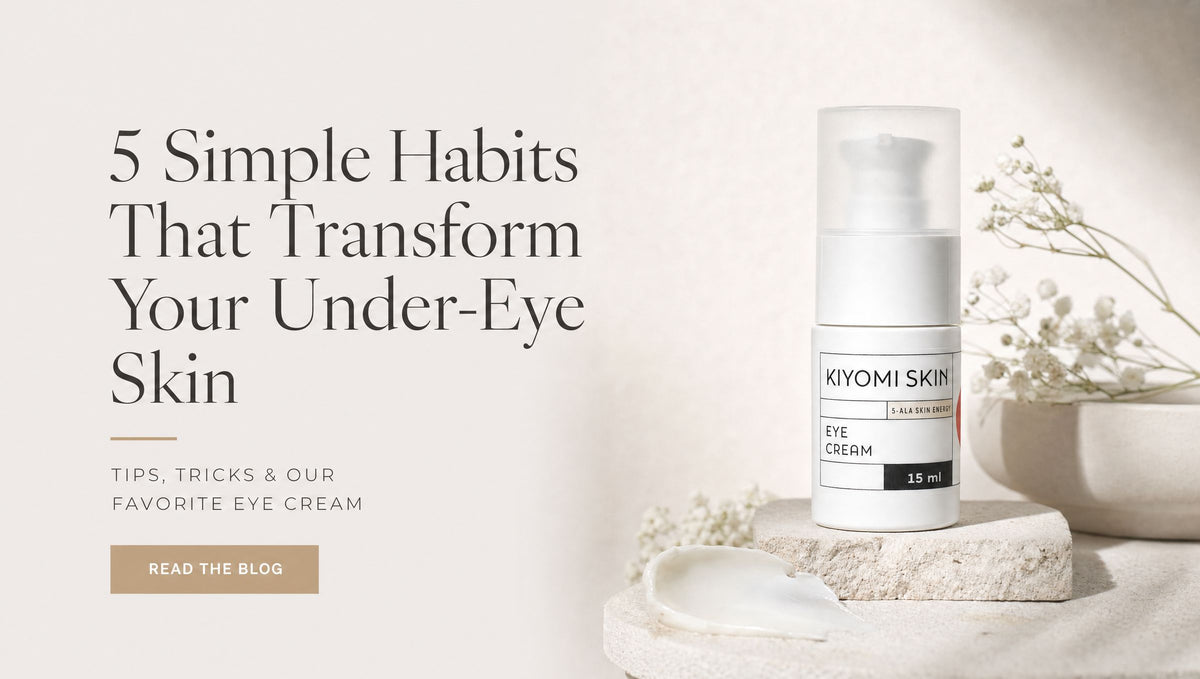
Kiyomi Skin Eye Cream contains 5-ALA and ceramides and comes in a 15 ml size. It gives shoppers already interested in the range a dedicated eye-care option without turning the routine into a collection of unrelated treatments.
Ceramides are lipids naturally found in the skin barrier, the outer layer that helps retain moisture. Their presence is relevant to moisturizing care, but ingredient science is not proof that this finished eye cream corrects pigmentation, puffiness, or wrinkles.
Best for: Shoppers who want a dedicated eye cream within a simple 5-ALA skincare routine.
Kiyomi Skin Eye Cream pros:
- Contains ceramides, an ingredient category relevant to barrier-focused skincare.
- Includes 5-ALA, the ingredient around which the brand builds its range.
- Offers a dedicated eye-care format rather than requiring you to repurpose a face serum.
Kiyomi Skin Eye Cream considerations:
- The supplied evidence does not establish a finished-product effect on dark circles.
- Fragrance-free status and individual sensitive-skin suitability need formula-specific confirmation.
In 2026, choose this product for its place in your routine rather than an unsupported promise to erase darkness. Follow its application directions and keep the product out of your eyes.
Verdict: Buy for a dedicated 5-ALA eye-care step, not as a proven dark-circle treatment.
Named market alternatives to consider
Search results for dark-circle eye care often name specific products rather than formula categories. The options below are included so you can compare the market with Kiyomi Skin Eye Cream. They are not independently tested or ranked here; product descriptions reflect each brand’s product page and can change.
- RoC Derm Correxion Eye Repair Dark Circle Cream: a 15 mL eye cream the manufacturer positions for persistent dark circles. Consider its retinol-containing formula and directions before adding it to a routine.
- CeraVe Eye Repair Cream: a fragrance-free option with ceramides, hyaluronic acid, and niacinamide on the manufacturer’s ingredient list. Consider it when moisture support and a lightweight texture are priorities.
- The INKEY List Caffeine Eye Cream: a caffeine-based eye cream marketed for puffiness and tired-looking eyes. Consider it when puffiness is the main concern, not as a solution for a structural hollow.
- e.l.f. Holy Hydration! Eye Cream: a rich eye cream with hyaluronic acid and peptides listed by the manufacturer. Consider its texture and how it wears under makeup if dryness is prominent.
- The Ordinary Caffeine Solution 5% + EGCG Eye Serum: a water-based caffeine and EGCG serum for the eye area. Consider it for a lightweight option when puffiness contributes to a tired-looking appearance.
How to use this list: choose based on the concern you see—dryness, puffiness, or cosmetic coverage—and patch test any new formula. None of these options can replace lost volume beneath an under-eye hollow or diagnose a sudden change around one eye.
2. Fragrance-free moisturizing eye cream: best for dry under-eyes
A fragrance-free moisturizing eye cream is the practical starting point when under-eye skin feels tight or looks flaky. Humectants such as glycerin or hyaluronic acid attract water, while emollients help soften rough texture.
That distinction matters: smoother-looking dry skin is not the same as reduced pigmentation. Choose this category when comfort and moisture are your first priorities, even if discoloration remains visible.
Best for: Shoppers whose main concern is dry under-eye skin, especially when irritation makes elaborate routines difficult.
Fragrance-free moisturizing eye cream pros:
- Focuses on dryness instead of adding several targeted treatments at once.
- Offers ingredient choices suited to moisturizing care.
- Avoids added fragrance when the finished formula is genuinely fragrance-free.
Fragrance-free moisturizing eye cream considerations:
- Fragrance-free does not mean allergy-proof or suitable for everyone.
- Moisture cannot fill a tear-trough hollow or remove every source of darkness.
Check the whole formula, not just the ingredient highlighted on the front. If your eyelids repeatedly become itchy, red, or scaly, seek medical advice rather than cycling through increasingly active eye creams.
Verdict: Buy when dryness and comfort matter more than brightening claims.
3. Caffeine eye cream: best for puffiness-led concerns
Caffeine appears in eye products intended to reduce the appearance of puffiness. It is a more relevant category to investigate when swelling contributes to your tired-looking eyes than when the main issue is a permanent hollow.
Keep expectations specific. Evidence about caffeine does not establish the performance of every caffeine eye cream, and a temporary cosmetic improvement is not permanent correction.
Best for: Shoppers whose under-eye concern includes variable puffiness rather than discoloration alone.
Caffeine eye cream pros:
- Gives you an ingredient-led option focused on puffiness.
- Is available in moisturizing formulas, allowing you to consider comfort alongside the active ingredient.
- Fits a targeted routine without requiring an exfoliating eye product.
Caffeine eye cream considerations:
- It does not replace volume beneath a structural hollow.
- Added fragrance or other ingredients can still make an individual formula unsuitable.
For your 2026 shortlist, prioritize clear directions and a tolerable formula over a long list of additional actives. Persistent, unexplained, or one-sided swelling needs assessment rather than another cosmetic purchase.
Verdict: Buy for puffiness-led concerns; skip as a solution to structural shadows.
4. Tinted eye cream: best for immediate coverage
A tinted eye cream combines an eye-care texture with cosmetic pigment. Its main advantage is straightforward: it changes the appearance of discoloration while you wear it, without requiring a treatment claim.
Shade match matters as much as skincare ingredients. A tint that looks gray, orange, or too light on your skin defeats the purpose, even when the moisturizing texture feels pleasant.
Best for: Shoppers who want an immediate visual change rather than waiting for an uncertain skincare result.
Tinted eye cream pros:
- Offers visible coverage during wear.
- Combines a moisturizing step with cosmetic camouflage.
- Makes the distinction between appearance and treatment clear.
Tinted eye cream considerations:
- Coverage disappears when you remove the product.
- Shade range, finish, and eye-area tolerance determine whether it works for you.
Do not assume tint means sun protection. Only a product labeled with an SPF provides that stated protection when used as directed; cosmetic coverage alone is not a substitute.
Verdict: Buy for immediate camouflage, not lasting pigment correction.
Match your routine to the darkness you see
Look at your under-eyes in even daylight without makeup. Lighting changes shadows, so use similar conditions when judging whether your routine is helping.
- Dry texture: Prioritize moisture when tightness, flaking, or roughness is the main complaint.
- Brown discoloration: Treat pigmentation as a separate concern; sun protection matters, and persistent discoloration deserves tailored advice.
- Puffiness: Choose care around swelling rather than assuming all darkness is excess pigment.
- Hollow shadows: Recognize that topical skincare cannot replace missing volume or change underlying anatomy.
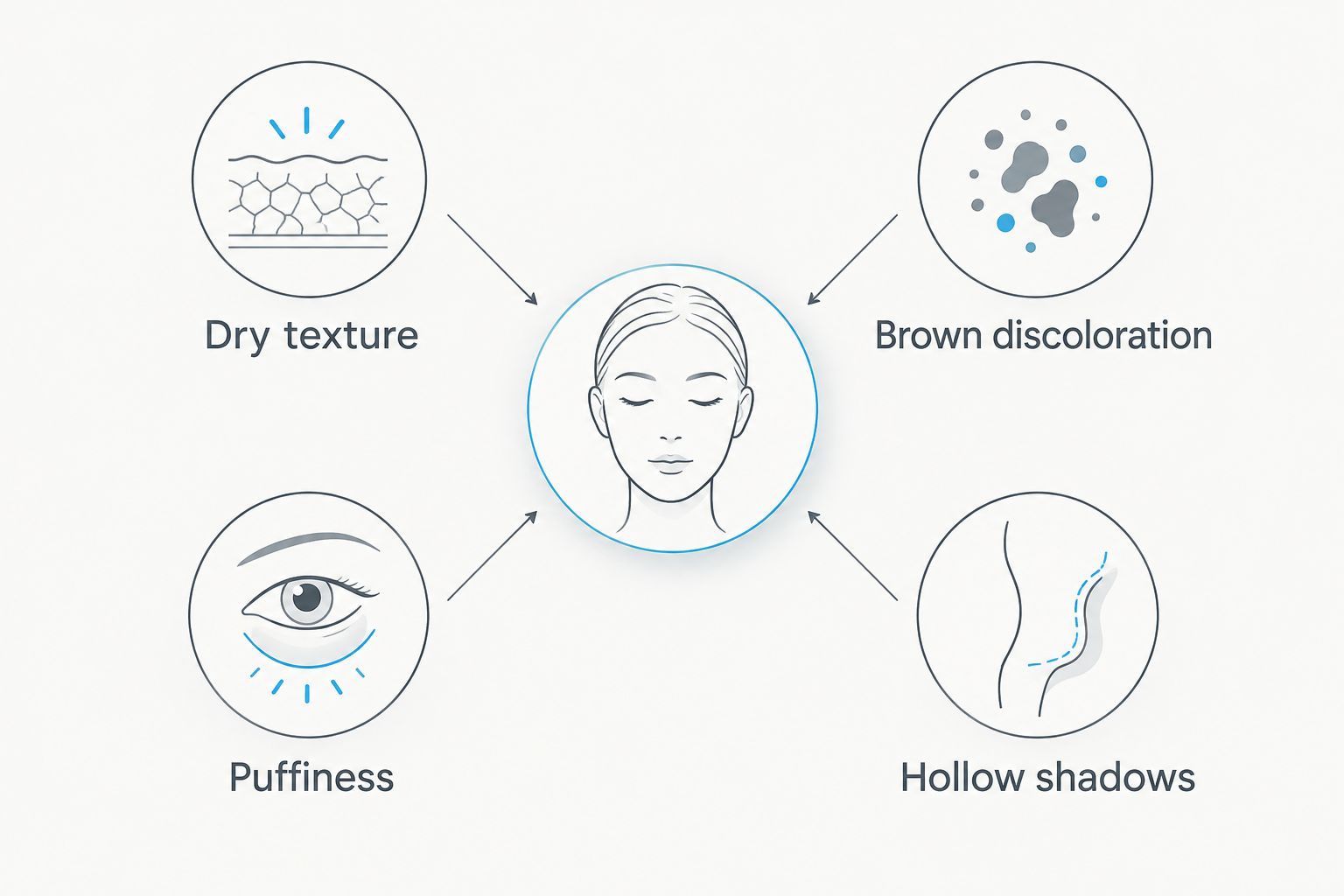
This check is a shopping aid, not a diagnosis. Seek medical advice for sudden changes, pain, substantial swelling, or an unexplained change affecting one eye.
Build a gentle morning and evening routine
A useful 2026 eye-care routine keeps the basics consistent and introduces new products separately. More layers make it harder to identify what causes irritation.
Morning: moisturize and protect
Cleanse gently, avoiding rubbing around the eyes. Apply your eye cream according to its directions, then use your face moisturizer where appropriate.
Our Day Cream is described as fragrance-free and contains 5-ALA and hyaluronic acid. That description belongs to this face moisturizer; it does not establish the eye cream's fragrance status or mean the day cream replaces sunscreen.
Finish with broad-spectrum SPF 30 or higher, following the sunscreen's directions for eye-area use. Sunglasses add practical protection, and choosing a sunscreen you can wear comfortably helps make the habit repeatable.
Evening: remove makeup without friction
Remove eye makeup gently and cleanse without scrubbing. Apply eye care only where its directions allow; do not assume that a face serum belongs on the eyelids or lash line.
For a new skincare product, the American Academy of Dermatology recommends testing a small area twice daily for 7–10 days before wider use. Follow product-specific warnings, and remember that a tolerated test spot does not guarantee tolerance around the eyes.
Stop using a product that causes persistent burning, redness, itching, or swelling. Discomfort is not evidence that an eye cream is working.
How these options were ranked
The ranking prioritizes a clear use case, moisturizing relevance, formula transparency, and realistic expectations. The named product earns its place as the catalog's dedicated eye-care option, not through a demonstrated win against competing products.
The other entries describe formula categories rather than unverified brand comparisons. None is ranked using invented testing scores, shopper counts, or claims borrowed from unrelated facial-serum studies.
Finished-product evidence matters most when a product promises a finished-product result. Research on an ingredient helps explain a formula's rationale; it does not establish that the formula reduces dark circles.
Which eye cream should you choose?
Choose Kiyomi Skin Eye Cream if your priority is a dedicated eye-care step within a 5-ALA routine. If dryness dominates, start with a verified fragrance-free moisturizing formula; if puffiness dominates, investigate caffeine; if you want immediate coverage, choose tint.
For an undecided sensitive-skin shopper, start with comfort and moisture, then reassess what darkness remains. That separates a manageable dryness concern from pigmentation or anatomy that calls for a different approach.
FAQ
What's the best eye cream for dark circles in 2026?
The best eye cream for dark circles matches the main concern: moisture for dryness, a caffeine formula for puffiness, or tint for coverage. Structural hollows and persistent pigmentation need different expectations from basic moisturizing care.
Is Kiyomi Skin Eye Cream proven to reduce dark circles?
The supplied evidence does not establish that Kiyomi Skin Eye Cream reduces dark circles. Its stated ingredients include 5-ALA and ceramides, but ingredient research is separate from finished-product efficacy.
Can sensitive skin use an eye cream every day?
Daily use depends on the individual formula, its directions, and your skin's response. Introduce the product separately and stop if it causes persistent irritation; sensitive skin does not tolerate every formula alike.
Is a fragrance-free eye cream always safe for sensitive skin?
No, fragrance-free eye cream is not guaranteed to suit every sensitive-skin shopper. Other ingredients can cause irritation or allergy, so check the specific formula and your known triggers.
Does caffeine eye cream remove dark circles permanently?
Caffeine eye cream is not a permanent solution to all dark circles. Its relevance is mainly to puffiness-related appearance, and it cannot replace volume beneath an under-eye hollow.
Can I use a face serum instead of eye cream?
Use a face serum around the eyes only when its directions allow that application. Facial-use studies do not establish eyelid tolerance or dark-circle benefits.
Does an eye cream replace sunscreen?
An eye cream without labeled SPF does not replace sunscreen. Use broad-spectrum SPF 30 or higher as directed and choose an eye-area application approach that avoids getting sunscreen into your eyes.
One last thing
Before buying another brightening product in 2026, check whether overhead lighting is exaggerating your under-eye shadows. Compare your appearance in even daylight: a change caused by lighting is not proof that your skin needs a stronger active.
Choose the product for the concern it can reasonably address, and let comfort guide consistency.