Can you use night cream in the morning?
Yes, you can use night cream in the morning if its directions allow daytime use and the formula feels comfortable under sunscreen. A night cream does not replace sunscreen unless it is specifically labeled with appropriate sun protection. For your 2026 routine, choose by ingredients, skin comfort, and how the layers wear—not just the word “night” on the jar.
- Can you use night cream in the morning? Yes, when its directions allow and it layers comfortably under sunscreen.
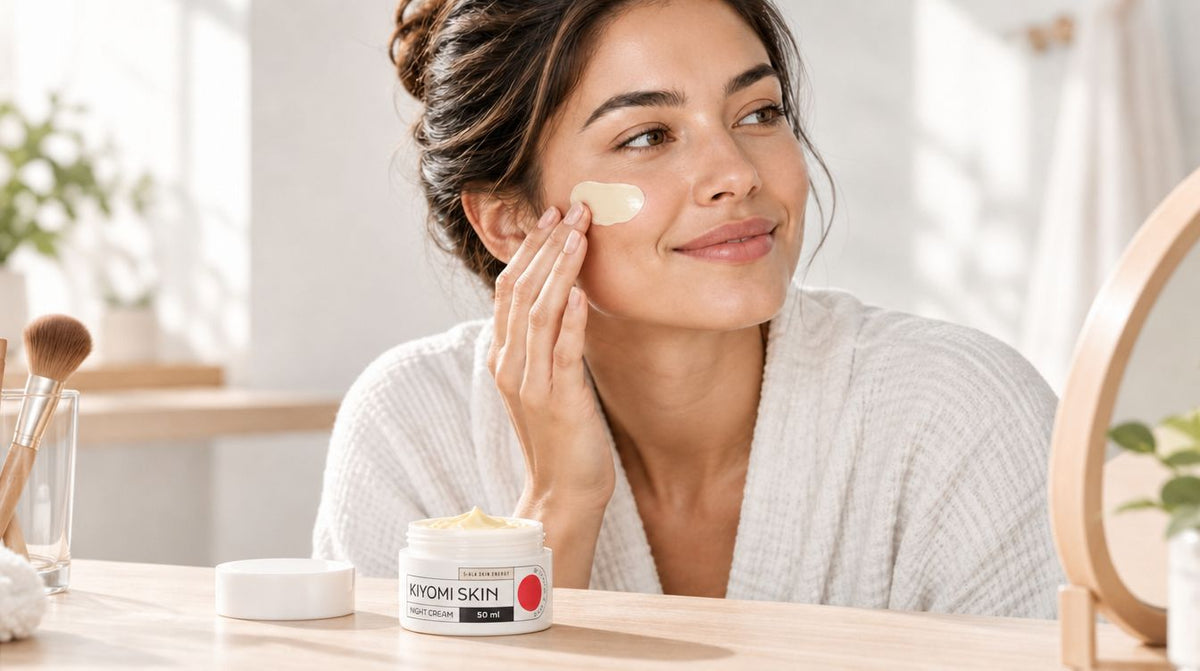
- Kiyomi Skin Night Cream contains hyaluronic acid and ceramides; choose it for a moisturizing step, not sun protection.
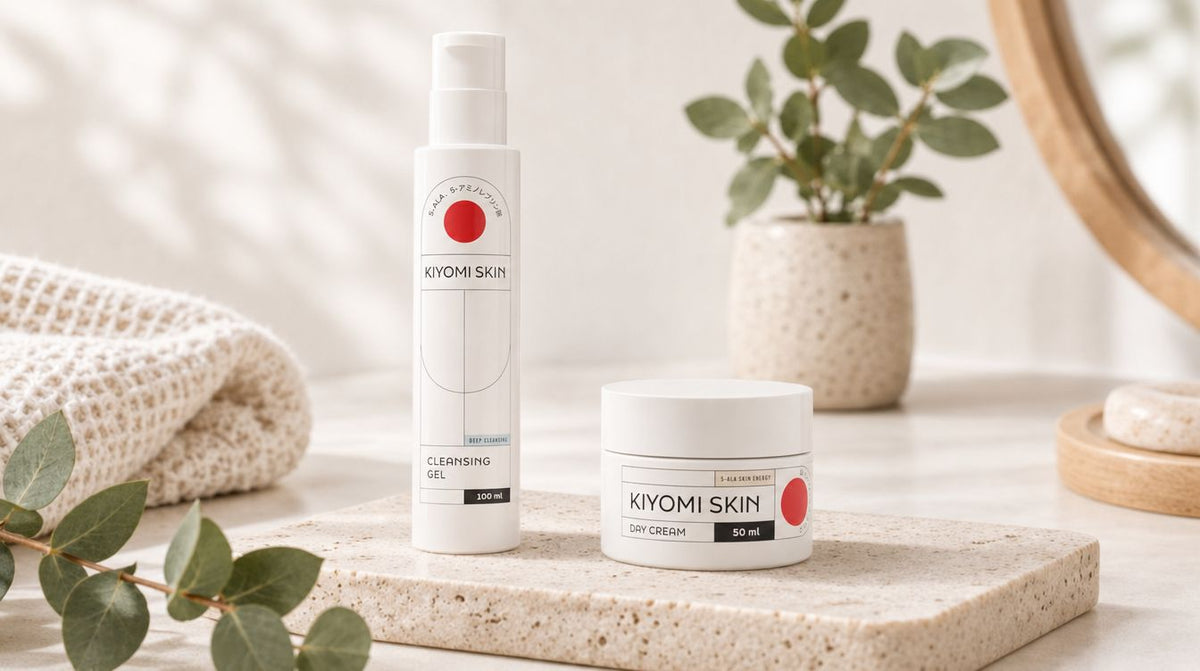
- Kiyomi Skin Day Cream is a fragrance-free option for shoppers prioritizing daytime hydration.
- Finish your morning routine with broad-spectrum SPF 30 or higher, whether you choose day cream or night cream.
Can you use night cream in the morning?
Yes—the formula and its instructions matter more than the time printed on the packaging. A moisturizing cream does not automatically become unsuitable when the sun comes up. The practical question is whether it suits your skin and works beneath your sunscreen.
Start with these two options from our catalog:
| Option | Best for | Supported formula details | What to consider |
|---|---|---|---|
| Night Cream | Shoppers looking for hyaluronic acid and ceramides in their moisturizing step | Contains 5-ALA, hyaluronic acid, and ceramides | Check current directions before using it in the morning; assess the finish beneath sunscreen |
| Day Cream | Shoppers prioritizing fragrance-free daytime hydration | Fragrance-free; contains 5-ALA and hyaluronic acid | A daytime name alone does not establish SPF protection; check the label and complete your sunscreen step |
Kiyomi Skin Day Cream is the best fit in this comparison for shoppers who specifically want fragrance-free daytime moisturizing care. Night Cream is another moisturizing option to assess against your needs, rather than an automatic replacement for a daytime formula.
Why this matters
A comfortable morning routine should moisturize your skin without making sunscreen difficult to apply. You do not need separate creams simply to satisfy a morning-versus-evening naming convention. You need products that do their jobs together.
For sensitive skin, keeping the routine understandable also helps you make useful adjustments. Changing your cleanser, serum, moisturizer, and sunscreen at once makes it harder to identify which change affected your skin.
Think of well aging as consistent care: gentle cleansing, moisturizing, and daily sun protection. It is not a promise to stop aging, and it does not require the longest possible product lineup.
What is the difference between day cream and night cream?
Day creams are generally positioned for daytime use, while night creams are positioned for evening care. Those names describe intended use, not a universal ingredient standard. Read the actual formula and directions before deciding that one must be lighter, stronger, or more suitable for sensitive skin.
Some nighttime products contain retinoids or other ingredients with specific use instructions. Others focus on moisturizing ingredients. A product labeled “night cream” therefore needs a different assessment from a prescription treatment or an exfoliating night treatment.
Do not transfer instructions from one nighttime product to another. If a label specifies evening-only use, follow that instruction rather than treating the product as an ordinary all-day moisturizer.
For your 2026 skincare shelf, a useful distinction is function: cleanser removes buildup, moisturizer supports hydration, and sunscreen provides labeled UV protection. A marketing name does not replace any of those functions.
When does using night cream in the morning make sense?
Using your existing night cream in the morning makes sense when you already like the formula, its instructions permit it, and it leaves your skin comfortable. This approach keeps the routine simple without adding a separate product solely because the clock changed.
It is especially practical when your main concern is dry-feeling skin rather than adding another active ingredient. Moisturizers commonly combine ingredients that attract water with ingredients that soften skin and reduce moisture loss. The finished formula determines how that combination feels.
Try your usual moisturizer beneath your sunscreen before judging it beneath a full face of makeup. This separates the basic skincare combination from additional cosmetic layers.
If the cream feels comfortable and sunscreen spreads evenly over it, there is no need to reject the combination just because the moisturizer is marketed for nighttime. If the layers feel heavy or roll off, adjust the moisturizer rather than reducing your sun protection.
Why morning suitability varies
Your skin and the complete formula determine whether a night cream belongs in your morning routine. Check these factors:
- Use directions: Evening-only instructions take priority over general advice about moisturizing creams.
- Ingredient roles: A primarily moisturizing formula is different from a treatment containing ingredients with specific timing requirements.
- Skin comfort: Judge the product by how your skin actually feels, not by assumptions about your age or skin type.
- Fragrance preferences: Verify fragrance-free status for the individual product rather than assuming an entire brand shares that claim.
- Layering: Your moisturizer needs to sit comfortably beneath your chosen sunscreen and any makeup.
- Application amount: More cream is not automatically more useful; an excessive layer can leave an unwanted finish.
These factors also explain why a cream that works beautifully in the evening does not always feel right before a busy morning. The issue is the complete routine, not a rule that night cream becomes harmful in daylight.
How should you apply night cream in the morning?
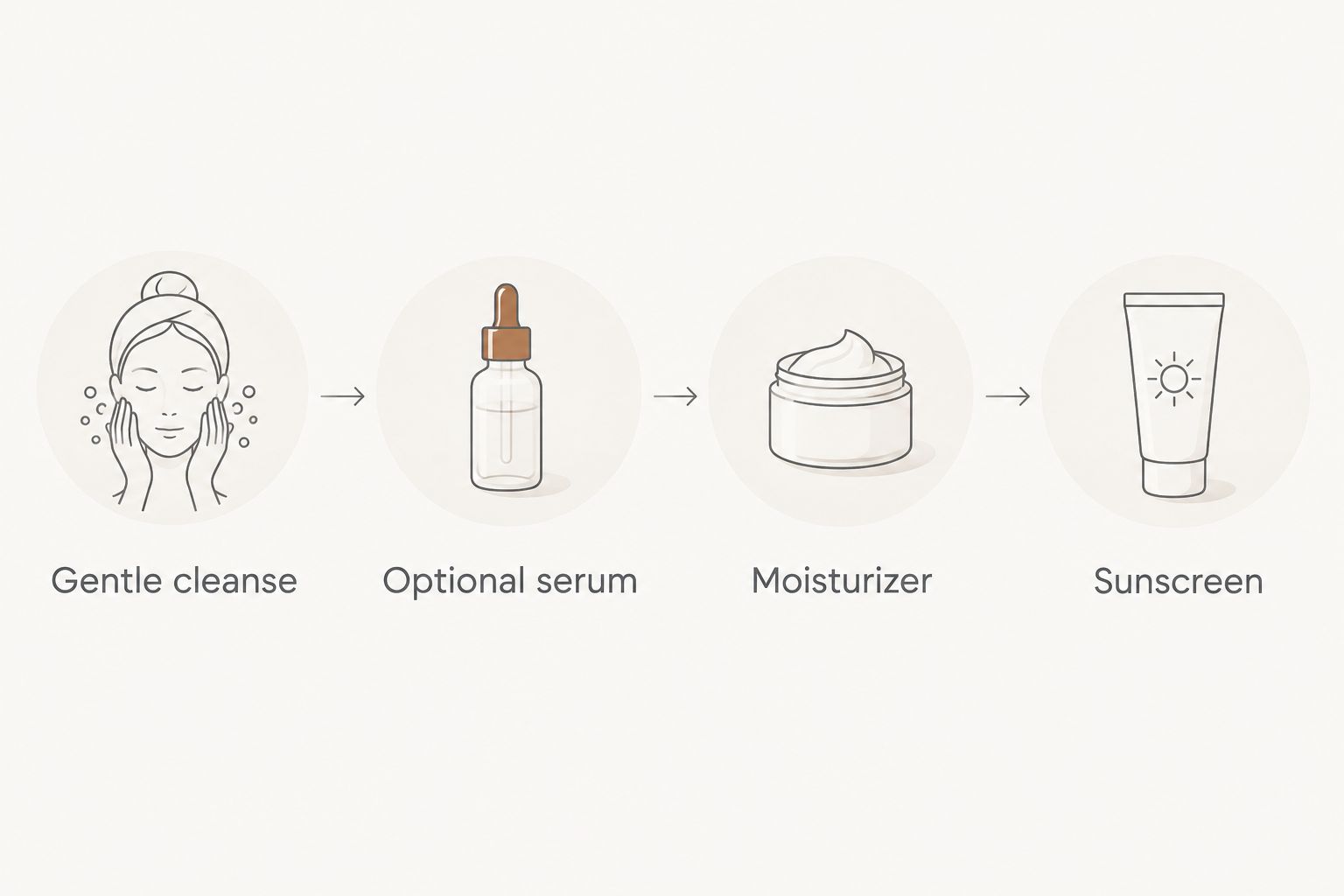
Use this sequence for a straightforward 2026 morning routine. Keep any product-specific instructions in place, especially for treatments and sunscreen.
- Gentle cleanse: Cleanse as needed without scrubbing. Pat your skin gently rather than rubbing it with a towel.
- Optional serum: Apply a serum only if it serves a clear purpose in your routine. Follow its directions rather than adding several new treatments together.
- Moisturizer: Apply your suitable night cream or daytime moisturizer in an even layer. Concentrate on comfort rather than creating a thick coating.
- Sunscreen: Finish skincare with broad-spectrum, water-resistant SPF 30 or higher. Apply it as directed before adding makeup.
The American Academy of Dermatology recommends applying sunscreen 15 minutes before going outdoors and reapplying approximately every 2 hours outdoors, as well as after swimming or sweating. Follow the sunscreen's own directions for application and reapplication.
Do not mix moisturizer and sunscreen together in your palm. Apply them as separate layers so you use the sunscreen as directed. If the combination feels too heavy, change the moisturizer layer—not the labeled sunscreen application.
Which Kiyomi Skin moisturizer should you choose?
Choose Day Cream when fragrance-free daytime moisturizing care is your priority. Its catalog description identifies 5-ALA and hyaluronic acid, an ingredient widely used to attract and hold water in skincare formulas.
Choose Night Cream when you are looking for a moisturizing formula containing hyaluronic acid and ceramides. Ceramides are lipids naturally present in the skin barrier and are also used in moisturizers. That ingredient role does not establish a specific measured result for this finished product.
Kiyomi Skin skincare pairs 5-ALA with other ingredients across the catalog. Keep ingredient science separate from finished-product evidence: the presence of 5-ALA alone does not establish wrinkle reduction, deeper penetration, or a specific hydration improvement.
The practical choice is simple: select the formula that matches your preferences, then check how it wears in your actual routine. Shop the two moisturizing options below to compare their current product details and directions.


Can you wear night cream under makeup?
Yes, you can wear a suitable night cream under makeup if the moisturizer, sunscreen, and makeup form comfortable layers. There is no universal rule that a product's nighttime label makes it incompatible with foundation.
Pilling—the small rolls of product that appear as you rub—means the layers are not wearing well together. It does not prove that your skin has absorbed nothing or that the moisturizer is ineffective.
Try simplifying the layers, applying moisturizer evenly, and letting each layer settle before applying the next. Avoid repeatedly rubbing the same area. If the combination still pills, test a different moisturizer-and-sunscreen pairing rather than continually adding more product.
Do not use an arbitrary waiting period as a substitute for the product directions. There is no single settling time that suits every cream, sunscreen, and makeup formula.
Should sensitive skin use a separate day cream?
Sensitive skin does not automatically require separate day and night moisturizers. A suitable formula can simplify your routine when its instructions allow both uses and it works with your sunscreen.
Use this brief suitability check: introduce one new product at a time, test it on a small area before wider use, and stop using it if irritation develops. Fragrance-free is a useful selection preference, not a guarantee that every sensitive-skin shopper will tolerate a formula.
For your 2026 routine, favor consistency over frequent product changes. A moisturizer you use comfortably is more useful than a complicated schedule built around products you do not enjoy applying.
Does night cream replace sunscreen?
No—night cream does not replace sunscreen unless the product itself carries appropriate sunscreen labeling. Hydrating ingredients, botanical extracts, and a rich texture do not establish UV protection.
Use broad-spectrum SPF 30 or higher as your sun-protection step. The same rule applies to day cream: “day” is not another word for SPF.
Sun protection also includes shade and protective clothing. Keeping those habits alongside moisturizing is a practical approach to healthy-looking skin over time, without treating any cream as an aging cure.
FAQ
Can I use the same moisturizer in the morning and at night?
Yes, you can use the same moisturizer morning and night when its directions allow both uses and it suits your skin. In the morning, follow it with appropriate sunscreen unless the product itself provides suitable labeled sun protection.
Is night cream too heavy to use during the day?
Not necessarily; the finished formula and your preferred feel determine whether night cream is too heavy for daytime. Assess it beneath your sunscreen before adding makeup.
Can I use night cream in the morning if I have dry skin?
Yes, a suitable night cream can serve as your morning moisturizer for dry-feeling skin. Choose according to its ingredients, directions, and comfort rather than the nighttime name alone.
Can I put sunscreen over night cream?
Yes, apply sunscreen over a suitable night cream as a separate layer. Use the sunscreen according to its label rather than mixing it into the moisturizer.
Does day cream always have SPF?
No, a day cream does not automatically contain sunscreen. Check for specific SPF and broad-spectrum labeling instead of assuming daytime positioning means UV protection.
Is Kiyomi Skin Day Cream fragrance-free?
Yes, Kiyomi Skin Day Cream is described as fragrance-free in the current supplied catalog. That statement applies to this product, not automatically to every formula in the range.
Should I wash off night cream before going outside?
You do not need to wash off an otherwise suitable moisturizing cream solely because it was applied at night. Follow your normal morning cleansing needs, any treatment-specific instructions, and your sunscreen directions.
One last thing
You do not need a separate jar for every time of day. You need a moisturizer that suits your skin and a sunscreen you can apply correctly over it.
Make that your 2026 decision rule: keep a comfortable formula when it works, and choose a dedicated daytime option when it better matches your fragrance preferences or layering needs. Let the routine earn its place through usefulness, not extra steps.