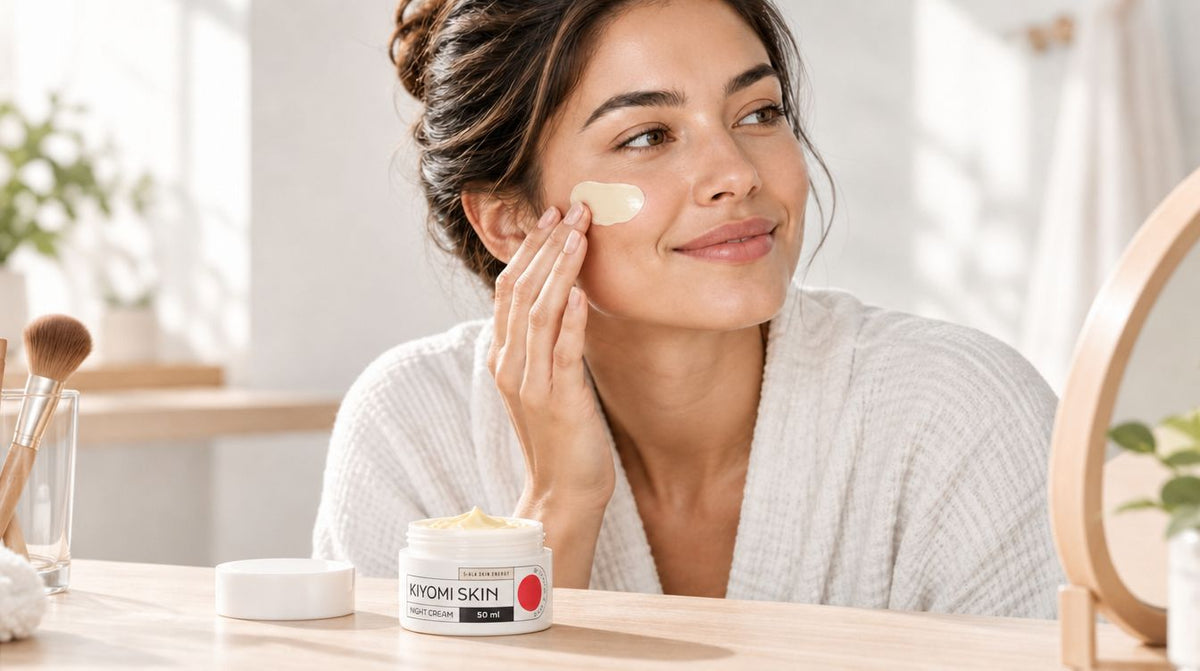
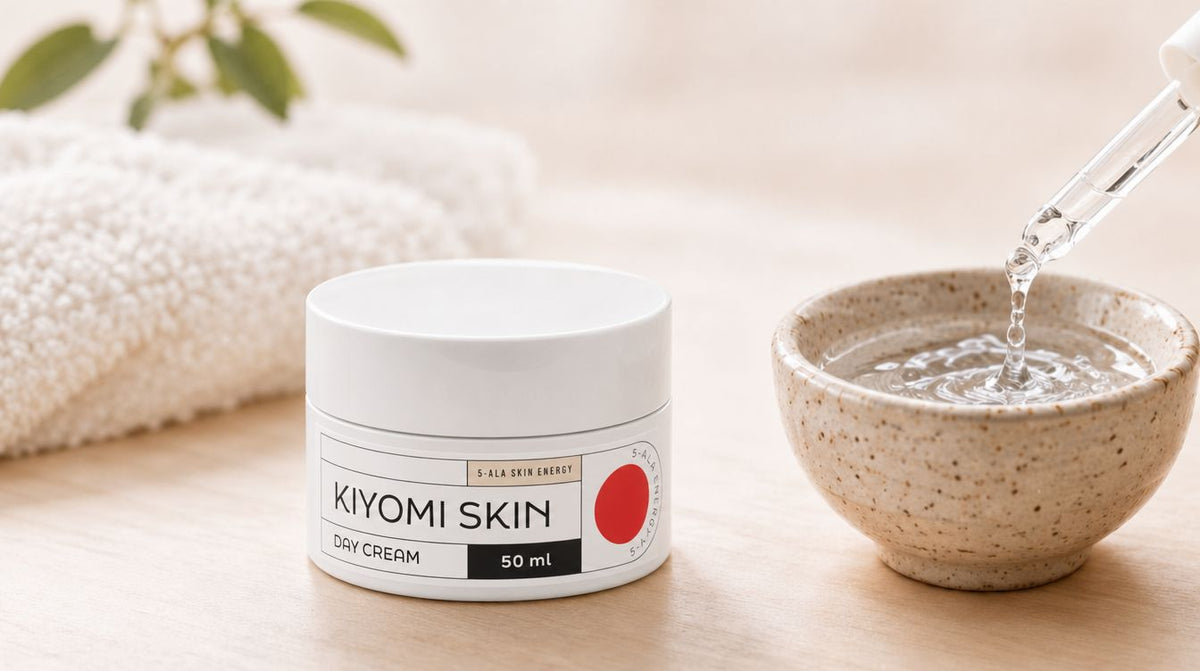
Is toner a necessary step in a skincare routine?
No, toner is not a necessary step in a skincare routine; gentle cleansing, moisturizing, and daily sun protection are the priorities. A hydrating toner is an optional extra when you want a lightweight layer of moisture, but it does not replace moisturizer or sunscreen.
- Is toner a necessary step in a skincare routine? No—prioritize cleanser, moisturizer, and sunscreen.
- Kiyomi Skin Toner is an optional hydrating step, not a replacement for moisturizer.
- For sensitive skin, choose formulas by their ingredients and purpose, not the number of steps.
- Apply toner after cleansing and before serum or moisturizer, following the product directions.
Why this matters
Your skincare routine should solve a problem, not satisfy a checklist. If your skin already feels comfortable with a simple routine, adding toner is a preference rather than a requirement.
For your 2026 routine, put the essentials first. An extra layer earns its place when it adds something you actually want, such as a refreshing feel or lightweight hydration.
Is toner a necessary step in a skincare routine?
Toner is optional; moisturizer and sun protection have different jobs that toner cannot replace. Use this comparison to decide where to focus your attention.
| Step or product | Best for | Main role |
|---|---|---|
| Gentle cleanser | Removing daily buildup | Cleans the skin |
| Kiyomi Skin Toner | Shoppers wanting an optional hydrating layer | Hydrating and balancing care |
| Day Cream | Shoppers seeking a fragrance-free facial moisturizer | Moisturizing care with 5-ALA and hyaluronic acid |
| Broad-spectrum sunscreen | Daily protection from ultraviolet exposure | Helps protect skin from sun damage |
Kiyomi Skin Toner is best for shoppers who want an optional hydrating layer in a simple skincare routine. Choose it because that step suits your preferences—not because every routine needs toner.
The distinction matters for sensitive skin. More products do not automatically make a routine more effective, and a comfortable routine does not become incomplete when you leave toner out.
What does toner add to your routine?
A hydrating toner adds a lightweight leave-on layer after cleansing. Its usefulness depends on the formula, the rest of your routine, and whether you enjoy using it.
Think of toner as a supporting step rather than the foundation. If you like a light, refreshing application before cream, it fits that preference; if your moisturizer already leaves your skin comfortable, toner is not compulsory.
The word toner also covers products with different purposes. A hydrating formula and an exfoliating formula should not be treated as interchangeable simply because both come in liquid form.
| Toner category | Best for | What to look for | Trade-off |
|---|---|---|---|
| Hydrating toner | An optional moisture-focused layer | A formula intended for hydration | Can overlap with an existing hydrating serum |
| Exfoliating toner | A deliberate exfoliation step | Clearly identified exfoliating ingredients and directions | Requires attention to other exfoliating products in your routine |
| No toner | Keeping your routine simple | A cleanser and moisturizer that suit your skin | Leaves out the extra liquid-layer experience |
Choose by function, not by the category name. A toner described as balancing is not automatically an exfoliant, and a watery texture does not tell you how a formula will suit your skin.
Why the need for toner varies
Whether toner deserves a place in your 2026 routine comes down to a few practical factors:
- Your existing hydration steps. A moisturizing serum and cream already provide moisture-focused care; another layer needs a clear purpose.
- Your cleansing experience. Persistent tightness after washing is a reason to reassess your cleanser and technique, not automatically add toner.
- The toner's formula. Hydrating ingredients and exfoliating ingredients serve different goals. Read the ingredient list and directions.
- Your ingredient preferences. Check fragrance and other ingredients against your own history rather than relying on a sensitive-skin label alone.
- Your preferred routine length. An enjoyable step is useful only if it fits the routine you can maintain.
Start with the concern you want to address. If you cannot describe what toner would add, keep your routine simple until you can.
How do you use toner in a simple skincare routine?
Apply toner after cleansing and before serum or moisturizer, unless the product directions specify otherwise. In the morning, finish your skincare with sunscreen.
Morning: prioritize moisture and sun protection
- Cleanse. Use a gentle cleanser as needed for your skin and routine. Rinse thoroughly without aggressive scrubbing.
- Toner. Add this optional layer if you enjoy it and the formula suits your needs. Follow its application directions.
- Serum. Use a serum for a specific goal rather than adding several by default. Toner does not make serum compulsory.
- Moisturizer. Apply a moisturizer that gives you a comfortable finish. Choose the texture around your preferences and the season.
- Sunscreen. Use broad-spectrum SPF 30 or higher and follow the label for application and reapplication.
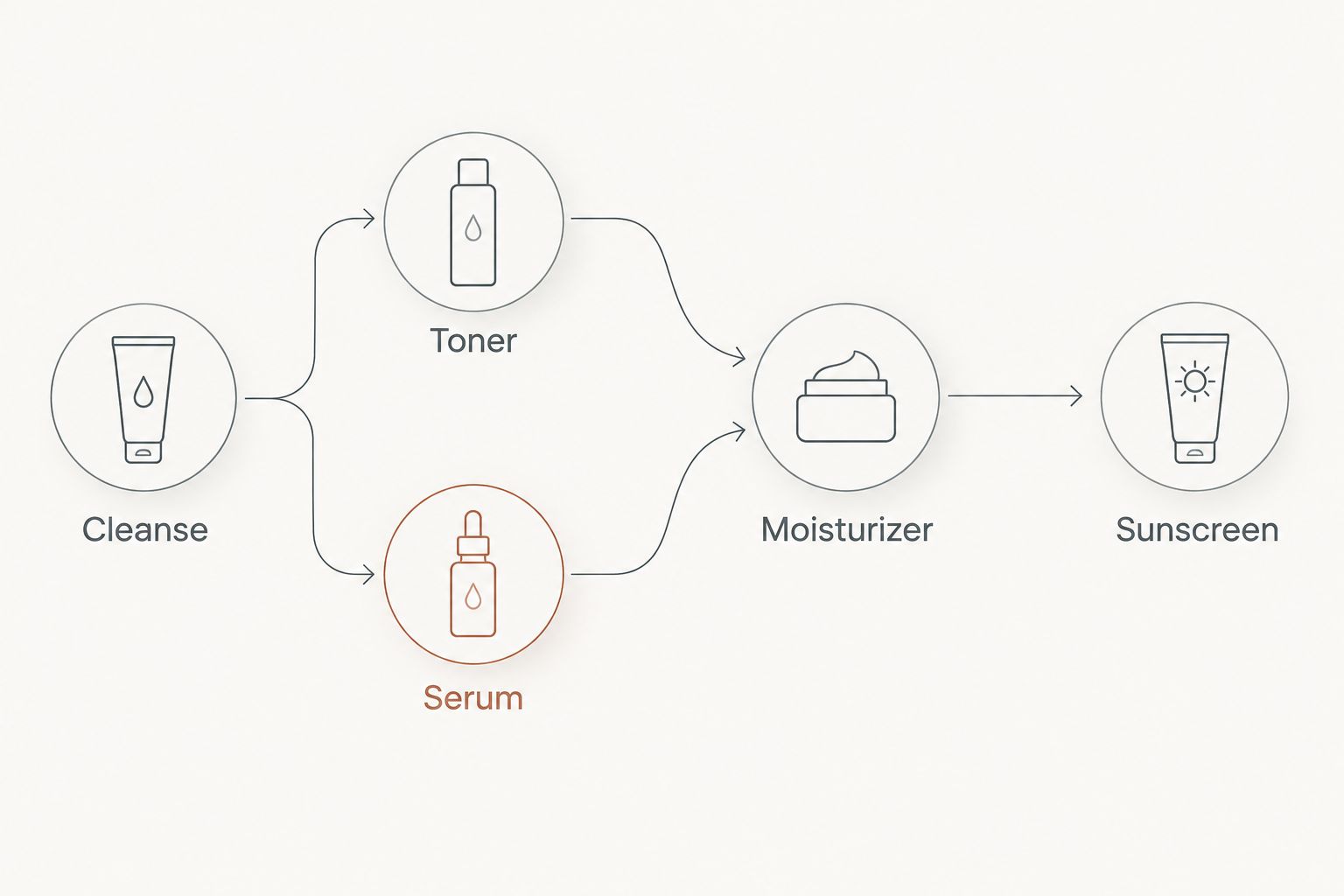
The sequence explains placement, not a requirement to use every product. Your 2026 morning routine can stay shorter by leaving out optional steps that do not serve your needs.
Evening: remove buildup, then moisturize
Cleanse to remove the day's buildup, makeup, and sunscreen. Follow with toner if you want it, then any selected serum and your moisturizer.
You do not need to recreate a long routine every evening. A Japanese-inspired approach can be simple and deliberate: cleanse thoughtfully, choose purposeful layers, and prioritize comfort rather than collecting steps.
Keep application straightforward
Follow the bottle's instructions for application method and amount. Do not assume that using more toner makes the rest of your skincare work better.
There is also no reason to invent a fixed waiting period between every layer. Follow product-specific directions and let the texture settle enough for the next product to apply comfortably.
Which products fit a hydration-focused routine?
For a focused 2026 routine, choose the cleansing and moisturizing basics first, then decide whether you want toner. Kiyomi Skin offers products for each of these roles, so you can build around the step your routine actually needs.
Toner: best for an optional hydrating layer
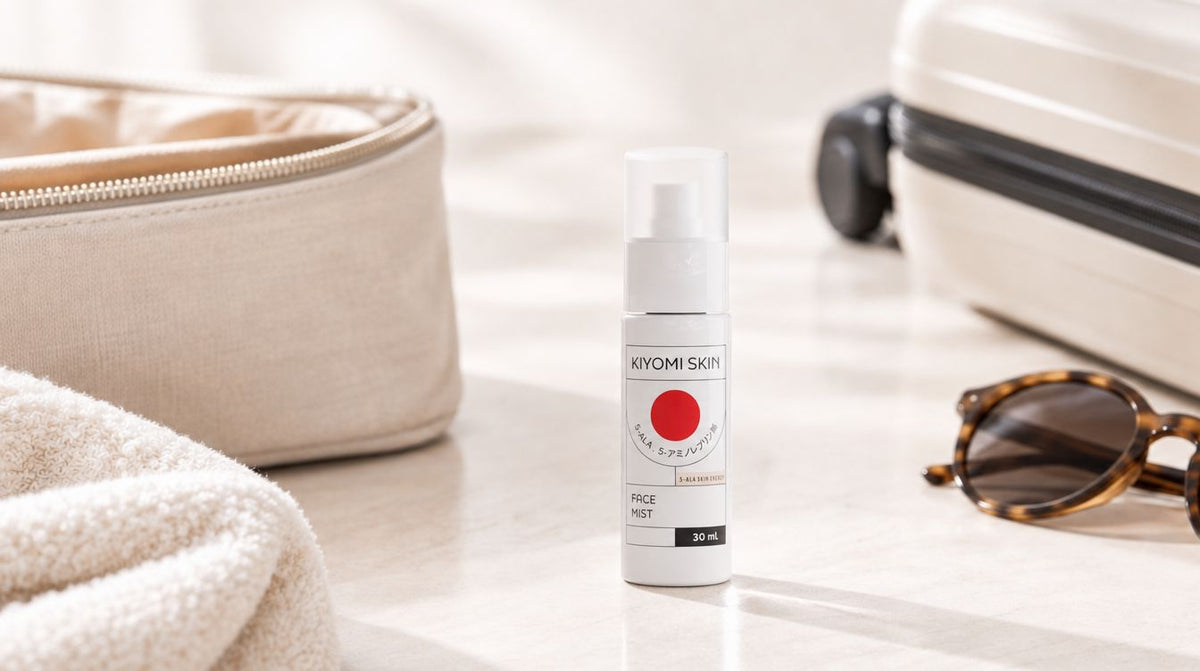
Toner is described as hydrating and balancing care for refreshed-looking skin. It comes in a 100 ml format, with Travel Size Toner offered in a 30 ml format.
The reason to choose it is straightforward: you want a liquid hydration step between cleansing and leave-on care. Keep toner optional rather than treating it as the product that makes your routine complete.
Day Cream: best for fragrance-free facial moisturizing
Day Cream contains 5-ALA and hyaluronic acid, and its supplied product description identifies it as fragrance-free. Hyaluronic acid is a humectant—an ingredient that attracts and holds water.
Choose Day Cream when your priority is the moisturizing step itself. The name does not establish SPF protection, so keep a separate sunscreen in your daytime routine unless your chosen product explicitly provides labeled sun protection.
Cleansing Gel: best for a gently foaming cleansing step
Cleansing Gel is described as gently foaming and fragrance-free. It fits the cleansing role at the start of your routine, before any toner, serum, or cream.
Choose it for that role rather than expecting a cleanser to provide all-day leave-on care. Cleansing and moisturizing complement each other; toner sits between them only if you want the additional step.


Shop by the missing role in your routine. If you already have a cleanser and moisturizer you enjoy, toner is an optional addition—not a reason to replace everything.
How should sensitive skin approach toner?
Choose a formula around your own ingredient history and introduce it without changing the rest of your routine at the same time. That makes your experience easier to assess.
Keep one suitability note in mind: fragrance-free does not guarantee individual tolerance, and not every toner is fragrance-free. Check the current ingredient list, follow directions, and stop using a new product if it causes irritation; persistent symptoms deserve advice from a dermatologist.
Avoid using a toner to compensate for cleansing that consistently leaves your skin uncomfortable. Review the cleansing step first, including water temperature, scrubbing, and the formula you use.
What does 5-ALA tell you about a toner?
5-ALA stands for 5-aminolevulinic acid, an ingredient featured across Kiyomi Skin skincare. An ingredient's scientific background and a finished product's demonstrated results are different kinds of evidence.
For a 2026 product decision, focus on the exact formula, its stated purpose, and the evidence available for that product. Research on an ingredient alone does not establish how much hydration a particular toner delivers or how every shopper will respond.
You do not need a biological promise to justify a hydrating step. A clear role, suitable ingredients, and a routine you enjoy are more practical reasons to choose a toner than claims about reversing aging.
Can you skip toner if you use a serum?
Yes, you can skip toner if you use a serum. Neither product category makes the other mandatory; choose each for the job it does in your routine.
If your serum already provides the lightweight hydration you want, toner can be redundant. Keep moisturizer and daytime sun protection in place rather than adding another liquid simply to follow an order chart.
Can toner replace moisturizer?
No, toner does not replace moisturizer. A hydrating liquid and a moisturizing cream have different formulation roles, even when both are marketed around hydration.
Use toner as an optional layer before moisturizer. If you prefer fewer steps, choose the moisturizer rather than assuming a refreshing liquid delivers the same care.
Does toner help with visible signs of aging?
Toner is not a necessary well-aging step. A hydrating formula can contribute to a moisture-focused routine, but specific wrinkle or firmness claims require evidence for that finished product.
Build healthy-aging habits around gentle cleansing, moisturizing, and daily sun protection. Add targeted care deliberately instead of treating toner as a shortcut to visible results.
FAQ
Is toner a necessary step in a skincare routine for sensitive skin?
No, toner is optional for sensitive skin. Prioritize gentle cleansing, moisturizing, and daily sunscreen, then add toner only when it serves a clear purpose.
Should I use toner before or after serum?
Toner generally goes after cleansing and before serum. Follow the directions for your specific products if they specify a different order.
Do I need toner every day?
No, you do not need toner every day. If you choose to use one, follow its directions and fit it around your routine rather than treating daily use as a requirement.
Is a hydrating toner the same as an exfoliating toner?
No, hydrating and exfoliating toners serve different purposes. Check the ingredients and product directions instead of judging a toner by its liquid texture.
Can I use moisturizer without toner?
Yes, you can apply moisturizer without using toner first. Toner is not required for a moisturizer to have a place in your routine.
Does a day cream replace sunscreen?
A day cream replaces a separate sunscreen only when it provides appropriate labeled sun protection and is applied as directed. Otherwise, use broad-spectrum SPF 30 or higher as your final morning skincare step.
What is the simplest way to decide whether I need toner?
Decide what you want toner to add before buying it. If your current routine already provides comfortable hydration and you prefer fewer steps, leaving toner out is a reasonable choice.
One last thing
A good routine is allowed to have an empty slot where toner would go. You do not need to fill every category to care for your skin well.
Start with the essentials, then add the experience you want. Explore Kiyomi Skin Toner when a hydrating liquid layer fits your routine, and keep the focus on consistent, comfortable care.