Can moisturizer alone reverse signs of aging?
No—moisturizer alone cannot reverse signs of aging, but it can soften the appearance of dryness-related fine lines and help your skin feel smoother and more comfortable. It does not replace sunscreen or erase established wrinkles and sun damage. For sensitive skin, the best starting point is consistent hydration, gentle cleansing, and daily sun protection—not a more aggressive routine.
- Can moisturizer alone reverse signs of aging? No—hydration softens dryness-related lines without reversing aging.
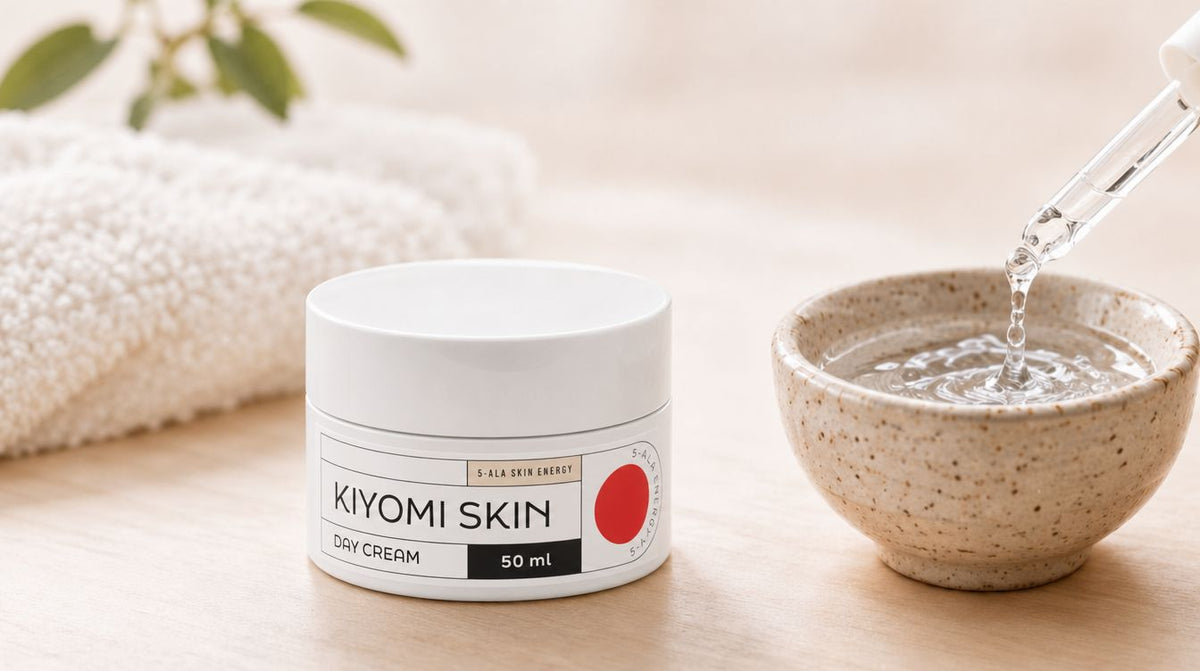
- Kiyomi Skin Day Cream is a fragrance-free moisturizing option for shoppers prioritizing hydration.
- Broad-spectrum SPF 30 or higher belongs alongside moisturizer in a healthy aging skin routine.
- Choose targeted serums by your main concern; adding more products is not automatically better.
Can moisturizer alone reverse signs of aging?
Moisturizer improves hydration; it does not turn back the biology of aging. That distinction matters because a softer-looking line after applying cream is a real cosmetic improvement, even when the underlying wrinkle remains.
Your skin's outer layer holds water and helps limit moisture loss. When that layer becomes dry, the surface looks rougher and fine lines become more noticeable. Moisturizing ingredients help address that dryness, making the surface look and feel smoother.
For a hydration-first starting point, Day Cream contains hyaluronic acid and 5-ALA, and its supplied product description identifies it as fragrance-free. Choose it for its moisturizing role—not as a promise to erase wrinkles.
| What you notice | What moisturizer can do | What moisturizer alone does not establish |
|---|---|---|
| Tightness and flaky texture | Help relieve dryness and improve surface comfort | A diagnosis or treatment for a skin condition |
| Fine lines emphasized by dryness | Make those lines look less pronounced through hydration | Permanent removal of established wrinkles |
| A dull-looking, rough surface | Improve the appearance of dry surface texture | Reversal of accumulated sun damage |
| Uneven pigmentation | Support a comfortable moisturizing routine | Reliable correction of persistent dark spots |
| Changes in facial firmness | Keep the skin moisturized | A lifting effect or replacement of lost facial volume |
Why this matters for sensitive skin
If you judge every moisturizer by whether it removes wrinkles, you miss its main job. Comfortable, hydrated skin is a useful outcome. It also gives you a simpler foundation for deciding whether a targeted treatment is necessary.
A practical well-aging routine in 2026 starts with what your skin needs each day, rather than how many active ingredients you can fit into one application. Well aging means caring for comfort, hydration, sun protection, and the visible look of aging over time—not stopping aging itself.
Kiyomi Skin skincare is best for shoppers seeking a simple, hydration-focused routine built around 5-ALA products. The useful starting question is whether a formula fits your needs, not whether its ingredient story sounds more advanced than your current routine.
What changes can you reasonably expect from moisturizer?
Dryness-related lines can look softer
A line that becomes more visible when your skin feels tight is not necessarily the same as a deeper wrinkle that remains when your skin is comfortable. Hydration can improve the appearance of the dry surface around either one, but that does not mean it has removed the wrinkle.
Think of moisturizer as surface care with an important daily purpose. You are helping your skin maintain a smoother, less flaky appearance rather than asking a cream to rebuild every structure associated with youthful skin.
Skin can feel more comfortable
Comfort is an important result, especially if your face feels tight after washing. A moisturizer that suits you should make the routine easier to maintain, rather than leave you searching for another product to compensate for dryness.
This is why cleansing and moisturizing belong together. If you routinely scrub or wash until your face feels stripped, adding a richer cream does not address the entire routine. Start by making the cleansing step gentler.
Established wrinkles need different expectations
Expression lines, cumulative sun exposure, and changes in the skin's supporting structures all contribute to visible aging. Moisture addresses only part of that picture. A cream that improves dryness is not automatically a treatment for every cause of a wrinkle.
For your 2026 routine, separate the outcomes you can see: less flaking, better comfort, softer-looking dry lines, or changes in persistent pigmentation. Keeping those goals distinct makes product descriptions easier to evaluate and prevents a pleasant texture from being mistaken for proof of wrinkle reversal.
Why moisturizer results vary
The same moisturizing routine does not produce the same visible change on every face. These factors help explain the difference:
- The source of the line. A line emphasized by surface dryness responds differently from an established expression wrinkle.
- Your starting dryness. If tightness and flaking are your main concerns, improving hydration addresses a more obvious part of the problem.
- The complete formula. Humectants attract water, emollients soften the surface, and occlusive ingredients help reduce water loss. Products combine these functions differently.
- Your cleansing habits. Harsh washing, rubbing, and unnecessary exfoliation can undermine a comfort-focused routine.
- Sun protection and consistency. Moisturizing without protecting exposed skin from ultraviolet radiation leaves a major contributor to visible aging unaddressed.
These factors are more useful than assuming a thicker texture, a longer ingredient list, or an unfamiliar scientific term guarantees a better result. Choose the formula and routine that match the concern you actually have.
How do you choose a moisturizer for visible aging?
Start with hydration and formula suitability, then consider targeted treatment. A cream does not need to promise dramatic correction to earn a place in your routine.
For sensitive skin, look at the complete ingredient list and verify fragrance claims product by product. A brand offering fragrance-free creams does not mean every serum, mist, or other formula from that brand is fragrance-free.
The comparison below keeps the choice focused on the supplied product information, rather than assuming one cream has stronger wrinkle results.
| Moisturizer | Best for | Supported formula details | Trade-off |
|---|---|---|---|
| Day Cream | A fragrance-free daytime moisturizing step | 5-ALA and hyaluronic acid; described as fragrance-free | Moisturizing care does not replace sunscreen |
| Night Cream | An evening moisturizing step featuring ceramides | 5-ALA, hyaluronic acid, and ceramides | Its supplied description does not verify fragrance-free status |
Hyaluronic acid is a humectant: it helps attract and hold water. Ceramides are lipids naturally present in the skin barrier; ceramide-containing moisturizers are commonly used to support moisturizing care. Those ingredient roles explain why they appear in creams, but they do not prove a particular finished formula reverses aging.
For your 2026 shopping decision, choose Day Cream if verified fragrance-free daytime care is your priority. Consider Night Cream if you want an evening formula containing ceramides, and review the full formula before deciding whether it suits your skin.
Shop these Kiyomi Skin skincare options to build the moisturizing foundation first. Add a serum only when you can name the concern it will address.


How do you build a simple well-aging routine?
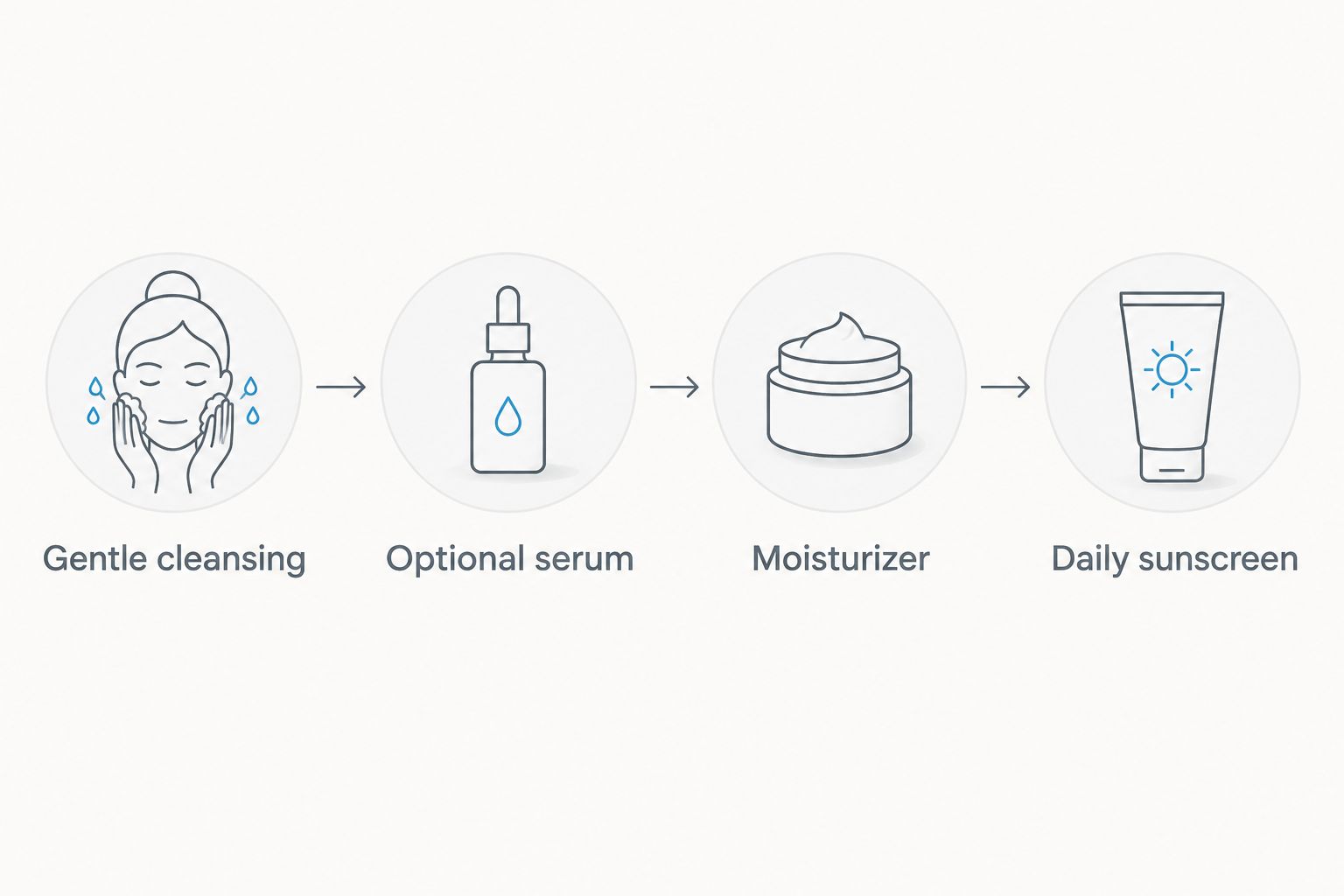
You do not need a complicated schedule to give moisturizer the right supporting routine. Keep the essentials steady, then decide whether an optional serum adds something useful.
- Gentle cleansing. Remove makeup, sunscreen, and daily buildup without scrubbing. Choose a cleanser that leaves your face comfortable rather than deliberately squeaky-clean.
- Optional serum. Use a targeted serum only if you have a defined goal, such as the appearance of uneven tone or fine lines. Follow its directions instead of combining several unfamiliar formulas at once.
- Moisturizer. Apply your chosen cream to support hydration and reduce the dry, rough appearance that makes fine lines stand out.
- Daily sunscreen. Finish your morning skincare with a broad-spectrum sunscreen rated SPF 30 or higher. At night, leave out the sunscreen step.
For sensitive skin, introduce one new formula at a time and test a small area before broader use; no formula suits everyone. Stop using a product that causes persistent irritation, and ask a dermatologist about ongoing redness, burning, or a sudden change in your skin.
That simple approach also makes troubleshooting easier. If you replace your cleanser, serum, and cream together, you lose a clear way to identify which change helped—or which one your skin disliked.
Can moisturizer replace sunscreen?
SPF 30 or higher is the American Academy of Dermatology's recommended sunscreen threshold; moisturizer without labeled SPF does not provide that protection. Broad-spectrum coverage protects against both UVA and UVB radiation, which have different roles in skin damage.
The American Academy of Dermatology's consumer guidance also recommends applying sunscreen 15 minutes before going outdoors and reapplying about every 2 hours outdoors, or after swimming or sweating. Follow the product's directions, including its water-resistance instructions.
For 2026, keep the distinction simple: moisturizer supports hydration, while sunscreen helps protect against ultraviolet exposure. Neither product needs to do the other's job for both to be useful.
Do you need a serum as well as moisturizer?
SPF 30 or higher and a suitable moisturizer are more fundamental than adding a serum. A serum is optional; it becomes useful when your routine is comfortable and you have a specific additional goal.
For example, selecting a product for uneven-looking tone is a different decision from selecting one for dry, flaky cheeks. Look for evidence relevant to that exact outcome. An elasticity measurement, a hydration measurement, and a questionnaire about visible lines do not measure the same thing.
You also do not need to layer every serum you own. A focused choice keeps application simpler and makes it easier to decide whether the product adds enough value to remain in your routine.
What does 5-ALA tell you about a moisturizer?
Kiyomi Skin uses 5-ALA across its skincare catalog. The ingredient's full name is 5-aminolevulinic acid, but recognizing that name is not the same as knowing how a finished cream performs on your face.
Ingredient research and finished-product evidence answer different questions. Research about an ingredient's biological role does not establish that a moisturizer containing it reverses aging, repairs DNA, or produces a specific visible result.
When reading skincare claims in 2026, ask what was tested: the ingredient alone or the finished formula, on people or in a laboratory model, and with which outcome. A claim about hydration should be supported by hydration evidence—not repackaged as proof of fewer wrinkles.
This is not a reason to dismiss an ingredient. It is a practical way to keep your buying decision connected to what you want from the product: a moisturizing formula you enjoy using consistently.
FAQ
Can moisturizer alone reverse signs of aging?
No, moisturizer alone cannot reverse signs of aging. It can improve hydration and soften the appearance of dryness-related fine lines, but it does not erase established wrinkles or replace sun protection.
Will moisturizer make my wrinkles disappear?
Moisturizer does not make established wrinkles disappear. Hydration can make dry surface lines less noticeable, which is different from permanently removing a wrinkle.
What's the best starting routine for sensitive, aging skin?
Start with gentle cleansing, a suitable moisturizer, and broad-spectrum SPF 30 or higher each morning. Add a targeted serum only when you have a clear goal and your basic routine feels comfortable.
Is Kiyomi Skin Day Cream fragrance-free?
Kiyomi Skin Day Cream is described as fragrance-free in its supplied product information. That statement applies to this formula, not automatically to every product in the catalog.
Do I need a serum if I already use moisturizer?
You do not automatically need a serum if your moisturizer meets your hydration needs. A serum is an optional step for a specific concern, such as uneven-looking tone or the appearance of fine lines.
Does a night cream replace my moisturizer?
A night cream is a moisturizer designed for an evening routine. You generally do not need a separate product labeled moisturizer over it unless your skin needs additional moisturizing care.
Does 5-ALA mean a cream reverses aging?
No, the presence of 5-ALA does not establish that a cream reverses aging. Claims about visible results require evidence about the finished formula and the specific outcome being claimed.
One last thing
Your most useful next purchase might be sunscreen, not another serum. If moisturizer already keeps your skin comfortable but your morning routine lacks sun protection, adding another hydrating layer leaves that gap unchanged.
Before expanding your routine, identify what is still missing: comfort, protection, or a targeted cosmetic goal. Shop the moisturizing foundation that fits, keep the daily steps consistent, and judge progress by a specific concern rather than the promise of younger skin.