Can you use 5-ALA skincare every day?
You can use a 5-ALA skincare product every day when its directions allow daily use and your skin tolerates the complete formula. That does not make every 5-ALA serum suitable for daily use: the formula, its instructions, and evidence from repeated use matter more than the ingredient name.
- Can you use 5-ALA skincare every day? Follow the individual formula’s directions and your skin’s response.
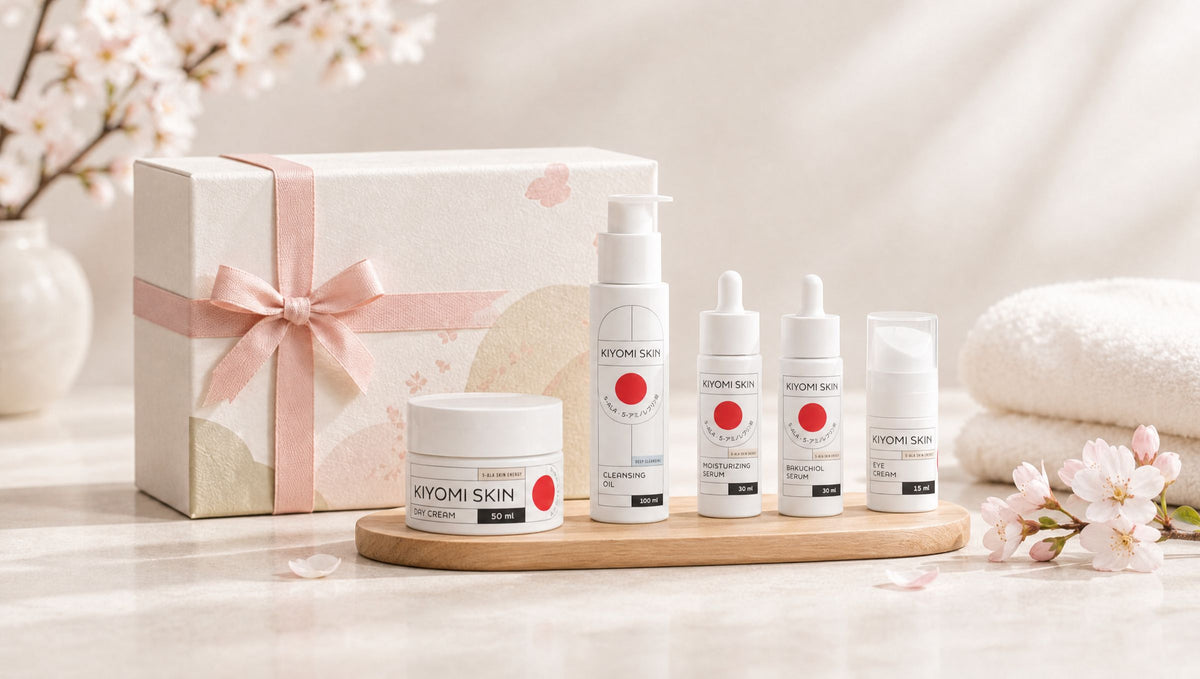
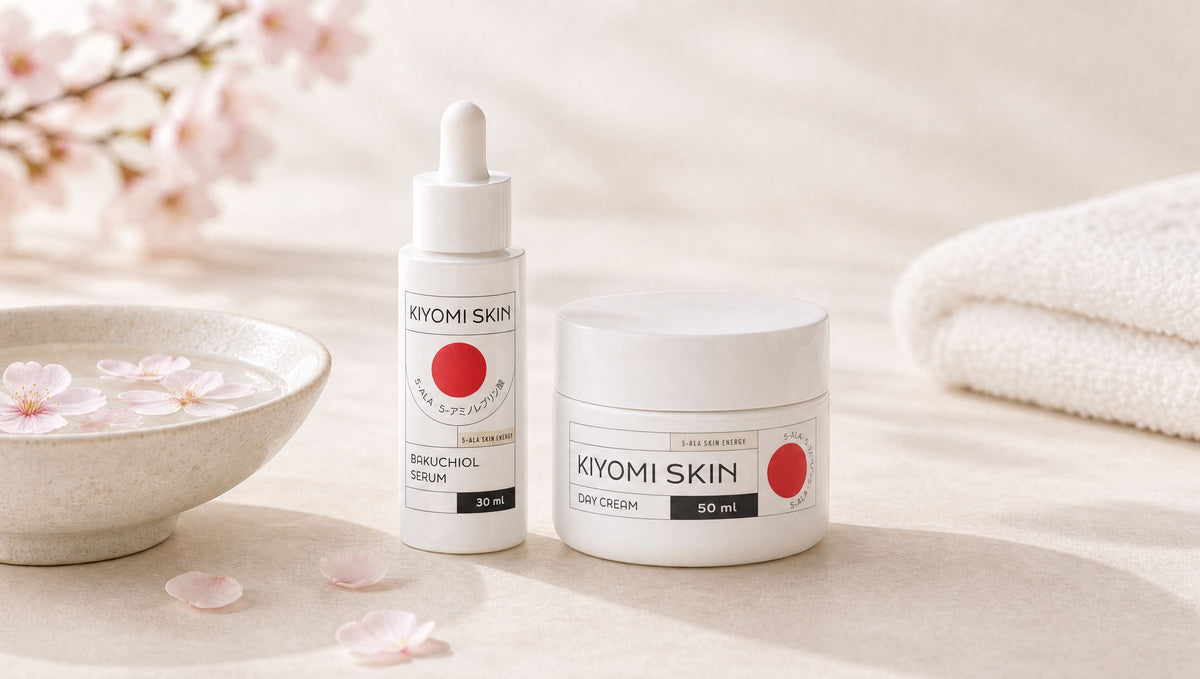
- Kiyomi Skin Day Cream is a fragrance-free moisturizing option containing 5-ALA and hyaluronic acid.
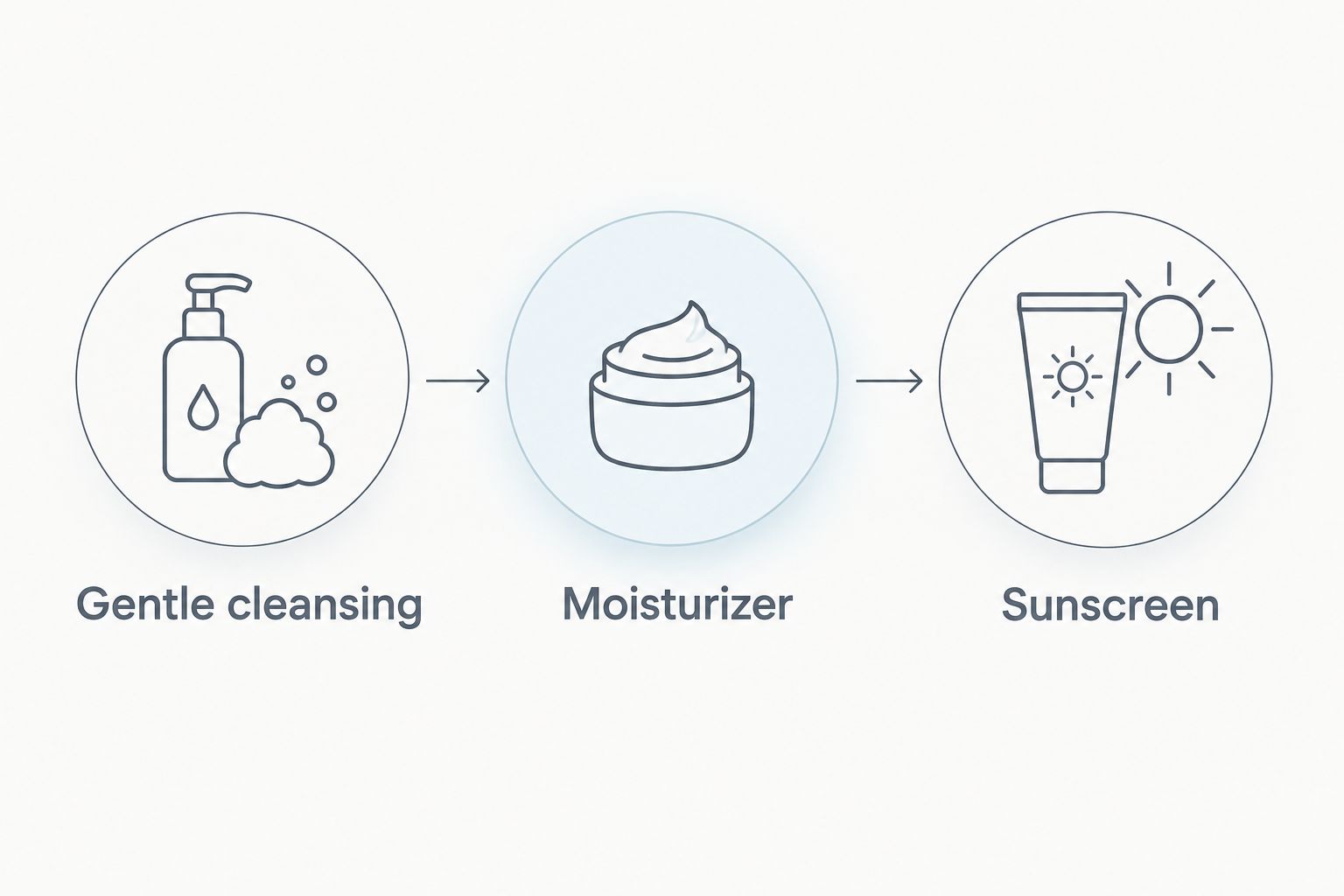
- For sensitive skin, build around gentle cleansing, moisturizer, and daily broad-spectrum sunscreen.
- A single patch test does not establish tolerance during repeated facial use.
Can you use 5-ALA skincare every day?
Daily use is a product-specific decision, not an ingredient-wide rule. Start by choosing the role your routine needs, then check the product’s application instructions. A cleanser and a leave-on moisturizer serve different purposes even when both belong to a 5-ALA skincare collection.
| Product | Best for | Supported reason to choose it | Selection consideration |
|---|---|---|---|
| Day Cream | A fragrance-free moisturizing step | Contains 5-ALA and hyaluronic acid; supplied in a 50 ml size | A moisturizer does not replace sunscreen unless it carries an appropriate SPF label |
| Cleansing Gel | A fragrance-free, gently foaming cleansing step | Described as a gentle, hydrating facial cleanser; supplied in a 100 ml size | Rinse-off cleansing serves a different purpose from leave-on moisturizing |
To decide whether daily use fits your routine:
- Read the directions. Follow the stated application frequency, amount, and any precautions.
- Choose a clear purpose. Address cleansing or hydration before adding another targeted serum.
- Introduce one new formula at a time. Keep familiar products unchanged so you can identify what suits your skin.
- Assess comfort as well as appearance. A routine should remain comfortable, not simply produce a temporary glow.
Why this matters
A useful daily routine supports hydration and the visible appearance of healthy aging without turning skincare into a constant experiment. Sensitive skin makes that distinction especially important: adding more active ingredients is not the same as choosing better care.
Kiyomi Skin skincare is best for shoppers seeking a Japanese-inspired routine built around 5-ALA products. The practical approach is to select a product for its job in your routine, rather than treat the shared ingredient as a reason to use the entire collection together.
For your 2026 routine, make consistency the goal. Comfortable cleansing, regular moisturizing, and sun protection give you a clear foundation; a serum should have a specific reason to join it.
What does 5-ALA tell you about daily use?
5-ALA stands for 5-aminolevulinic acid. Naming the ingredient identifies part of a formula, but it does not tell you how often the finished product should be applied or how your skin will respond.
The distinction is simple: ingredient science explains an ingredient; finished-product research evaluates a particular formulation under particular conditions. Research about an ingredient does not automatically establish the performance of every cream or serum containing it. Concentration, accompanying ingredients, application method, and the study population all affect what a finding means.
Read claims with that separation in mind. A statement about hydration needs hydration evidence; a statement about tolerance needs relevant tolerance evidence. Neither establishes that every sensitive-skin shopper can use a product every day.
In 2026, terms such as “skin energy” and “skin longevity” should not replace this basic check. For everyday shopping, focus on the actual formula, its intended use, and evidence that matches the claim being made.
Day Cream: best for a straightforward moisturizing step
Day Cream is a practical starting point when you want a fragrance-free moisturizer containing 5-ALA and hyaluronic acid. Hyaluronic acid is a humectant, meaning it helps attract and hold water; that makes hydration a clear reason to choose this type of product.
Keep the role of the cream straightforward. Use it as your moisturizing step according to its directions, rather than assume that the word “day” also means sun protection. Check sunscreen labeling separately.
The advantage is simplicity: you can build around cleansing, moisturizing, and sunscreen without immediately adding several targeted treatments. The selection limit is equally practical: a fragrance-free label helps you screen formulas, but does not predict your individual response to every ingredient.
Choose Day Cream when moisturizing is the missing step. You do not need to add a serum merely because you have started using a cream with 5-ALA.
Cleansing Gel: best for a gently foaming cleansing step
Cleansing Gel offers a fragrance-free option for shoppers who prefer a gently foaming facial cleanser. Its purpose is cleansing, so judge it by how well it fits that task and how your skin feels afterward—not by expecting the effects of a leave-on treatment.
Use the amount and rinsing method stated on the product. Avoid turning a gentle cleansing step into prolonged rubbing or repeated washing in pursuit of a squeaky-clean feeling.
For sensitive skin, the benefit of a simple cleanser is that it gives the rest of your routine a consistent starting point. The trade-off is that cleansing cannot take the place of moisturizing afterward when your skin needs it.
Choose Cleansing Gel for the cleansing step, not as a substitute for a serum or cream. Matching each product to one clear purpose keeps the routine manageable.


How to build a simple daily routine
Your 2026 routine does not need every product category. Start with the essentials below, then add a targeted step only when you can explain what you want it to do.
Morning: cleanse, moisturize, protect
- Gentle cleansing. Use a cleanser that suits your skin and follow its directions. Avoid scrubbing with a washcloth or cleansing brush if friction leaves your skin uncomfortable.
- Moisturizer. Apply your chosen moisturizer as directed. If you use a serum, follow its instructions for placement relative to the cream.
- Sunscreen. Finish with broad-spectrum SPF 30 or higher. Follow the sunscreen’s directions for application and reapplication, and use shade and protective clothing as additional sun protection.
The American Academy of Dermatology recommends broad-spectrum, water-resistant sunscreen with SPF 30 or higher for sun protection. That is general skincare guidance, not evidence that sunscreen prevents a reaction to a particular 5-ALA formula.
Evening: remove the day, then moisturize
Cleanse to remove the day’s buildup, then use your moisturizer according to its directions. If you already use a targeted serum comfortably, keep its established instructions rather than increasing frequency simply because another product contains 5-ALA.
Double cleansing is an option, not a requirement for everyone. Decide based on what you need to remove and whether the extra cleansing step suits your skin; the goal is clean, comfortable skin rather than completing a longer ritual.
Keep the sequence easy to repeat. A short routine that you understand is easier to assess than a collection of overlapping treatments introduced together.
Why your ideal application frequency varies
There is no single daily-use schedule that applies to every 5-ALA formula. These factors explain why the correct frequency starts with the individual product:
- Product instructions. The stated directions take priority over a general routine found online.
- Rinse-off or leave-on use. A cleanser and a serum have different contact patterns and intended functions.
- The complete ingredient list. Fragrance, botanical ingredients, and other actives matter alongside 5-ALA.
- Your existing routine. Introducing several new products together makes it harder to identify which formula agrees with your skin.
- The evidence available. A short patch test answers a narrower question than repeated facial-use research.
- Your current skin condition. A routine that feels comfortable normally needs reassessment if your skin becomes irritated.
Do not turn these factors into a homemade dosing schedule. If the instructions are unclear, ask for product-specific guidance rather than assume that more frequent application produces better results.
What the tolerance evidence means for daily use
One relevant example is Kiyomi Skin’s 5-ALA Radiance Booster Serum. A January 2026 Dermatest study evaluated a single 24-hour occlusive patch application of the matching formula on 30 adults with sensitive skin, with assessments at 24, 48, and 72 hours. One participant had a mild positive reaction at 24 hours that resolved at later assessments; Dermatest concluded very good tolerance under those test conditions.
That result does not settle repeated-use tolerance. A separate May–June 2026 instrumental study enrolled 30 people and recorded five adverse-effect withdrawals; a separate home-use report recorded discomfort or similar sensations in 5 of 30 respondents. The reports have unresolved differences in participant and completion records, so their results should not be combined or presented as proof of universal daily-use suitability.
Sensitive-skin note: introduce one new formula at a time and follow its precautions. Stop using a product that causes burning, persistent redness, swelling, or a rash, and seek medical advice when needed. Sunscreen remains essential sun protection, but it has not been established as the solution to these reported reactions.
Should you use a 5-ALA serum morning and night?
Morning-and-night use is appropriate only when the particular serum’s directions support it and your skin tolerates it. Do not double the application frequency because you want faster visible changes.
If your routine already includes a moisturizer with 5-ALA, you do not automatically need a second 5-ALA product. Choose a serum for a distinct concern, such as the appearance of uneven tone or fine lines, and assess the evidence for that finished formula.
Can you use several 5-ALA products together?
Using several 5-ALA products is not automatically more effective than using one well-chosen product. A cleanser and moisturizer can fill different routine roles, but shared ingredient branding does not establish an added benefit from stacking formulas.
Build the routine by function. Once cleansing, moisturizing, and sun protection are covered, decide whether another product addresses a need that remains.
How can you tell whether daily use suits your skin?
Comfort during ordinary use is an important practical check. Notice whether the routine leaves your skin comfortable after application and through the day, rather than judging only the immediate finish.
Separate appearance from tolerance. A product can feel hydrating without proving a long-term effect on fine lines, and a pleasant first application cannot establish how repeated use will feel. Keep your routine stable enough to make those distinctions.
FAQ
Can you use 5-ALA skincare every day if you have sensitive skin?
Daily use depends on the individual formula’s directions and your response to it. Sensitive skin does not make every 5-ALA product unsuitable, but an ingredient name or patch-test result cannot guarantee repeated-use tolerance.
Do I need sunscreen when I use 5-ALA skincare?
Use broad-spectrum SPF 30 or higher as part of daily sun protection. Sunscreen guidance does not establish that sunscreen prevents irritation or other reactions to a particular 5-ALA product.
Should I apply a 5-ALA serum before moisturizer?
Follow the serum’s application instructions for its position in your routine. Many facial serums are applied before moisturizer, but the finished formula’s directions take priority.
Is every 5-ALA product fragrance-free?
No, 5-ALA does not establish whether a formula is fragrance-free. Day Cream and Cleansing Gel are described as fragrance-free; check each product individually rather than extending that claim to the collection.
Does a sensitive-skin patch test prove a serum is safe every day?
No, a single patch test does not establish tolerance during repeated facial use. Interpret the result according to the tested formula, participants, application conditions, and assessment period.
Do I need both a 5-ALA serum and a 5-ALA moisturizer?
No, you do not need both simply because they contain the same ingredient. Choose moisturizer for its moisturizing role and add a serum only for a specific purpose.
Does using more 5-ALA skincare stop skin aging?
No, using more 5-ALA skincare is not an established way to stop or reverse aging. A well-aging routine focuses on hydration, comfort, sun protection, and the visible appearance of healthy skin over time.
One last thing
The most useful next purchase can be the missing basic, not another serum. If cleansing feels harsh, address the cleansing step; if your routine lacks moisturizer, start there. Adding a targeted treatment makes more sense once those foundations work for you.
Shop Kiyomi Skin skincare by the role you need: a gentle cleansing step, a moisturizing step, or a specific treatment. Keep the routine simple enough to follow, and let the individual product’s directions—not the ingredient trend—set the schedule.