Can 5-ALA skincare be used with retinol?
5-ALA skincare is not automatically compatible with retinol: the answer depends on the finished formula and its directions, not the ingredient name alone. For sensitive skin, keep retinol use consistent with its label and introduce a new product separately; using products at different times does not establish that the combination has been tested.
- Can 5-ALA be used with retinol? Check the finished formula; ingredient names alone do not establish compatibility.
- Kiyomi Skin Day Cream is a fragrance-free moisturizing option, not a clinically verified retinol pairing.
- Keep sensitive-skin routines simple: gentle cleansing, moisturizer, and daily broad-spectrum sunscreen.
- Introduce one new product at a time rather than changing your entire routine.
Why this matters
Retinol routines work best when the supporting steps are easy to maintain. If you want hydration and a more comfortable routine in 2026, the useful question is not how many active ingredients you can combine. It is which products serve a clear purpose without making your routine harder to manage.
Start with formula selection. This guide to choosing a fragrance-free serum for sensitive skin explains a relevant starting point, but fragrance-free labeling alone does not establish compatibility with retinol.
Can 5-ALA skincare be used with retinol?
There is no blanket compatibility rule for every 5-ALA product and every retinol formula. Neither the ingredient descriptions nor the product information supplied here establishes a tested retinol combination. A serum, cleanser, and moisturizer have different formulations and use instructions, even when they share an ingredient.
Use this sequence to decide what belongs in your routine:
- Identify your retinol product. Read its directions, application frequency, and warnings. If you use a prescription retinoid rather than cosmetic retinol, follow your prescriber's instructions.
- Identify the exact 5-ALA formula. Check the full ingredient list and directions rather than relying on a headline ingredient or product category.
- Choose a purpose. Decide whether you need cleansing, hydration, or another targeted step. Do not add a serum simply to increase the number of ingredients you use.
- Keep established products unchanged. Introduce the new product separately so you can identify which change affects your skin.
- Confirm unclear combinations. Ask the manufacturer about the specific products, or ask your dermatologist when your routine includes prescription treatment or an ongoing skin condition.
This is a product-selection process, not evidence that the two ingredients improve each other's results. A sensible routine does not need an unproven ingredient-pairing claim to be useful.
What does 5-ALA tell you about a formula?
5-ALA stands for 5-aminolevulinic acid. Its presence identifies an ingredient; it does not tell you the complete product's effect, how the product interacts with retinol, or whether your skin will tolerate it.
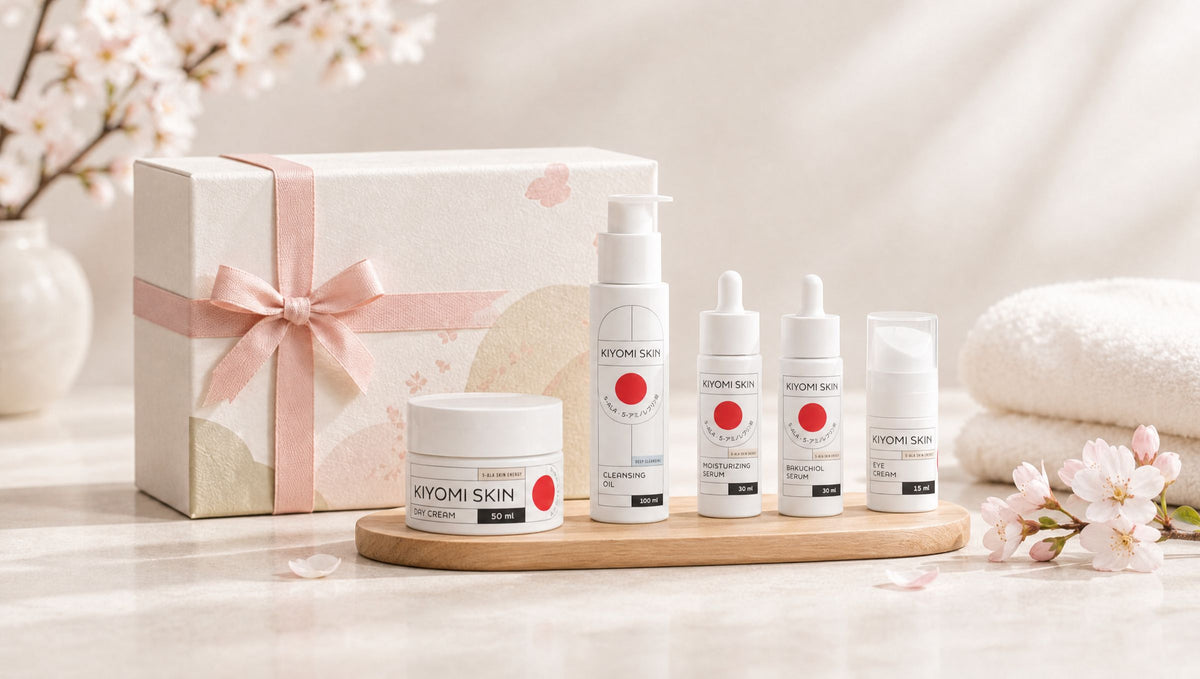
Kiyomi Skin's 5-ALA skincare catalog includes cleansers, serums, and moisturizers. Choose among those categories by the job you need the product to perform. A rinse-off cleanser is a cleansing step, while a leave-on cream is a moisturizing step; they are not interchangeable simply because they belong to the same brand.
Keep ingredient science separate from finished-product evidence. Research about an ingredient does not automatically demonstrate that a particular cream reduces wrinkles, improves retinol tolerance, or works better when layered with retinol.
For your 2026 routine, prioritize a clear purpose and readable directions over claims about cellular energy or deeper delivery. Neither phrase establishes that a finished formula is suitable for a retinol routine.
Build the routine around cleansing, moisture, and sunscreen
A Japanese-inspired routine can stay simple. You do not need multiple cleansing passes, several serums, and separate treatments at every application to make the routine feel complete.
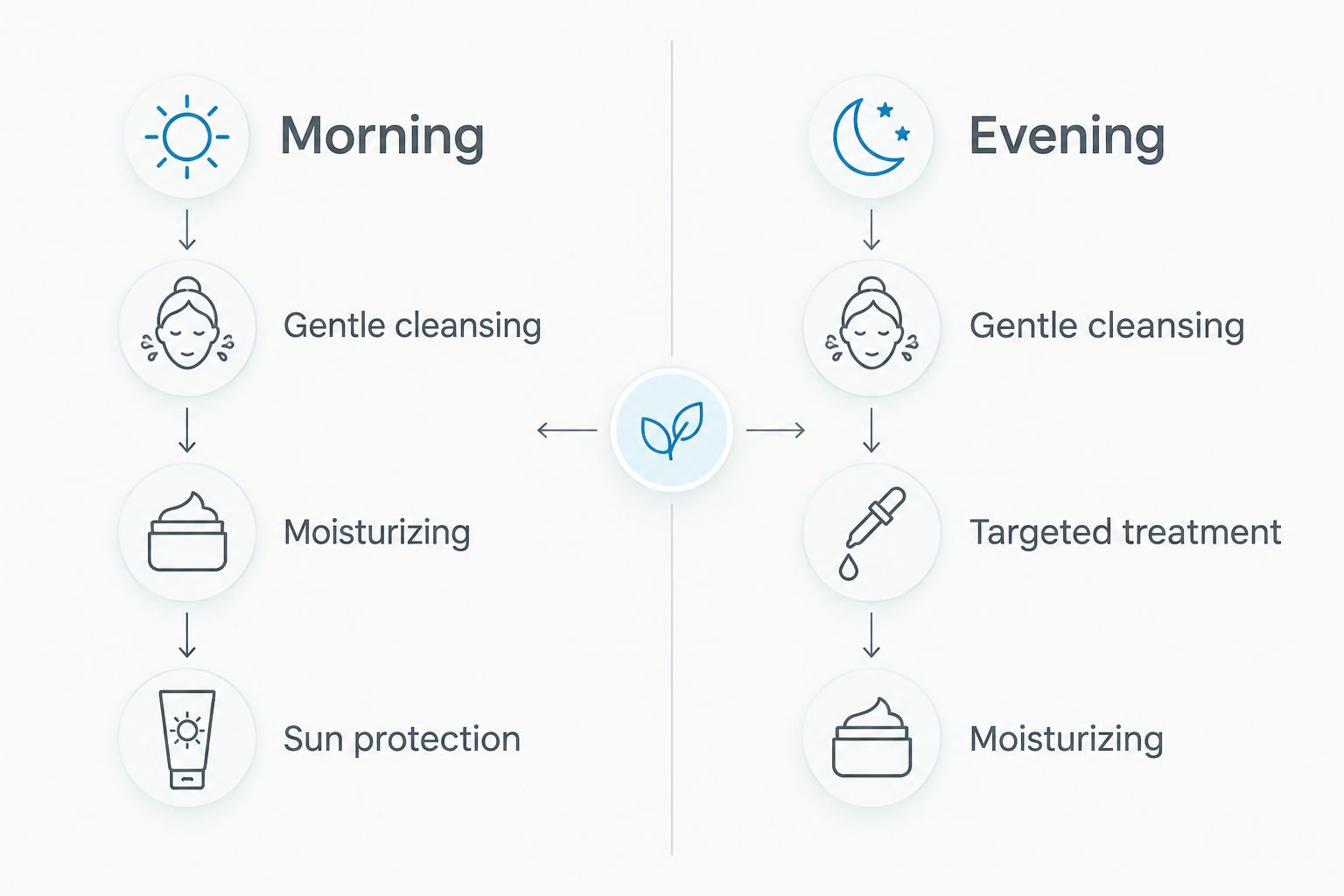
Use these categories as the foundation:
- Gentle cleansing: Remove daily buildup without turning cleansing into an exfoliating treatment.
- Moisturizing: Choose a product that addresses dryness and fits comfortably into your existing routine.
- Sun protection: Use broad-spectrum sunscreen with SPF 30 or higher, consistent with American Academy of Dermatology recommendations.
- Targeted treatment: Keep retinol at the frequency directed for your product rather than adding applications to compensate for missed nights.
For outdoor exposure, the American Academy of Dermatology recommends reapplying sunscreen approximately every 2 hours and after swimming or sweating. Follow the sunscreen's label, including its water-resistance directions.
Sunscreen is a daily protection step. It is not proof that a particular 5-ALA and retinol combination is compatible, and it should not be presented as a way to prevent every possible product reaction.
A simple morning sequence
Cleanse as needed, moisturize, then apply sunscreen. If your skin already has a comfortable morning routine, keep that structure while you evaluate a new product.
You do not need to move every serum into the morning. First decide whether the serum adds something your moisturizer does not already provide, then check its directions.
A simple evening sequence
Cleanse, apply retinol according to its directions, and moisturize as directed. Follow your retinol label or clinician's guidance on application order and whether skin should be dry before application.
On evenings without retinol, keep cleansing and moisturizing consistent. There is no need to turn every non-retinol evening into another treatment night.
Choose supporting products before adding another serum
Kiyomi Skin is best for shoppers exploring 5-ALA skincare who want to choose by routine function rather than ingredient hype. For this routine, start with cleansing and moisture instead of assuming another active serum is necessary.
The two products below have fragrance-free descriptions in the supplied catalog. Their roles are different, and neither has been established here as a clinically tested retinol partner.
| Product | Best for | Supported product details | Selection limit |
|---|---|---|---|
| Cleansing Gel | Shoppers seeking a fragrance-free cleansing step | Gently foaming facial cleanser; 100 ml size | A rinse-off cleanser does not replace moisturizer |
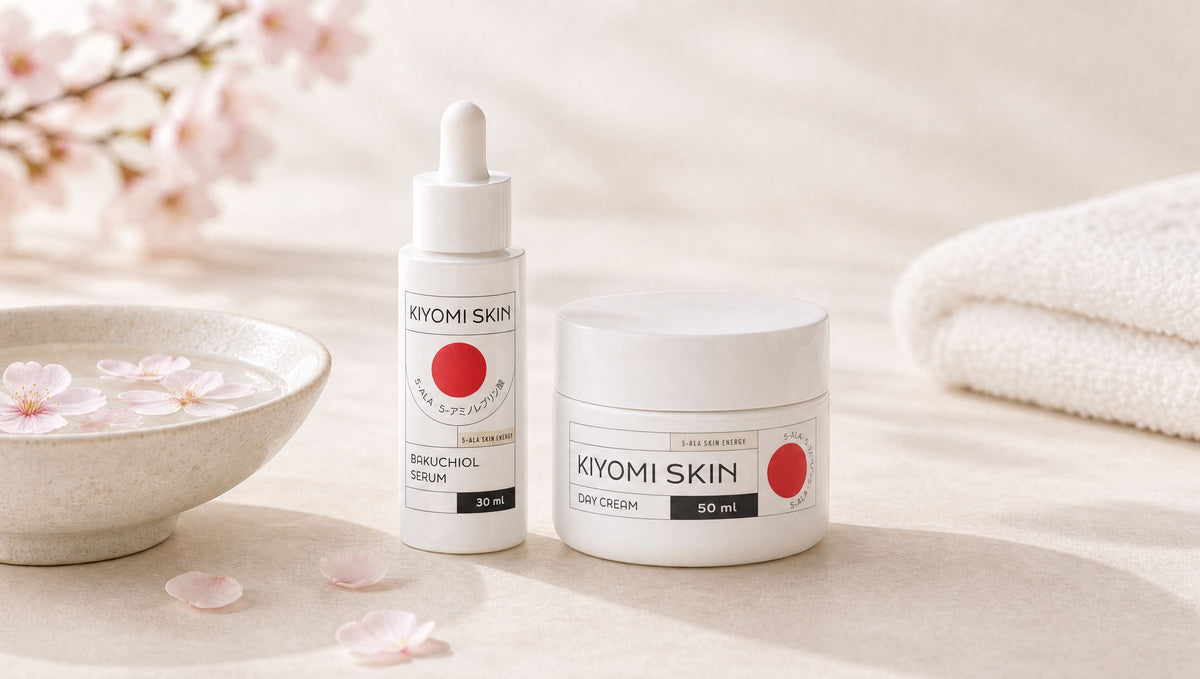
| Day Cream | Shoppers seeking a fragrance-free daytime moisturizer | Contains 5-ALA and hyaluronic acid; 50 ml size | No SPF protection is established by the supplied description |
Choose Cleansing Gel when your priority is the cleansing step. Choose Day Cream when your priority is daytime moisture. You do not need to replace both categories if one of your current products already suits you.
Hyaluronic acid is a humectant, meaning it helps attract and hold water. That explains an ingredient's moisturizing role; it does not establish a measured hydration result for this cream or prove that it offsets retinol-related dryness.
Shop these Kiyomi Skin essentials by the gap in your routine, not as a required two-product purchase. Keep sunscreen as a separate, clearly labeled protection step.


Why suitability varies between routines
Your 2026 product choices should reflect the whole routine, not a single compatibility chart. These factors change the decision:
- The retinol formula: Directions apply to the actual product, not every product carrying the word retinol.
- The complete 5-ALA formula: Other ingredients and the product's intended use matter alongside 5-ALA.
- Rinse-off versus leave-on use: A cleanser and a serum involve different application steps and contact with skin.
- Your current skin condition: An already uncomfortable routine needs simplification before another addition.
- Other treatment steps: Exfoliating acids, scrubs, and additional retinoid products deserve a full-routine review rather than separate pairing decisions.
- How many changes you make: Introducing several products together makes it harder to identify which change caused a response.
One brief suitability note: No formula is suitable for every sensitive-skin shopper. Introduce one new product at a time, follow its directions, and stop the new addition if it causes irritation; seek medical advice for persistent or significant symptoms.
Can I use 5-ALA in the morning and retinol at night?
Using products at different times separates the application steps, but it does not prove the combination is compatible. Check both labels and keep your daytime sunscreen routine consistent.
If you are reviewing your routine in 2026, use morning and evening categories to simplify decisions, not to justify adding every product you own. A product still needs a clear purpose even when there is an unused slot in the schedule.
Should I choose a 5-ALA moisturizer instead of a serum?
Choose a moisturizer when moisture is the gap in your routine; choose a serum only when it has a distinct purpose supported by its formula and directions. A serum is not a mandatory companion to retinol.
Day Cream provides a catalog-supported option for shoppers specifically seeking a fragrance-free moisturizer with 5-ALA and hyaluronic acid. Its daytime positioning does not establish sunscreen protection or a tested benefit when combined with retinol.
Does a 5-ALA product make retinol work better?
A retinol-enhancing effect is not established by the product information here. Claims of improved absorption, stronger wrinkle results, or reduced irritation would require evidence on the actual combination.
The practical goal is simpler: build a routine you can use as directed. Supporting cleansing and moisture have value without claiming that they amplify retinol's effects.
FAQ
Can 5-ALA be used with retinol on sensitive skin?
There is no blanket compatibility answer for sensitive skin; suitability depends on both finished formulas and their directions. Review the exact products rather than assuming a shared ingredient category establishes tolerance.
Should I apply 5-ALA before or after retinol?
There is no universal application order for every 5-ALA and retinol product. Follow the directions for each finished formula and your clinician's instructions when applicable.
How long should I wait between 5-ALA and retinol?
No specific waiting interval is established by the product information here. Follow product directions rather than treating an arbitrary delay as proof of compatibility.
Can I mix my 5-ALA serum and retinol together?
Do not assume the products are intended to be mixed in your hand or bottle. Apply products according to their individual instructions unless the manufacturer explicitly directs otherwise.
Is every Kiyomi Skin product fragrance-free?
Fragrance-free status must be checked product by product. The supplied catalog identifies Cleansing Gel and Day Cream as fragrance-free, but that description should not be extended to the entire range.
Do I still need sunscreen with a 5-ALA moisturizer?
Yes, use a sunscreen labeled broad-spectrum SPF 30 or higher rather than assuming a moisturizer provides UV protection. Day Cream's supplied description does not establish an SPF rating.
Can a 5-ALA serum replace my retinol?
A 5-ALA serum is not established here as an equivalent replacement for retinol. Choose products by their supported purpose rather than treating different ingredients as interchangeable.
Can I add a new 5-ALA product while starting retinol?
Introduce one new product at a time instead of starting both together. Keeping the rest of your routine unchanged makes your skin's response easier to interpret.
One last thing
The most useful upgrade is not always another serum. Before adding 5-ALA skincare to a retinol routine in 2026, identify the missing function: cleansing, moisture, or a targeted treatment with a clear purpose.
If your cleanser and moisturizer already suit you, keep them. If moisture is missing, start there—and choose a formula for what it is documented to do, not for an unverified promise about what it does alongside retinol.