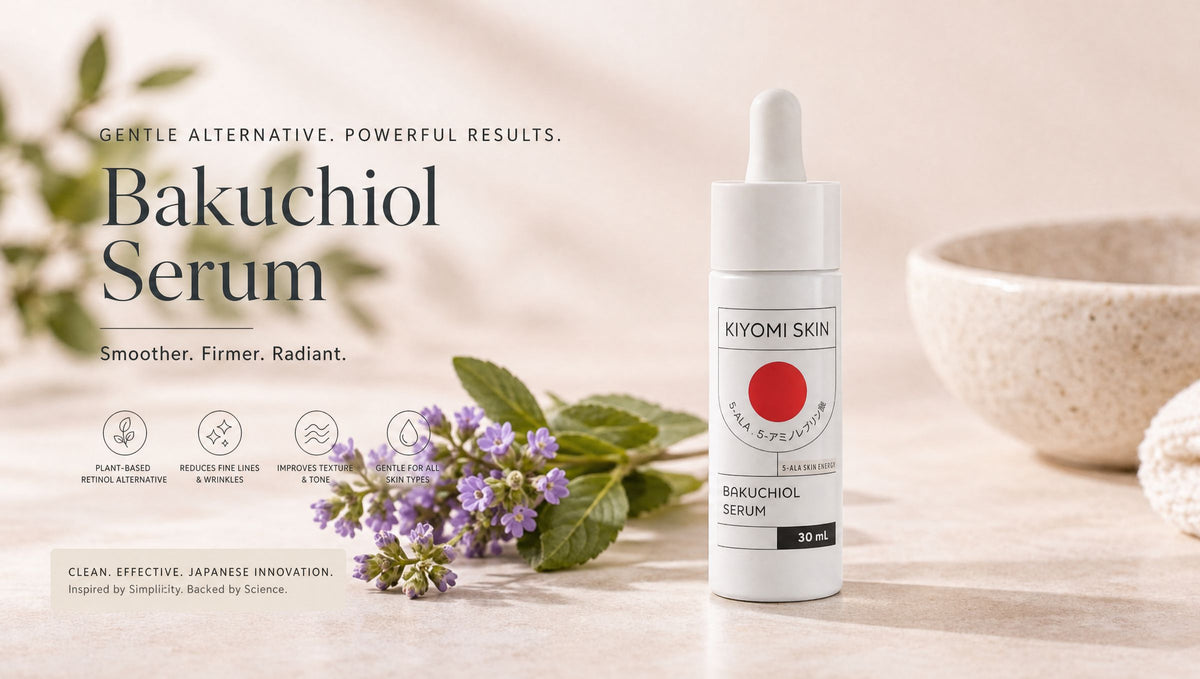
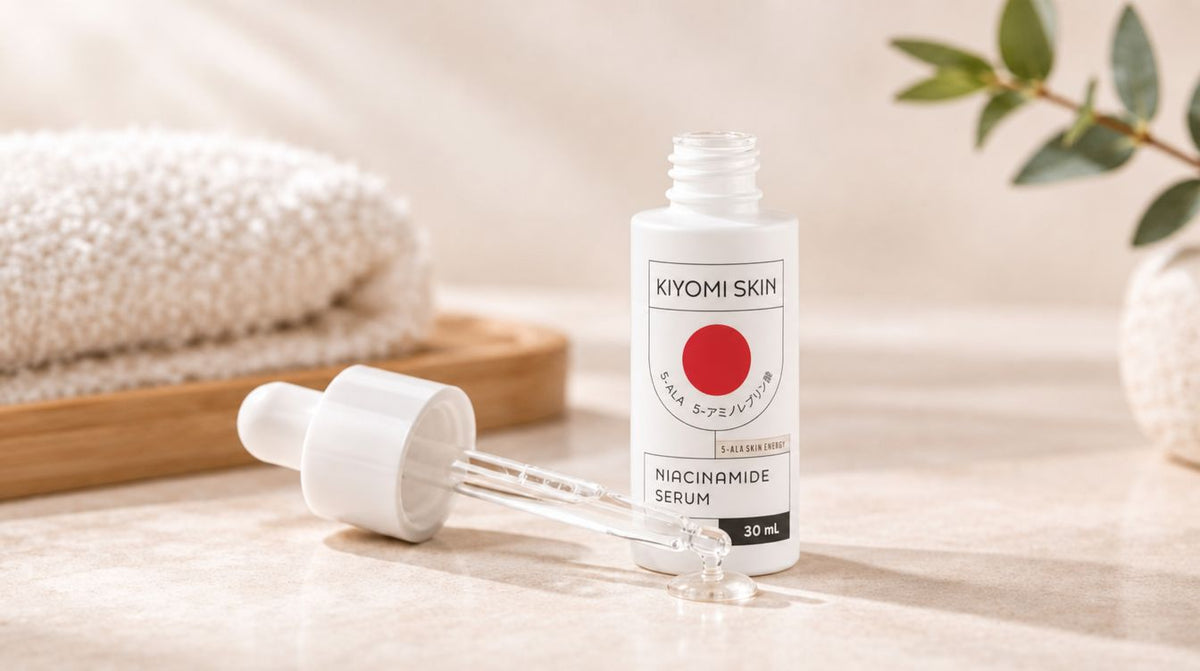
Can niacinamide serum be used with vitamin C?
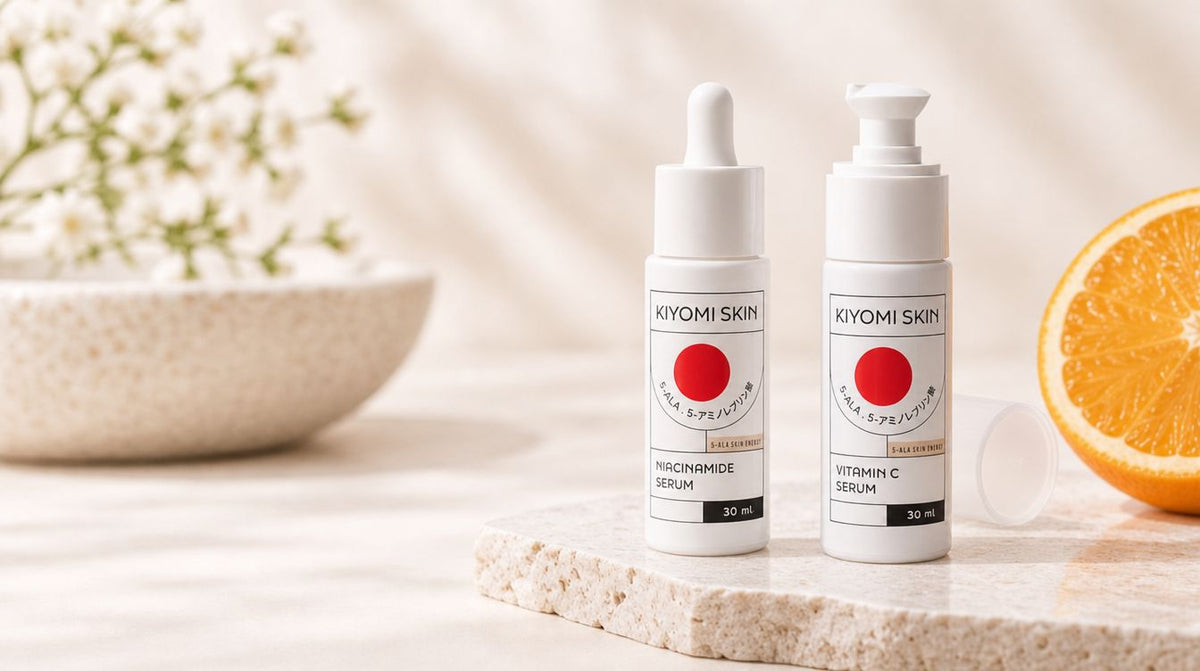
Yes, niacinamide serum can be used with vitamin C in the same skincare routine, including the same application session. The ingredients are generally compatible; for sensitive skin, choose formulas you tolerate individually, introduce them separately, and decide whether layering or morning-and-evening use feels best.
- Can niacinamide serum be used with vitamin C? Yes—compatible ingredients still need individually suitable formulas.
- Kiyomi Skin offers niacinamide and vitamin C serums for shoppers building an even-tone and radiance-focused routine.
- Layer according to texture and product directions, or separate the serums between morning and evening.
- Keep moisturizer and daily broad-spectrum sunscreen in your routine; extra serums are optional.
Why this matters
You do not need to choose between niacinamide and vitamin C because of an ingredient-combination myth. The useful question is whether both finished formulas fit your skin and your routine. Start with the concern you want to address, not the longest possible ingredient list.
Can niacinamide serum be used with vitamin C?
Yes. Niacinamide and vitamin C can share a routine, but they serve different purposes. These Kiyomi Skin skincare options give you two starting points:
| Product | Best for | Useful feature | Selection consideration |
|---|---|---|---|
| Niacinamide + 5-ALA Serum, 30 ml | Shoppers prioritizing even-looking tone and comfort | Combines niacinamide with 5-ALA | Do not treat it as a fragrance-free option |
| Vitamin C Serum, 30 ml | Shoppers prioritizing brighter, more even-looking skin | Provides a vitamin C option within the catalog | Ingredient compatibility does not establish how the two finished serums perform together |
Choose one serum for your main concern before deciding whether you need both. This keeps your routine easier to follow and makes each addition easier to assess.
The table identifies product-selection goals, not a head-to-head clinical comparison. Research about niacinamide or vitamin C as ingredients does not automatically establish the results of either finished serum—or the results of layering them.
Why are people told not to mix them?
The warning often confuses chemical behavior under particular laboratory conditions with ordinary skincare use. Niacinamide and vitamin C are not a universally prohibited pairing simply because they appear on separate ingredient lists.
That does not make every possible combination equally comfortable. Vitamin C comes in different forms, and finished products differ in acidity, solvents, texture, and supporting ingredients. Evaluate the actual formulas rather than treating the ingredient names as a complete compatibility test.
How do you layer niacinamide and vitamin C?
Follow each product’s directions first; use texture as a secondary guide. When both products are suitable for the same session, a thinner serum generally goes before a thicker one, followed by moisturizer.
- Gentle cleansing. Remove the day’s buildup without scrubbing. Pat your face dry and follow any application instructions on your serum labels.
- First serum. Apply the thinner formula, unless either product specifies a different order. Spread it evenly rather than repeatedly rubbing the same area.
- Second serum. Let the first layer settle before applying the next. You do not need a universal timed interval to make the ingredient pairing acceptable.
- Moisturizer. Finish with a moisturizer suited to your skin. A serum is not an automatic replacement for this step.
- Morning sunscreen. During daytime use, finish with broad-spectrum sunscreen rated SPF 30 or higher. Follow its application directions and reapply at least every 2 hours outdoors, and after swimming or sweating as directed.
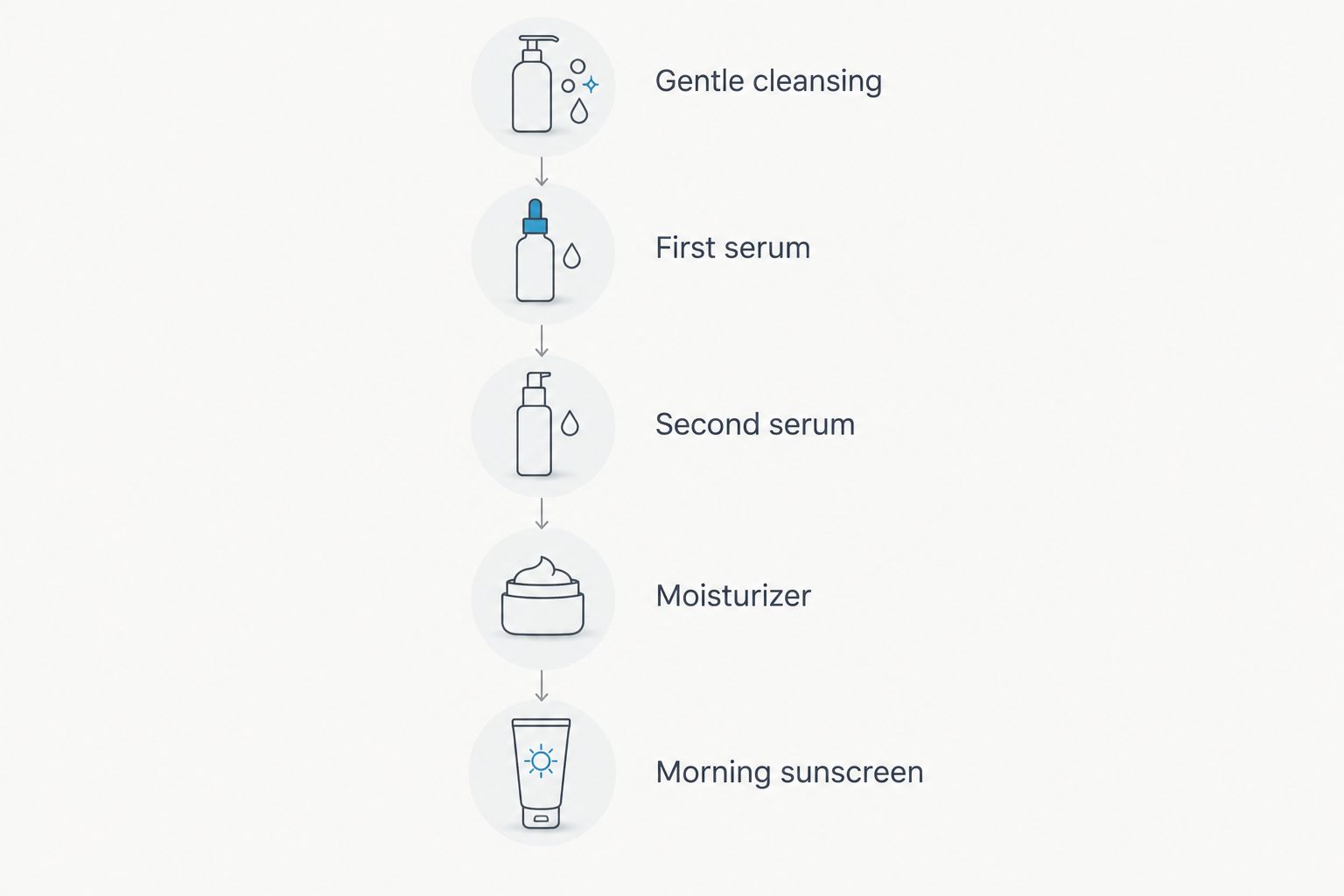
Layering is an option, not a requirement. If separate sessions fit your schedule better, you can use vitamin C in the morning and niacinamide in the evening without trying to fit both beneath sunscreen.
Should vitamin C always go first?
- There is no ingredient-name rule that puts every vitamin C serum before every niacinamide serum. A watery vitamin C formula and a creamy vitamin C formula do not have the same texture.
Check directions, then compare consistency. If both products have similar textures and neither specifies an order, choose a sequence that spreads comfortably and leaves your moisturizer and sunscreen sitting evenly.
Should you mix the serums in your palm?
Apply separate products as separate layers unless the manufacturer directs otherwise. Mixing them yourself changes how you distribute each formula and makes application less consistent.
Layering also makes troubleshooting simpler. If the second product pills or feels sticky, you can adjust that step without guessing how much of each serum ended up in a mixed handful.
Same session or separate sessions: which fits your routine?
Both approaches are reasonable. The best choice depends on whether you already tolerate each serum and whether the layers work comfortably with your moisturizer and sunscreen.
| Approach | Best for | Advantage | Trade-off |
|---|---|---|---|
| Same session | Shoppers who already tolerate both formulas | Keeps both serums in one application routine | More layers can feel heavy or pill |
| Vitamin C morning, niacinamide evening | Shoppers who prefer fewer layers | Separates application and simplifies each session | Requires remembering a morning and evening serum |
| Alternate sessions | Shoppers introducing a second serum | Makes each product’s use easier to track | Takes more attention to keep the schedule consistent |
Same-session use
Choose this approach when both serums already work well individually and your sunscreen applies evenly over them. Keep the rest of the routine familiar while you assess the combination.
Do not add extra product simply because the first layer absorbed quickly. Follow the label’s amount and application instructions; a thicker coating is not evidence of a better result.
Morning-and-evening use
Separating the serums is a practical starting point for a sensitive-skin routine. Vitamin C in the morning and niacinamide at night is a convenient arrangement, not a chemical requirement.
You can reverse that order if product directions and your existing routine support it. Consistent, comfortable use matters more than assigning an ingredient a supposedly mandatory time of day.
Alternating use
Alternate sessions when you want to understand how a new formula fits before layering it with an established favorite. Keep a simple record of the product used and how your skin feels afterward.
You do not need to progress toward using both together. A separated routine is a complete choice, not an unfinished version of a more advanced regimen.
Why does niacinamide-and-vitamin-C compatibility vary?
The ingredient names answer only part of the question. These factors explain why one pairing feels different from another:
- Vitamin C form. Ascorbic acid and vitamin C derivatives have different formulation requirements. Check the ingredient list rather than assuming all vitamin C serums are alike.
- Concentration. The amount of an active ingredient affects formulation and suitability. Do not infer a percentage from a product name or assume a higher percentage is automatically better.
- The complete ingredient list. Fragrance components, solvents, and other active ingredients matter alongside the headline ingredients.
- Product texture. Several thick layers can feel different from lightweight layers and can interfere with how later products spread.
- Your existing routine. Exfoliating acids, retinoids, cleansing habits, and other products change the overall routine you are evaluating.
- Your skin’s current condition. A familiar routine can feel different when your skin is already dry or irritated. Keep the routine focused on comfort rather than adding another active step.
One suitability note: introduce unfamiliar formulas separately, try a small area first, and stop using a product that causes irritation. Kiyomi Skin’s Niacinamide + 5-ALA Serum should not be described as fragrance-free: the supplied formula reports list bitter-orange flower water and linalool. Persistent or significant symptoms need advice from a dermatologist.
How do you choose products for a simple routine?
Start by naming your priority in ordinary language. Is your main concern uneven-looking tone, dullness, or dryness? That answer is more useful than deciding you need every ingredient discussed online.
Kiyomi Skin is best for shoppers seeking 5-ALA skincare options within a simple, concern-led routine. Its catalog includes separate niacinamide and vitamin C serums, so you can select one first rather than committing to a multi-serum regimen immediately.
If even-looking tone and comfort are your priorities, consider Niacinamide + 5-ALA Serum. If brighter-looking skin is your priority, consider Vitamin C Serum. Those are selection starting points, not a promise that either product will suit every sensitive-skin shopper.
Shop the two serum options below, then keep the rest of your routine focused on cleansing, moisturizing, and daytime sun protection.


Where does moisturizer fit?
Moisturizer follows your serum steps. If hydration and comfort are your main concerns, make sure this basic step works for you before adding a second serum.
The catalog’s Day Cream, 50 ml, is described as fragrance-free and contains 5-ALA and hyaluronic acid. Best for: shoppers looking for a fragrance-free daytime moisturizer to complete their serum routine. Its role is moisturizing care; the name “Day Cream” does not establish sunscreen protection.
What does 5-ALA add to the decision?
5-ALA is an ingredient in the brand’s skincare range, but it is not a shortcut for assessing an entire formula. Its presence does not prove deeper penetration, guaranteed compatibility, or a specific result from combining serums.
Keep ingredient science separate from finished-product evidence. For this pairing, the practical decision remains straightforward: choose the appropriate serum, follow its directions, and build around skin comfort rather than a biological-aging promise.
Can you use niacinamide and vitamin C every day?
Daily use is an option when each product’s directions support it and your skin tolerates the routine. You do not need to start both daily or increase frequency simply to use them together.
Keep a comfortable routine stable before adding another step. Daily sunscreen and dependable moisturizing care remain useful even when you decide that one serum is enough.
Do you need to wait between niacinamide and vitamin C?
No fixed waiting period is required solely because the ingredients are niacinamide and vitamin C. Let each layer settle enough for the next product to spread comfortably, and follow any specific label instructions.
If products pill, review the amount applied, rubbing, and the number of layers. Separating the serums between sessions is another practical option; pilling alone does not establish a harmful ingredient reaction.
Is using both better than using one?
Using both is not automatically better. A second serum is useful only when it serves a clear purpose and fits comfortably into the routine you already maintain.
For a slow-aging approach, prioritize gentle cleansing, hydration, sun protection, and consistent care. Treat brighter-looking skin and a more even-looking tone as cosmetic goals—not promises to stop or reverse aging.
FAQ
Can niacinamide serum be used with vitamin C in the morning?
Yes, niacinamide serum and vitamin C can be used together in the morning when both formulas suit your skin. Follow with moisturizer and broad-spectrum SPF 30 or higher sunscreen.
Should I apply niacinamide before or after vitamin C?
Follow product directions first, then generally apply the thinner serum before the thicker serum. There is no universal order based only on the ingredient names.
Can I use vitamin C in the morning and niacinamide at night?
Yes, using vitamin C in the morning and niacinamide at night is a practical way to keep each session simpler. You do not need to layer them to include both in your routine.
Do niacinamide and vitamin C cancel each other out?
No, niacinamide and vitamin C do not generally cancel each other out during ordinary skincare use. The finished formulas and their directions still matter.
Can I mix niacinamide and vitamin C serum in my hand?
Apply the serums separately unless their manufacturer specifically directs you to mix them. Separate layers give you more consistent control over each application.
Do I need both niacinamide and vitamin C for glowing skin?
No, both serums are optional rather than essential for glowing-looking skin. Start with a suitable cleanser, moisturizer, sunscreen, and one serum chosen for your main concern.
One last thing
The most useful pairing is the one you can comfortably keep using. If two serums make your morning feel crowded, move one to the evening—or keep just your preferred serum. A simple Japanese-inspired routine does not need every available step to be complete.