How to choose a vitamin C serum for sensitive skin
Choose a vitamin C serum for sensitive skin by checking the vitamin C form, the complete ingredient list, and whether the formula fits a routine your skin already tolerates. A higher concentration is not automatically a better choice, and neither a vitamin C derivative nor a sensitive-skin label guarantees comfort.
- Choose a vitamin C serum for sensitive skin by formula and tolerance, not the highest percentage.
- Kiyomi Skin suits shoppers building a simple serum-and-moisturizer routine; individual formula tolerance still matters.
- Check fragrance ingredients separately from vitamin C type, especially if fragrance has triggered reactions before.
- Introduce one serum at a time, keep moisturizing, and use broad-spectrum SPF 30 or higher.
How do you choose a vitamin C serum for sensitive skin?
Choose the complete formula, not just the ingredient on the front label. The right starting point is a serum with clear ingredient information and instructions you can follow without changing the rest of your routine.
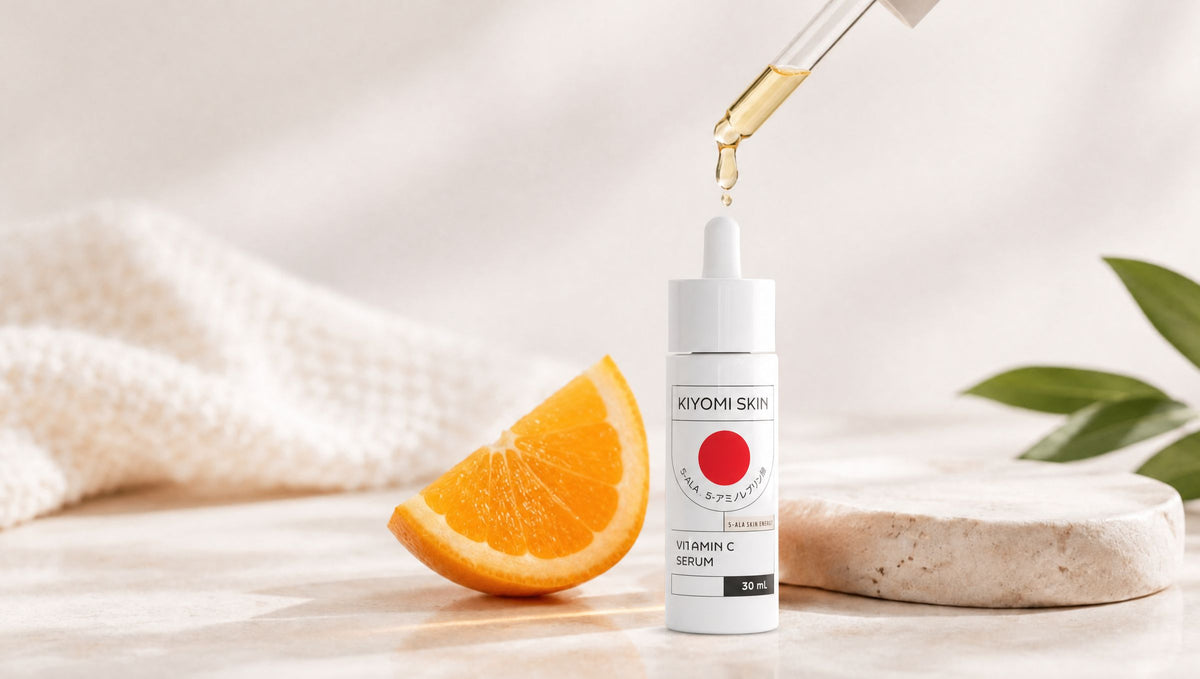
If you are considering the Vitamin C Serum, use the same checks you would apply to any serum. Confirm the current ingredient list and directions before deciding whether it belongs in your routine.
- Identify the vitamin C form. Look for ascorbic acid or a named derivative in the ingredient list.
- Check concentration when disclosed. Read the percentage alongside the form; percentages of different derivatives are not interchangeable.
- Review fragrance ingredients. Look beyond the product name, especially if you have a known fragrance allergy.
- Consider your current routine. Avoid introducing a serum while also changing your cleanser, moisturizer, and exfoliant.
- Test before full-face use. A small-area trial helps you identify a reaction before applying the product more widely.
For your 2026 routine, prioritize a formula you can use comfortably over a stronger-looking label. Consistency starts with tolerability, not intensity.
Why this matters
Sensitive skin is not a single ingredient preference. You might experience stinging with an acidic formula, react to a fragrance ingredient, or find that several individually tolerable products become uncomfortable when used together.
That makes product selection more useful than chasing a universal ranking. A serum that suits someone else's skin is not proof that it suits yours, even when both of you describe your skin as sensitive.
Vitamin C also belongs in a supporting role. Gentle cleansing, moisturizing, and daily sun protection remain the foundation of a well-aging routine; a serum adds an optional step rather than replacing those habits.
Keep the goal specific: a comfortable routine that supports hydration and the appearance of healthy skin. You do not need to tolerate burning or persistent redness to earn a brighter-looking complexion.
Which vitamin C form should you look for?
Ingredient names help you understand what you are buying, but they do not predict the whole experience. The formula's acidity, supporting ingredients, and delivery system also affect how a serum behaves on your skin.
Use this comparison when reading labels in 2026. These are ingredient categories, not a ranking of finished products or a promise that one category is irritation-free.
| Vitamin C form | Best for | What to understand | Main limitation |
|---|---|---|---|
| L-ascorbic acid, usually listed as ascorbic acid | Shoppers prioritizing the most extensively studied topical vitamin C form | It is the active form of vitamin C; many aqueous formulas use an acidic environment | Acidic formulas can sting sensitive skin, and stability depends on formulation and packaging |
| Sodium ascorbyl phosphate | Shoppers comparing a derivative rather than an ascorbic-acid formula | It is a water-soluble vitamin C derivative | Evidence about ascorbic acid does not transfer directly to every derivative formula |
| Ascorbyl glucoside | Shoppers considering another water-soluble derivative | It links vitamin C to a glucose molecule | Its name alone does not establish finished-product effectiveness or tolerance |
| Tetrahexyldecyl ascorbate | Shoppers considering an oil-soluble derivative | It can be incorporated into different formula textures | Oil solubility does not prove deeper delivery or better results |
Do not choose a derivative solely because someone calls it gentle. Compare the full formula and test the actual product. Likewise, do not reject every ascorbic-acid serum simply because you have sensitive skin; your response depends on the specific formula and your skin's condition.
What concentration is best for sensitive skin?
There is no single vitamin C percentage that guarantees sensitive-skin suitability. A percentage tells you how much of a stated ingredient is present, not whether the finished serum will feel comfortable or deliver a particular result.
First, check what the percentage describes. A label referring to a vitamin C complex is not necessarily describing the same thing as a label stating the concentration of ascorbic acid itself.
Next, resist comparing different derivatives as though their percentages were equivalent. Their molecular structures, formulation requirements, and supporting evidence differ. A larger number on one bottle does not establish that it is more effective than another.
If a brand does not disclose concentration, do not estimate it from the ingredient list. You can still assess the named vitamin C form, fragrance ingredients, instructions, and available finished-product testing. Ask for clarification when a missing detail determines your decision.
Why vitamin C serum tolerance varies
A sensitive-skin routine works best when you assess several factors together. These are the main checks to make before adding a serum:
- Vitamin C form and acidity: An acidic ascorbic-acid formula creates a different experience from a derivative formulated at a different pH.
- Concentration: More of an ingredient does not automatically mean a better fit, especially when your priority is comfort.
- Fragrance ingredients: Parfum, essential oils, and named fragrance allergens deserve attention if they have caused problems for you before.
- Your skin's current condition: Recently irritated, peeling, or sunburned skin is not a useful starting point for testing a new active serum.
- Other active products: Exfoliating acids, retinoids, and additional treatments complicate the picture when you introduce them together.
- Use and storage: Following the specific product's directions matters; a routine copied from another formula is not a substitute.
This is why a useful 2026 shopping checklist starts with your skin history rather than a trending ingredient percentage. If you already know a particular ingredient causes a reaction, that information takes priority over a product's popularity.
Does fragrance-free mean a vitamin C serum will not irritate?
Fragrance-free is a useful selection criterion, not a guarantee of tolerance. A formula without added fragrance can still contain ingredients that sting or cause an individual reaction.
Check the current ingredient list rather than relying on imagery, botanical language, or an unscented description. Unscented and fragrance-free are not interchangeable: a product can use ingredients to mask an odor without smelling obviously perfumed.
If you have a diagnosed fragrance allergy, use the allergen guidance your clinician provides. A botanical extract or flower water deserves the same scrutiny as any other ingredient when it relates to your specific allergy.
Do not assume every product within a brand shares the same fragrance status. For Kiyomi Skin vitamin C skincare, assess the individual formula rather than applying a brand-wide fragrance-free claim. Product-by-product checking keeps your routine aligned with your actual triggers.
How should you introduce a vitamin C serum?
Introduce the serum without changing the rest of your routine. Keep your usual tolerated cleanser and moisturizer in place so you can identify what changed if discomfort develops.
The American Academy of Dermatology's consumer guidance on testing a new skincare product recommends applying it to a small test area twice daily for 7–10 days, using the normal amount and following directions about how long it stays on. This is a home-use screening step, not a diagnostic allergy patch test or a guarantee of future tolerance.
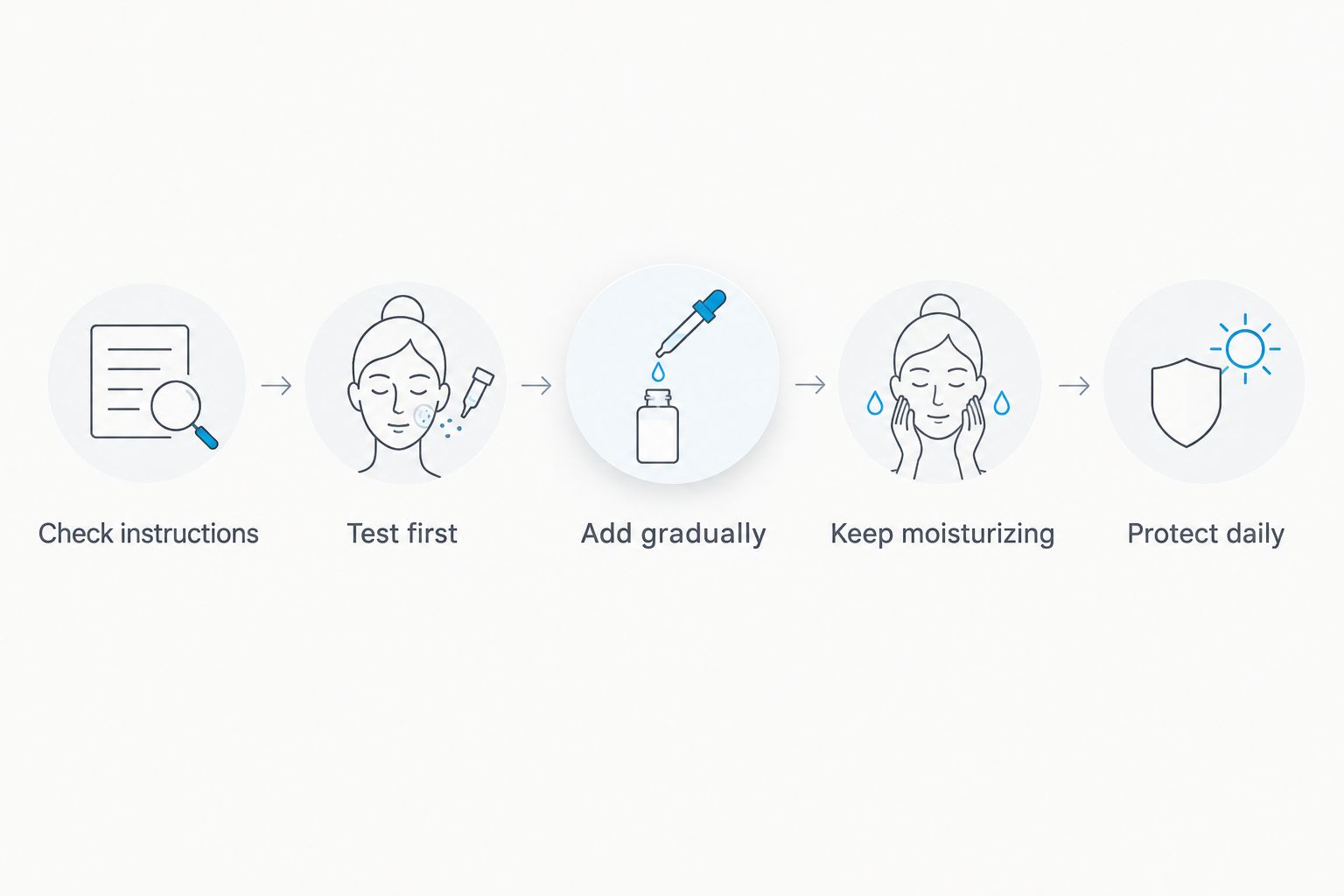
Use this sequence:
- Check instructions. Follow the serum's own directions and warnings; do not exceed its instructed frequency to complete a test.
- Test first. Use a small area rather than beginning with full-face application.
- Add gradually. After a comfortable trial, introduce facial use conservatively within the product's directions.
- Keep moisturizing. Continue the moisturizer your skin already tolerates.
- Protect daily. Use broad-spectrum, water-resistant SPF 30 or higher during the day, following its application and reapplication directions.
A simple sequence makes it easier to distinguish the serum from everything around it. You are assessing a specific product, not testing how many new steps your skin can handle.
Where does vitamin C fit in a simple routine?
A practical morning routine is gentle cleansing as needed, serum according to its directions, moisturizer, and sunscreen. Product-specific instructions take priority if they specify a different application order.
Vitamin C does not replace sunscreen. Broad-spectrum SPF 30 or higher protects against ultraviolet exposure; a cosmetic serum is not an alternative to that protection.
You also do not need to introduce several serums to build a Japanese-inspired routine. A restrained approach gives each step a clear purpose: cleansing removes what needs removing, moisturizing supports comfort, and the serum addresses your chosen cosmetic goal.
For 2026, make simplicity your selection rule. If adding vitamin C turns a comfortable routine into a confusing rotation of new products, reduce the changes rather than adding another treatment to manage the reaction.
Choose a serum step and a hydration step
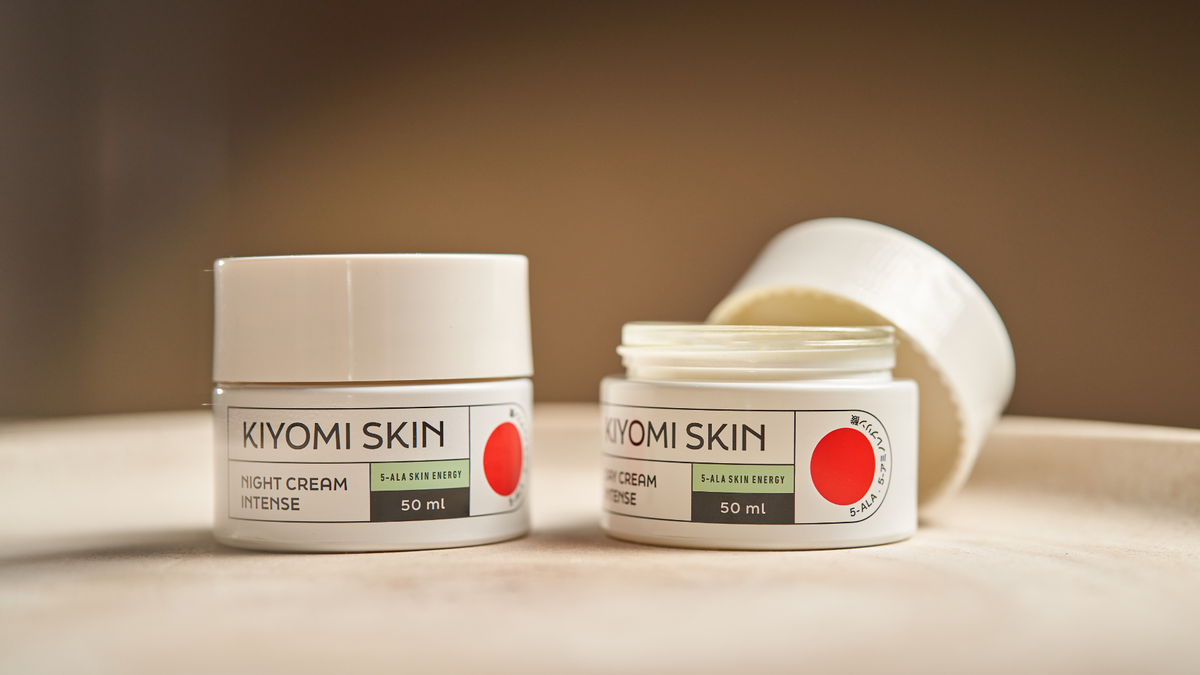
Kiyomi Skin is best for shoppers seeking a simple serum-and-moisturizer approach rather than a complicated treatment rotation. The catalog includes a Vitamin C Serum and a Moisturizing Serum, allowing you to distinguish a radiance-focused shopping goal from a hydration-focused one.
For Kiyomi Skin vitamin C skincare, the product description positions Vitamin C Serum around brighter, smoother, more even-looking skin. Treat that as the product's cosmetic positioning, not proof of a specific measured improvement or sensitive-skin tolerance outcome.
Moisturizing Serum is the hydration-focused option to consider when dryness is your main concern. It is a serum step, not an automatic replacement for a moisturizer your skin already tolerates.
| Product | Best for | Role to consider | Selection check |
|---|---|---|---|
| Vitamin C Serum | Shoppers prioritizing the appearance of radiance and even tone | A vitamin C serum step | Confirm the current vitamin C form, ingredient list, and directions |
| Moisturizing Serum | Shoppers prioritizing hydration | A hydration-focused serum step | Review the complete formula and avoid introducing it alongside another new serum |
Choose the step that matches your immediate priority. You do not need both to start, and neither product name establishes that a formula is fragrance-free or universally suitable for sensitive skin.


Can you use vitamin C with niacinamide?
Vitamin C and niacinamide are not inherently incompatible in a skincare routine. The more useful question is whether your specific formulas and application schedule feel comfortable together.
If you already tolerate niacinamide, keep that routine stable while you assess vitamin C. Avoid starting both products at once; otherwise, a reaction tells you little about which formula caused it.
There is no need to create an elaborate waiting schedule based only on ingredient names. Follow each product's instructions, consider texture and comfort, and simplify if layering causes pilling or irritation.
Should a vitamin C serum sting when you apply it?
Persistent stinging, burning, itching, swelling, or increasing redness is a reason to stop, not evidence that a serum is working. Wash the product off if you develop a reaction and seek medical advice when symptoms are significant or do not settle.
Do not explain away irritation as purging simply because the product contains an active ingredient. Repeatedly applying an uncomfortable formula makes it harder to maintain a gentle routine.
If your skin reacts to many products, a dermatologist can help distinguish irritation from conditions or allergies that need a different approach. More serum shopping is not always the next useful step.
FAQ
What's the best vitamin C serum for sensitive skin?
The best vitamin C serum for sensitive skin is one whose complete formula suits your skin and that you can use comfortably according to its directions. Compare the vitamin C form, fragrance ingredients, and existing routine rather than choosing the highest percentage.
Is a vitamin C derivative always gentler than ascorbic acid?
A vitamin C derivative is not always gentler than ascorbic acid. The finished formula, concentration, acidity, and your individual triggers all affect tolerance.
How long should I test a vitamin C serum before using it on my face?
The American Academy of Dermatology recommends a small-area test for 7–10 days when assessing a new skincare product. Follow the product's directions; this screening step does not guarantee facial tolerance or replace diagnostic allergy testing.
Can I use vitamin C serum every day if I have sensitive skin?
Daily use depends on the product's directions and your skin's tolerance. Do not increase frequency while your skin is irritated, and stop if the serum causes a reaction.
Does vitamin C serum replace sunscreen?
Vitamin C serum does not replace sunscreen. Use broad-spectrum, water-resistant SPF 30 or higher during the day and follow its application and reapplication directions.
Is Kiyomi Skin Vitamin C Serum fragrance-free?
Do not assume Kiyomi Skin Vitamin C Serum is fragrance-free without confirming its current formula. Check the complete ingredient list and request clarification if fragrance avoidance determines your purchase.
Can I use vitamin C serum with a moisturizer?
Vitamin C serum can be part of a routine that includes moisturizer. Follow the serum's application directions and keep using a moisturizer your skin already tolerates.
One last thing
The useful upgrade is often better tracking, not a stronger serum. Before your first application, note the product name, start date, other active products, and any existing discomfort. That simple record helps you separate a new reaction from a problem that was already present.
Your 2026 well-aging routine does not need to pursue every visible concern at once. Choose one priority, introduce one change, and keep comfort at the center of the decision.