Niacinamide serum for new moms: complete 2026 guide
New moms’ niacinamide skincare is a simple facial-care routine aimed at supporting skin comfort, hydration, and a more even-looking tone. Choosing a niacinamide serum for new moms starts with the complete formula and your breastfeeding circumstances—not the strongest percentage or the longest routine.
- Choose a niacinamide serum for new moms by its complete formula, not concentration alone.
- Kiyomi Skin offers Niacinamide + 5-ALA Serum; breastfeeding suitability requires a separate, formula-specific assessment.
- For sensitive skin, prioritize gentle cleansing, moisturizer, and daily broad-spectrum SPF 30 or higher.
- Introduce one new product at a time; ingredient research does not prove finished-product results.
Why niacinamide skincare matters for new moms
Niacinamide is a form of vitamin B3 used in skincare to support the skin barrier and improve the appearance of uneven tone. Your skin barrier is the outer layer that helps retain moisture and keep irritants out. A serum is an optional addition, not a replacement for moisturizer or sunscreen.
For a new parent, the useful routine is the one you can repeat without turning every application into a project. Start with your main concern: tightness, uneven-looking tone, or a routine that feels uncomfortable. If fragrance is a concern, read this guide to choosing a fragrance-free serum for sensitive skin before comparing bottles.
Your 2026 skincare priority is a comfortable baseline, then one purposeful addition. More products do not automatically mean better care. Persistent redness, an itchy rash, painful breakouts, or changing pigmentation deserve an assessment rather than another serum.
Build your routine around comfort and consistency
Identify the concern you actually want to address
Separate what your skin feels like from what you want it to look like. Tightness after washing points you toward reviewing cleansing and moisturizing first; uneven-looking tone gives you a different reason to consider niacinamide. Neither concern requires a full shelf of treatments.
For this 2026 routine, choose one priority and keep the rest of your care familiar. That makes changes easier to interpret and reduces the temptation to replace everything after a difficult skin day. A photograph in consistent lighting is more useful than comparing your face under different bathroom lights.
- Write down your main concern in plain language.
- Note whether discomfort starts after a particular product.
- Keep a cleanser and moisturizer you already tolerate.
- Separate cosmetic goals from symptoms that need medical care.
Check the whole formula before breastfeeding use
Breastfeeding suitability is a whole-formula question, not a niacinamide-only question. A familiar ingredient name does not establish the suitability of every serum containing it. Ask your obstetric clinician, dermatologist, or pharmacist to review the current ingredient list, especially when a formula combines several featured ingredients.
Keep facial skincare away from the nipple and areola, and avoid transferring freshly applied product to your baby’s skin or mouth. Wash your hands after application. If you are pregnant again, review that circumstance separately rather than carrying over advice given for breastfeeding.
This check also applies to a moisturizer, an eye cream, or a botanical serum. A product’s natural origin, Japanese inspiration, or gentle positioning does not replace a relevant safety assessment.
- Bring the complete ingredient list, not just the product name.
- Mention breastfeeding, pregnancy, allergies, and prescription skincare.
- Ask about application sites and infant contact.
- Follow the product’s current directions and your clinician’s advice.
Choose a serum with a clear purpose
You can begin without buying anything: check whether your current moisturizer already contains niacinamide. If it does and your skin feels comfortable, an additional serum is optional. A separate serum makes sense when you want a dedicated step rather than another overlapping formula.
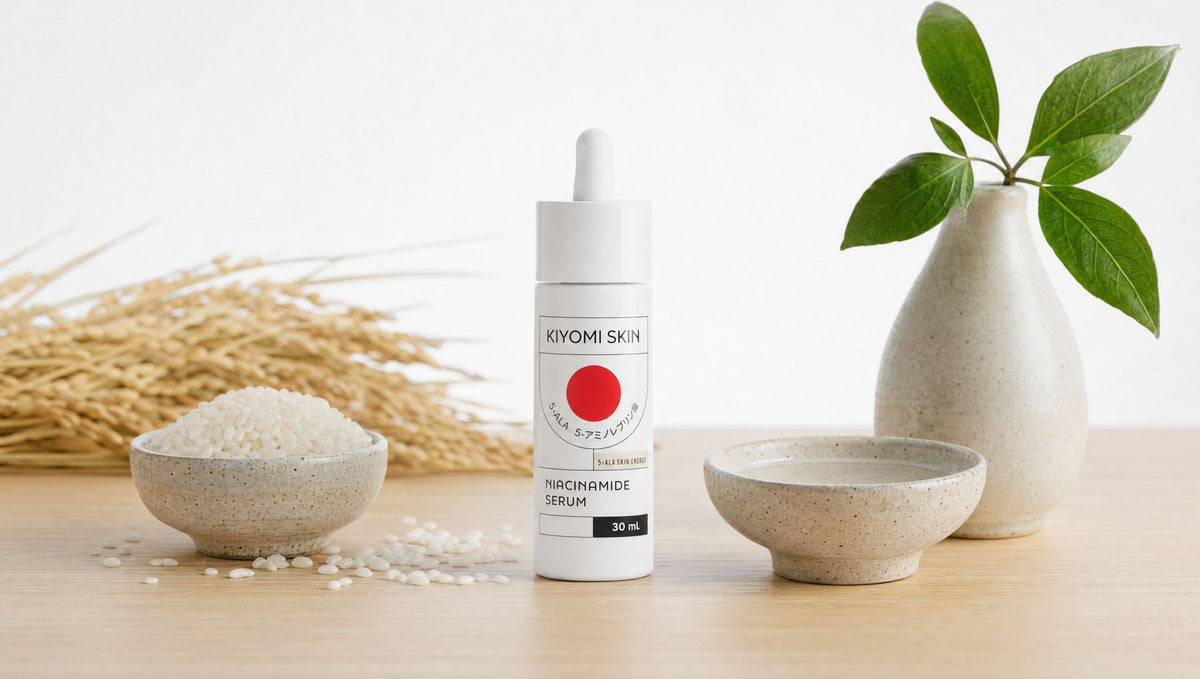
Kiyomi Skin niacinamide skincare is best for shoppers interested in a 5-ALA-containing formula for a simple routine. The Niacinamide + 5-ALA Serum is the catalog option to examine when even-looking tone and comfort are your priorities. That recommendation is about product selection, not a breastfeeding clearance or a promise of results.
Check fragrance details carefully. The supplied formula reports list bitter-orange flower water and linalool, so this serum should not be described as fragrance-free without formulation clarification. If fragrance avoidance is essential for your skin, make that a deciding criterion rather than overlooking it for a featured ingredient.
- Check your existing products for niacinamide first.
- Read the current full ingredient list before purchasing.
- Choose one serum rather than stacking several new treatments.
- Confirm fragrance details when you have known sensitivities.
Test your tolerance before full-face use
A cautious introduction gives you useful information before you apply a new formula everywhere. The American Academy of Dermatology recommends testing skincare on a small area twice daily for 7–10 days. Follow product-specific directions and seek professional advice if you have a history of significant reactions.
A home-use test does not diagnose an allergy or guarantee future tolerance. Stop if you develop burning, itching, swelling, or a rash; do not treat discomfort as proof that a serum is working. Get medical advice for a significant or persistent reaction.
Keeping other products unchanged matters here. If you introduce a cleanser, serum, and cream together, you lose the clearest way to identify which change caused a problem.
- Use a small test area as directed by dermatology guidance.
- Keep the rest of your routine unchanged.
- Record discomfort as well as visible changes.
- Stop use when a reaction develops.
Layer a short morning and evening routine
Build the routine manually with what you already tolerate: cleanse gently when needed, moisturize, and protect exposed skin during the day. Once a serum has passed your introduction process, use it according to its directions, generally before moisturizer. There is no need to add toner, mist, masks, and eye care to make the routine count.
For daytime protection, American Academy of Dermatology guidance recommends broad-spectrum, water-resistant SPF 30 or higher. Reapply sunscreen approximately every 2 hours outdoors and after swimming or sweating, following the label. A day cream is not a sunscreen unless its labeling explicitly provides that protection.
For your 2026 routine, keep the sequence visible and easy to remember. Missing an optional serum application does not require a catch-up application later.
- Cleanse: use a tolerated cleanser without scrubbing.
- Serum: apply your chosen serum according to its directions.
- Moisturize: follow with a comfortable moisturizer.
- Protect: finish daytime care with an appropriately labeled sunscreen.
Review progress without chasing stronger formulas
Assess comfort first. A product that leaves your face persistently uncomfortable is not a useful foundation for a consistent routine, even if its ingredient list sounds impressive. Review cosmetic changes under similar conditions rather than judging your skin immediately after every application.
Keep ingredient science separate from product evidence. Niacinamide research does not prove that every niacinamide serum produces the same outcome. Likewise, the presence of 5-ALA does not establish a finished product’s effect on cellular energy, biological aging, or postpartum skin.
Kiyomi Skin pairs niacinamide with 5-ALA in its serum, but a claim about that combination needs evidence on the actual formula. For your 2026 product review, ask what was tested, who participated, what was measured, and whether there was a comparison group—not simply whether a product is called science-backed.
- Track comfort and visible appearance separately.
- Compare photographs taken in similar lighting.
- Avoid increasing strength simply because progress feels slow.
- Ask for finished-formula evidence behind specific results.
- Seek dermatology advice for persistent or worsening concerns.
Compare your options before adding another step
Choose by the job you need done, not by the number of ingredients on the label. A dedicated niacinamide serum, a hydration-focused serum, and a basic moisturizer routine serve different purposes. The best starting point is the simplest option that matches your concern and passes your formula checks.
| Option | Best for | Practical advantage |
|---|---|---|
| Niacinamide + 5-ALA Serum | Shoppers interested in niacinamide and a 5-ALA-containing formula | Provides a dedicated niacinamide step |
| Moisturizing Serum | Shoppers comparing a hydration-focused serum | Keeps the choice focused on hydration rather than adding multiple treatments |
| Existing moisturizer-based routine | New moms prioritizing simplicity and familiar tolerance | Avoids introducing another formula |
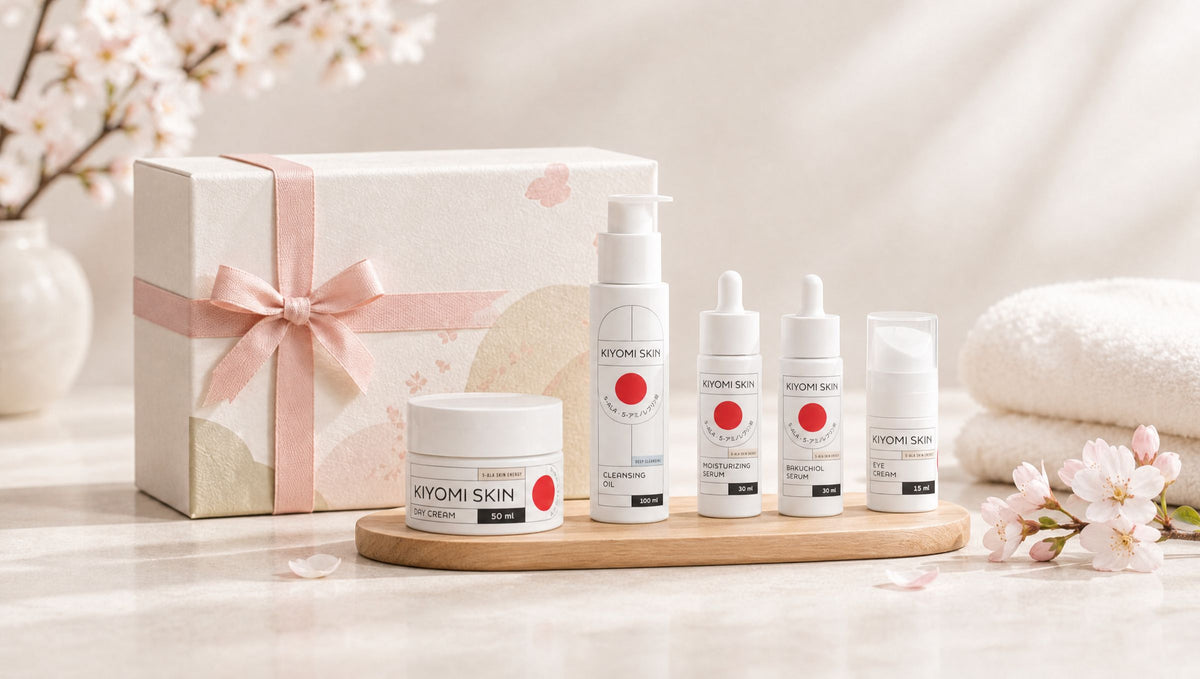
Kiyomi Skin offers both serum options below. Compare the full formulas before choosing; you do not need both to build a useful routine. If dryness is your main concern, review your cleanser and moisturizer before assuming a serum is the missing piece.


Common niacinamide mistakes new moms should avoid
Treating postpartum pigmentation as a serum-only problem
Uneven pigmentation needs an accurate assessment, particularly if it persists or changes. Niacinamide is a cosmetic skincare ingredient, not a diagnosis or a substitute for an appropriate treatment plan. Keep sun protection in your routine and ask a dermatologist about ongoing concerns.
Assuming gentle means suitable while breastfeeding
Gentle describes an intended skincare experience; it does not answer every exposure or safety question. Review the complete formula and where you apply it. Do not use a facial serum on the breast or nipple as a shortcut for another skincare concern.
Buying several products to make up for missed care
A disrupted routine does not need an intensive reset. Restart with familiar basics rather than combining new exfoliants, serums, and masks. That keeps your routine manageable and makes a reaction easier to trace if one occurs.
Confusing fragrance-free with unscented or botanical
A botanical ingredient can still matter to someone with a fragrance allergy. Read the full formula instead of relying on a gentle-sounding product name. For the Niacinamide + 5-ALA Serum, the reported bitter-orange flower water and linalool make a blanket fragrance-free claim inappropriate.
Expecting skincare to erase the demands of new parenthood
A serum can be part of caring for your skin; it cannot replace sleep, treat postpartum health concerns, or guarantee a rested appearance. Set a cosmetic goal you can assess without pressure. Comfort and a repeatable routine are useful outcomes in their own right.
FAQ
What’s the best niacinamide serum for new moms with sensitive skin?
The best choice matches your full ingredient requirements, skin tolerance, and breastfeeding circumstances. Check fragrance details, introduce one formula at a time, and review the complete ingredient list with a clinician when breastfeeding.
Can I use niacinamide serum while breastfeeding?
Breastfeeding suitability needs a formula-specific assessment rather than a blanket answer based on niacinamide alone. Ask your clinician or pharmacist to review the complete formula, and keep facial products away from the nipple, areola, and infant contact.
Is Kiyomi Skin Niacinamide + 5-ALA Serum fragrance-free?
It should not be labeled fragrance-free without formulation clarification. Supplied formula reports list bitter-orange flower water and linalool, which matter when fragrance avoidance is a priority.
Do I need a higher niacinamide percentage after having a baby?
Having a baby does not establish a need for a higher niacinamide concentration. Choose according to your skin concern, complete formula, and tolerance rather than treating a larger percentage as automatically better.
Can I use niacinamide serum instead of moisturizer?
A niacinamide serum is not an automatic replacement for moisturizer. Keep a moisturizer that supports your comfort, and treat serum as an optional step within that routine.
Will niacinamide serum remove postpartum dark spots?
Niacinamide serum does not guarantee removal of postpartum dark spots. Persistent pigmentation deserves assessment, and daily sun protection remains part of appropriate skincare.
How should I introduce a new serum to sensitive skin?
Test the product on a small area before full-face use and keep other skincare unchanged. American Academy of Dermatology guidance recommends twice-daily small-area testing for 7–10 days; stop if irritation develops.
One last thing
Your moisturizer might already contain niacinamide. Check that label before adding a separate serum: avoiding an unnecessary step can be the most practical improvement to a new-parent routine. Choose a dedicated serum because it fits a clear goal—not because postpartum skincare needs to be complicated.