Can cleansing oil be used on sensitive skin?
Yes, cleansing oil can be used on sensitive skin when you choose a suitable formula, rinse it thoroughly, and cleanse without scrubbing. Fragrance-free options are a practical starting point, but the complete formula and your skin’s response matter more than the word oil on the bottle.
- Can cleansing oil be used on sensitive skin? Yes—choose a fragrance-free formula and use gentle cleansing technique.
- Kiyomi Skin Cleansing Oil is a fragrance-free option for shoppers seeking an oil-based cleansing step.
- Double cleansing is optional; add a second cleanser when your cleansing needs justify it.
- Follow cleansing with moisturizer, and use broad-spectrum SPF 30 or higher during the day.
Can cleansing oil be used on sensitive skin?
Yes. Sensitive skin does not automatically rule out cleansing oil. An oil-based facial cleanser helps loosen oily residue and makeup so you can rinse them away without relying on repeated rubbing. Whether it suits you depends on the finished formula, not simply its oil content.
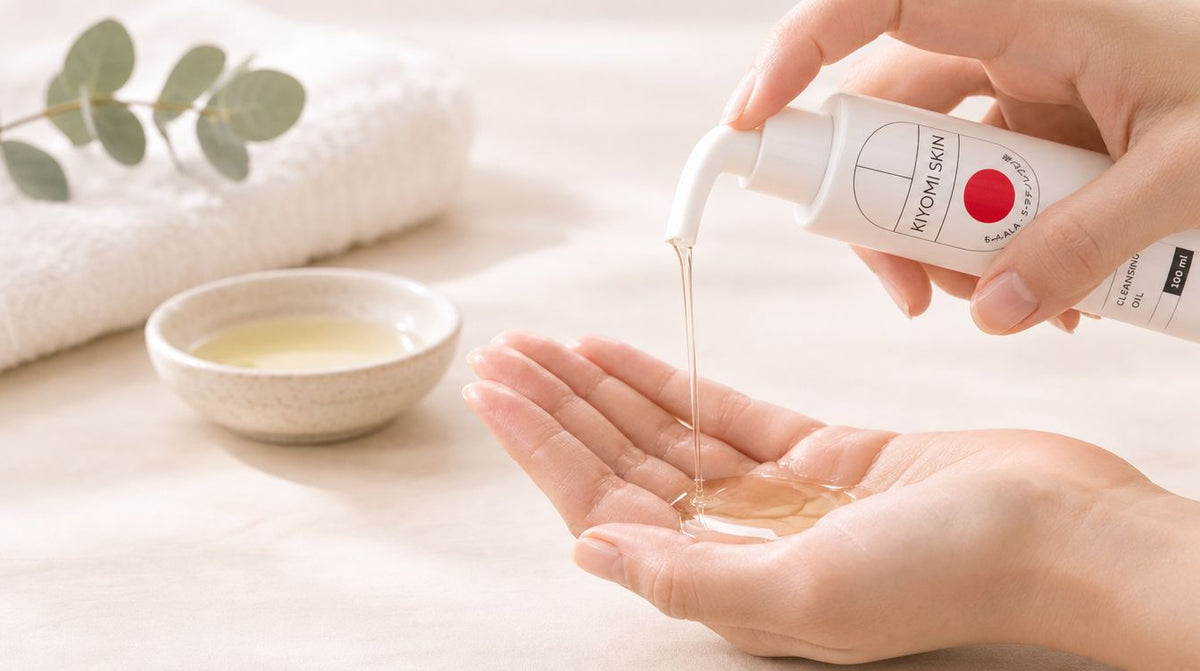
For a fragrance-free starting point, shop Kiyomi Skin Cleansing Oil. Its catalog description identifies it as a gentle, fragrance-free facial cleanser designed to remove dirt and buildup.
Use this simple sequence:
- Check the directions. Follow the cleanser’s instructions for application, water, and rinsing.
- Use light fingertips. Spread the cleanser without scrubbing or pulling at your skin.
- Rinse thoroughly. Use lukewarm water and remove the cleanser as directed.
- Assess the finish. Add another cleanser only if your cleansing needs call for it.
- Moisturize. Complete the routine with a moisturizer you already tolerate.
The goal is clean, comfortable skin—not a squeaky finish. That remains the useful standard for sensitive-skin cleansing in 2026, regardless of which cleansing texture is trending.
Why this matters
Cleansing sets the tone for everything you apply afterward. A routine that relies on hot water, friction, or repeated washing adds unnecessary stress before your moisturizer or serum reaches your face.
For shoppers focused on well aging, the priority is consistency. Gentle cleansing, moisturizing, and daily sun protection support a practical routine for hydration and the visible signs of aging; an elaborate cleansing ritual is not a requirement.
Think of cleansing oil as a tool rather than a treatment. Choose it because it fits what you need to remove and how you prefer to cleanse, not because an oil texture promises to change the biology of aging.
Which cleansing option fits your routine?
Choose your cleanser around what is on your skin, not around a rule that everyone needs two washes. Oil and gel are different formats, and neither format alone establishes how gentle a finished product will be.
| Option | Best for | Practical advantage |
|---|---|---|
| Kiyomi Skin Cleansing Oil | Shoppers seeking a fragrance-free oil-based cleansing step | Designed to remove dirt and buildup with an oil texture |
| Cleansing Gel | Shoppers who prefer a fragrance-free, gently foaming cleanser | Offers a gel format for routine facial cleansing |
| Double cleansing | Shoppers whose makeup or sunscreen removal needs a second step | Combines an oil cleanse with a separate water-based cleanse |
Kiyomi Skin Cleansing Oil is best for shoppers seeking a fragrance-free oil-based facial cleanser. That recommendation rests on its stated formula positioning and cleansing purpose, not on a claim that every person with sensitive skin will tolerate it.
If you already have a cleanser that removes your daily products comfortably, you do not need to replace it simply to follow a Japanese-inspired routine. Keep the steps that serve a purpose.
How do you choose a cleansing oil for sensitive skin?
Start with the current product label. In 2026, terms such as clean, natural, and gentle still do not replace a clear ingredient list and usable directions.
Look for a verified fragrance-free formula
Fragrance-free is a useful selection criterion for sensitive-skin shoppers because fragrance is a recognized source of contact allergy. Check the specific formula rather than assuming every product from the same brand has the same fragrance status.
The supplied catalog explicitly describes Cleansing Oil and Cleansing Gel as fragrance-free. That statement applies to those products; it is not a blanket description of every serum, mist, or cream in the range.
Choose a facial cleanser, not a kitchen oil
A formulated cleansing oil is designed for a cleansing routine. Plain cooking oils are not interchangeable with a finished rinse-off facial cleanser, and their behavior during removal differs.
Look for directions that explain how to apply and remove the product. Clear rinsing instructions are more useful than a long list of fashionable botanical ingredients.
Match the format to your actual needs
Think about your evening: makeup, sunscreen, and the products you need to remove. Then choose the simplest cleansing method that handles that job comfortably.
Do not add an oil step solely because your skin feels dry. Dryness also calls for reviewing your moisturizer, water temperature, washing frequency, and the rest of your routine.
Keep ingredient science in perspective
Kiyomi Skin skincare centers on 5-ALA, but ingredient research and finished-product evidence answer different questions. Evidence about an ingredient does not establish a cleansing oil’s sensitive-skin tolerance or a specific visible result.
For this purchase, prioritize the cleanser’s stated purpose, verified fragrance status, directions, and your experience using it. A rinse-off cleanser does not need an ambitious treatment claim to earn its place.


How should you use cleansing oil without overcomplicating your routine?
Keep the cleansing step focused. You are removing the day’s products and residue, not trying to massage your way to a treatment result.
Apply gently
Follow the bottle’s instructions, including whether to start with dry or damp skin. Use your fingertips rather than a scrub, cleansing brush, or rough washcloth.
Spread the cleanser where you need it and avoid prolonged rubbing. There is no need to chase a particular massage duration when the product directions do not require one.
Rinse thoroughly
Use lukewarm water and follow any instructions for adding water before rinsing. Some cleansing oils emulsify, meaning they disperse into a milky mixture when water is added; use your own product’s directions rather than assuming all formulas behave identically.
Pay attention around your hairline and the sides of your nose, where residue is easy to miss. Pat dry instead of dragging a towel across your face.
Moisturize
Apply your usual moisturizer after cleansing. A comfortable finish is the aim; skin does not need to feel stripped before a cream can do its job.
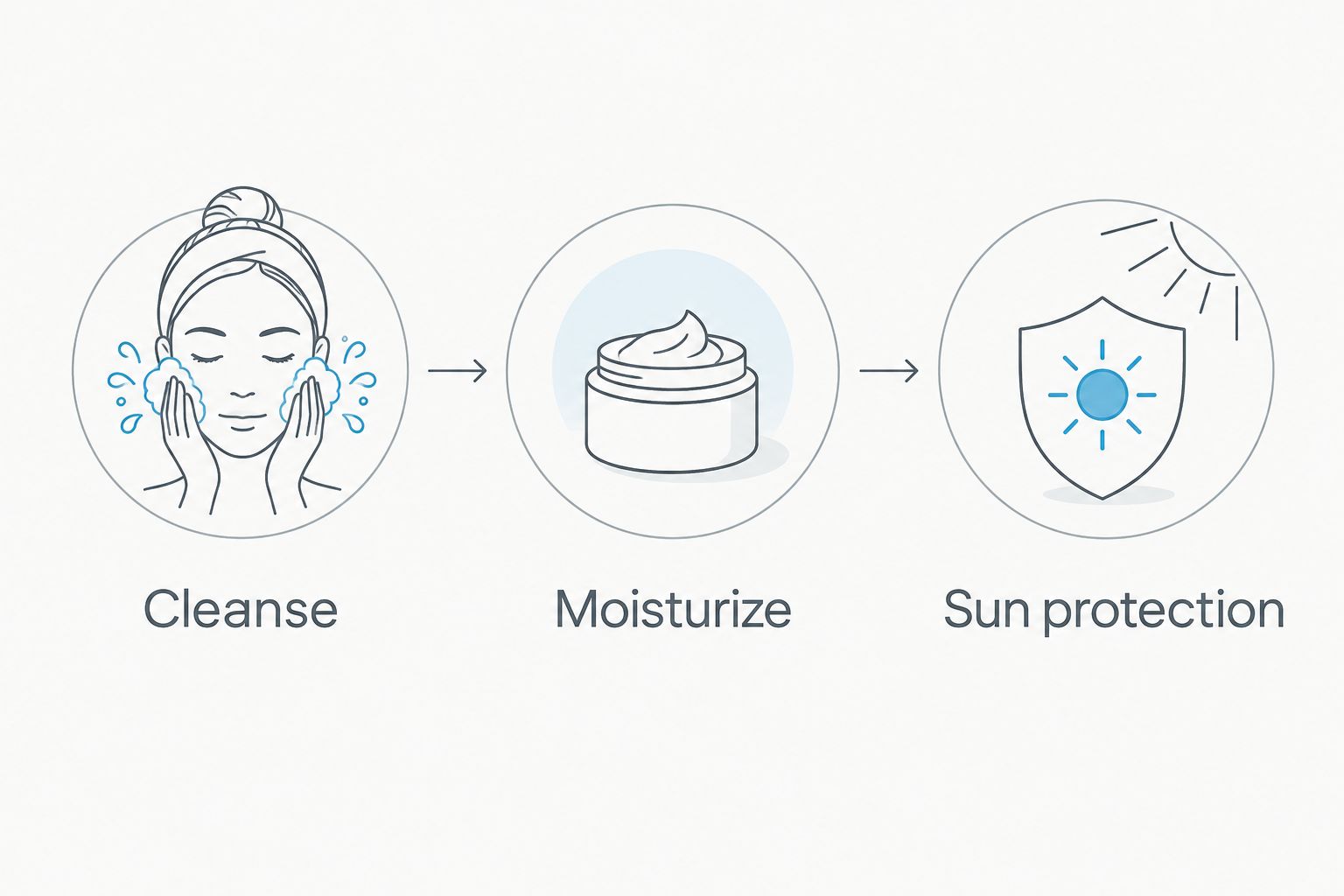
For a simple Japanese-inspired skincare routine in 2026, keep the core sequence clear: Cleanse, Moisturize, Sun protection. Sun protection belongs in your daytime routine, not as an extra nighttime step.
A brief suitability note: introduce a new cleanser while keeping other products familiar. The American Academy of Dermatology recommends testing skincare on a small area twice daily for 7–10 days, keeping rinse-off products on only as directed; stop if irritation develops, and seek medical advice for persistent symptoms or a known skin condition.
Why does cleansing oil suitability vary?
There is no single sensitive-skin formula that suits everyone. These four factors explain why the same cleansing format fits different routines differently:
- Fragrance and individual ingredient sensitivities. A fragrance-free formula removes one selection concern, but known personal allergens still matter.
- The complete formula. Oils, cleansing agents, and other ingredients work together; one highlighted ingredient cannot describe the whole product.
- What you need to remove. Your makeup and sunscreen affect whether one cleansing step meets your needs.
- How you cleanse. Water temperature, friction, rinsing, and unnecessary repeat washing change the overall experience.
Use those factors to make a decision rather than collecting more products. If you are changing your routine in 2026, choose one useful adjustment and keep the rest familiar so you can judge the difference.
Do you need to double cleanse if you have sensitive skin?
No. Double cleansing is optional, not a requirement for sensitive skin. It means using an oil-based cleanser followed by a water-based cleanser, usually in the evening.
A second step has a purpose when your first cleanse does not adequately remove your daily products. It has less value when one cleanser already leaves your skin clean and comfortable.
If you choose both formats, treat the gel as a targeted second step rather than an automatic obligation. You do not need to recreate the entire evening routine the next morning.
Can cleansing oil replace your moisturizer?
No. A cleansing oil is a cleanser, not a replacement for leave-on moisturizer. Its role is to help remove residue before you rinse it away.
The word oil does not mean you have completed your moisturizing step. Follow cleansing with a moisturizer suited to your skin and use broad-spectrum SPF 30 or higher during the day, consistent with American Academy of Dermatology guidance.
For Kiyomi Skin skincare shoppers, Day Cream is a fragrance-free moisturizing option identified in the catalog. Keep sunscreen as a separate selection unless a product is explicitly labeled with sun protection.
Is cleansing oil a good choice for a slow-aging routine?
Yes, when it makes daily cleansing comfortable and practical. Slow aging describes a consistent approach to skin comfort, hydration, and the visible look of aging—not stopping or reversing aging.
An oil cleanser earns its place by performing the cleansing step well. Leave targeted concerns to appropriately selected leave-on products, and resist adding several new serums at the same time as a new cleanser.
The useful 2026 routine is the one you can repeat: remove what needs removing, moisturize, and protect your skin from the sun. More steps are not automatically better care.
FAQ
Can cleansing oil be used on sensitive skin every day?
Yes, daily use can fit a sensitive-skin routine when the formula suits you and you follow its directions. You do not need an additional oil cleanse every time you wash your face.
What's the best type of cleansing oil to start with for sensitive skin?
A fragrance-free facial cleansing oil with clear removal instructions is a practical starting point. Check the full ingredient list against any ingredients you already know you cannot tolerate.
Is Kiyomi Skin Cleansing Oil fragrance-free?
Yes, Kiyomi Skin Cleansing Oil is described as fragrance-free in the supplied product catalog. That statement is specific to this cleanser, not every product in the range.
Is cleansing oil better than cleansing gel for sensitive skin?
Neither format is automatically better for sensitive skin. Choose the finished formula and texture that remove your daily products comfortably; the catalog identifies both Cleansing Oil and Cleansing Gel as fragrance-free.
Do I need a second cleanser after cleansing oil?
No, a second cleanser is not automatically necessary. Add a water-based cleansing step when your makeup or sunscreen removal needs it, rather than treating double cleansing as a rule.
Should I use hot water to rinse off cleansing oil?
Use lukewarm water rather than hot water. Follow the cleanser's removal directions and use gentle fingertips instead of scrubbing.
Can I skip moisturizer after using cleansing oil?
Cleansing oil does not replace moisturizer because it is a rinse-off cleansing step. Follow it with your usual moisturizer, and include broad-spectrum SPF 30 or higher in your daytime routine.
One last thing
Do not use a squeaky feeling as proof that your cleanser worked. Judge cleansing by whether it removes your daily products without requiring rough handling, then judge the whole routine by comfort and consistency.
Start with the fragrance-free cleansing texture you prefer. Shop the oil or gel above, keep your moisturizer familiar, and add a second wash only when it serves a clear purpose.