Can 5-ALA serum reduce fine lines and wrinkles?
5-ALA serum data from Kiyomi Skin's own lab and home-use testing shows measurable changes in hydration, elasticity and smoothness after regular use — not a clinically confirmed reduction in wrinkle count. This guide breaks down what each 2026 study actually measured, what it means for sensitive skin, and which serum fits a fine-lines-focused routine.
- Short answer to can 5-ALA serum reduce wrinkles: it changes measurable hydration and elasticity markers, not confirmed wrinkle depth.
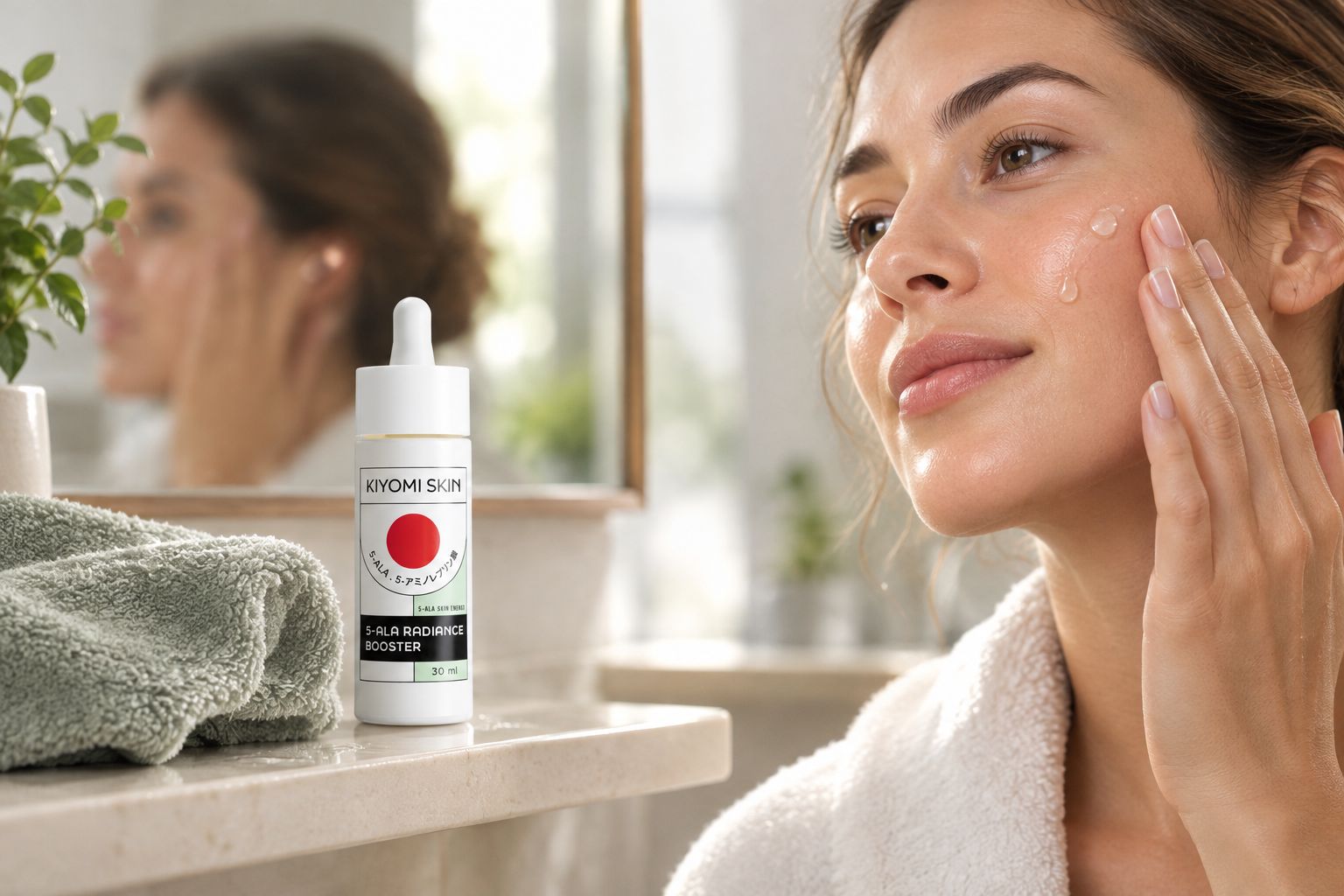
- 5-ALA Radiance Booster Serum raised hydration 21% and elasticity/firmness 17% in a 24-completer 2026 lab test.
- 18 of 30 home-use panelists noticed less visible fine lines after four weeks — a self-report, not an instrument reading.
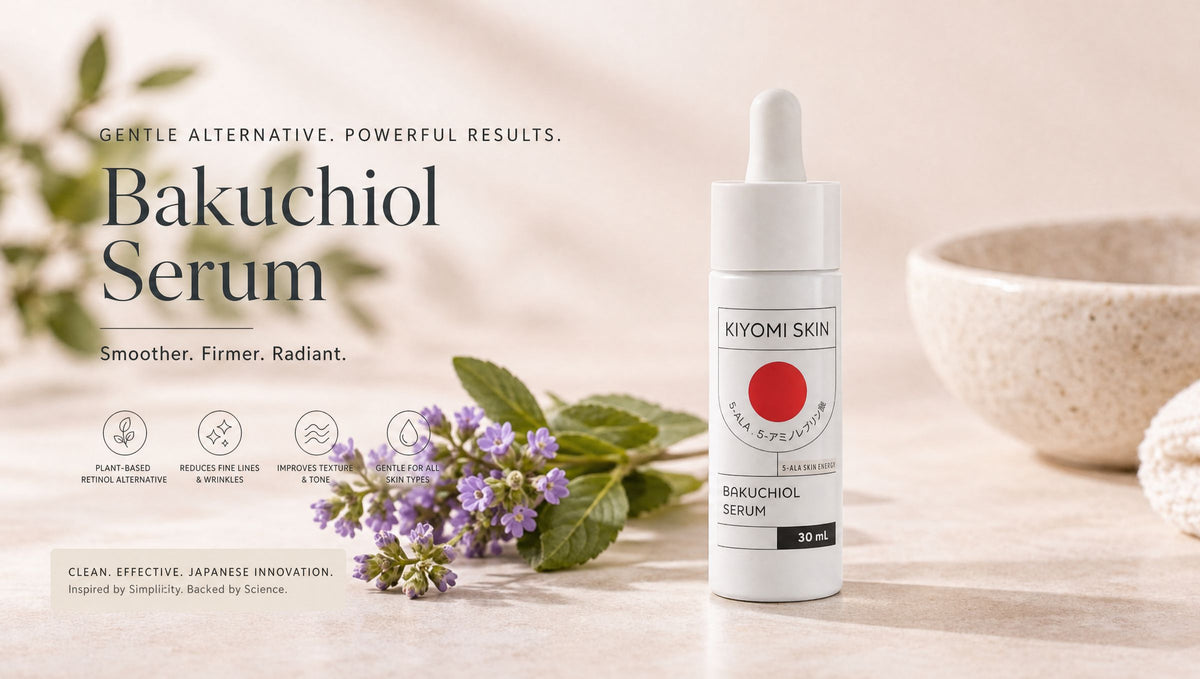
- Bakuchiol Serum: all 20 home-use panelists reported fewer visible fine lines and better smoothness in 2025 testing.
- No reviewed study measures 5-ALA's effect on wrinkle depth or count directly — treat these numbers as hydration and texture evidence.
Why this matters
Fine lines and wrinkles top the list of things sensitive-skin shoppers want a serum to fix, but "reduces wrinkles" gets thrown around loosely in skincare marketing. Kiyomi Skin has actual lab and home-use data behind its 5-ALA Radiance Booster Serum, run by an outside lab across a 2026 testing window, plus a separate consumer questionnaire.
That data is useful, but it measures specific things — hydration, elasticity, a smoothness proxy — not wrinkle count or depth directly. Knowing the difference between an instrument reading and a self-reported opinion is what lets you set realistic expectations in 2026 before you buy.
Can 5-ALA serum reduce fine lines and wrinkles?
Across the three Kiyomi Skin serums with reviewed study data, the pattern is consistent: measurable gains in hydration, elasticity and smoothness, plus self-reported improvement in how fine lines look — but no controlled study ties 5-ALA specifically to a reduction in wrinkle depth or count.
| Serum | Study type | Key measured result | Best for |
|---|---|---|---|
| 5-ALA Radiance Booster Serum | Instrumental lab test, 24 completers (2026) | +21% hydration, +17% elasticity/firmness | Hydration-first glow, data-backed texture change |
| Bakuchiol Serum | Instrumental test, 10 participants, plus a 20-person home-use panel (2025) | +19% elasticity; 20/20 panelists reported fewer visible fine lines | Look of firmness and fine lines, retinol-sensitive skin |
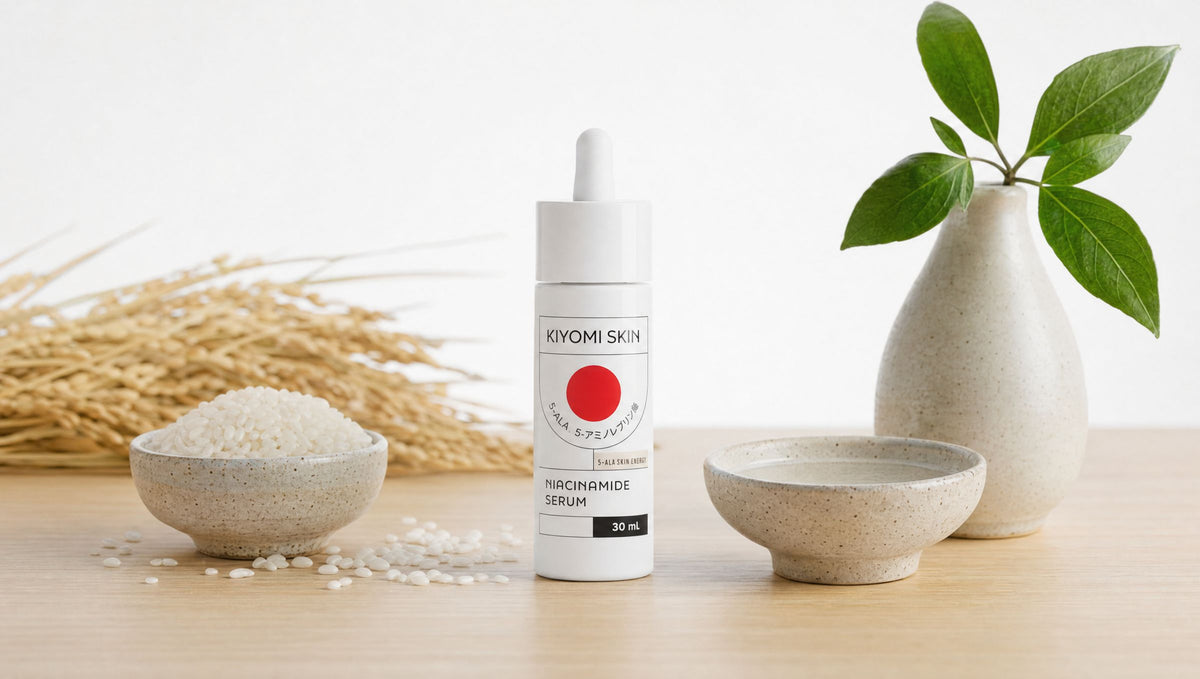
| Niacinamide + 5-ALA Serum | Instrumental test, 10 participants, plus a 20-person home-use panel (2025) | +14% firmness (Cutometer); even tone reported by 20/20 | Tone evenness and comfort, not a fine-lines-first pick |
5-ALA Radiance Booster Serum: +21% hydration, +17% elasticity in a 2026 lab test
An independent lab test on the current US formula of the 5-ALA Radiance Booster Serum tracked 24 completers (five of 30 enrolled withdrew citing adverse effects, one for an unrelated reason) over roughly four weeks in 2026. Average hydration readings moved from 51.9 to 62.6 (+21%), water-loss index dropped from 20.96 to 13.78 (-34%), and elasticity/firmness readings rose from 43.6 to 50.9 (+17%).
A separate smoothness proxy score came in 20% lower, which the lab reads as smoother skin — not a one-to-one match with a dermatologist's wrinkle scale. A companion home-use questionnaire of 30 users found 18 agreed fine lines looked less visible, 19 noted smoother feel, and 21 reported a healthier-looking glow, all self-reported impressions after four weeks, not instrument measurements. Verdict: the lab numbers back a real hydration and firmness effect; the fine-lines finding is a self-reported impression worth factoring in, not proof.
Bakuchiol Serum: 20 of 20 panelists reported fewer visible fine lines after four weeks
The Bakuchiol Serum carries two reviewed studies on the current US formula, both run over roughly four weeks in 2025. An instrumental test on 10 participants measured skin density by ultrasound, rising from a group mean of 17.0 to 23.3 (+37%), with elasticity/firmness climbing from 36.76 to 43.81 (+19%) — all 10 participants improved on both readings, though the test had no control group or significance analysis.
A separate home-use questionnaire of 20 participants found all 20 agreed the serum helped reduce the appearance of fine lines and wrinkles, improved smoothness, and promoted even tone, with zero reports of discomfort, burning or redness during the test window. Comparative feedback against other products panelists had used ran 15 of 20 calling it better and 5 of 20 calling it comparable — a strong lean, not a universal win. Verdict: Bakuchiol Serum has the most consistent self-reported fine-lines feedback in the catalog, positioned as a gentle alternative to retinol rather than a retinol-equivalent.
Niacinamide + 5-ALA Serum: +14% firmness and reported comfort in four weeks
The Niacinamide + 5-ALA Serum's instrumental test on 10 women recorded a Cutometer firmness reading moving from a group mean of 44.94 to 51.43 (+14%), with all 10 participants improving. A secondary vascularization-related score dropped 20%, which the lab associates with sensitivity markers — read that as a lab instrument trend, not a proven reduction in overall skin reactivity.
A home-use panel of 20 (8 self-reported sensitive skin) all agreed the serum promoted a more even tone and reduced tension, with no reports of discomfort during the four-week test. One formulation note worth flagging: this serum is not fragrance-free — it contains bitter-orange flower water and linalool — so check that against your sensitivity profile. Verdict: strongest pick for tone and comfort, not the first choice if fine lines are your main concern.
Why results vary from one person to the next
- Formula differences: the Booster, Bakuchiol Serum and Niacinamide + 5-ALA Serum each pair their core active with a different support ingredient, which changes what gets measured and how fast.
- Study size: these panels ran 10 to 30 participants — useful signal, not a population-wide guarantee.
- Instrument vs. opinion: a Cutometer or ultrasound reading is objective; a questionnaire answer is a participant's impression after looking in the mirror.
- Baseline skin condition: drier or more reactive skin going in tends to show a bigger relative change on hydration and elasticity readings.
- Consistency of use: every reviewed study ran for roughly four weeks of regular application — skipping days changes the outcome.
- Sun exposure and SPF habits: none of these studies controlled for daily sunscreen use, and UV exposure independently affects how fine lines look over time.
Consistency matters more than any single data point above — every study referenced here ran for about four weeks of regular use, and the questionnaire-based findings describe what panelists noticed within that specific window, not a permanent result.
“5-ALA serum data backs up hydration and firmness gains you can measure; it doesn't yet back up a count of fewer wrinkles.”


Related questions
Does 5-ALA serum work better than retinol for fine lines?
No controlled, head-to-head comparison between 5-ALA serum and retinol appears in the reviewed studies, so there's no verified answer on which works better. Bakuchiol Serum is positioned as a gentle alternative to retinol for people who find retinol irritating, with 20 of 20 home-use panelists reporting fewer visible fine lines after four weeks — but that's self-reported bakuchiol data, not a retinol comparison.
Can you use a 5-ALA serum every day?
Yes — every reviewed study tested daily application over roughly four weeks, which is the pattern Kiyomi Skin's own usage guidance follows. If you have reactive or very sensitive skin, introduce any new active gradually and patch test first.
Is 5-ALA skincare worth it in 2026?
For the full picture of what 5-ALA does across hydration, tone and glow beyond fine lines, see is 5-ALA skincare worth it for a complete 2026 breakdown.
FAQ
Can 5-ALA serum actually reduce wrinkles?
5-ALA serum data shows measurable hydration (+21%) and elasticity (+17%) gains in a 2026 lab test on 24 completers, not a confirmed reduction in wrinkle count or depth. Self-reported panels noted fewer visible fine lines, but that's an opinion, not an instrument reading.
How long does it take to see results from a 5-ALA serum?
Every reviewed Kiyomi Skin study ran for roughly four weeks of regular use before measuring results. Expect a similar timeline for noticing hydration or texture changes with consistent daily application.
Is 5-ALA serum safe for sensitive skin?
A 2026 Dermatest patch test on 30 adults with sensitive skin found one mild, transient reaction that resolved within 48 hours, with the lab concluding very good tolerance under test conditions. That's one patch test, not a guarantee every sensitive-skin user will react the same way, so patch test any new serum first.
Is Bakuchiol Serum better than 5-ALA Radiance Booster Serum for fine lines?
Bakuchiol Serum has the more direct fine-lines feedback: all 20 home-use panelists reported fewer visible fine lines after four weeks. The 5-ALA Radiance Booster Serum shows stronger hydration data at +21%, so the better pick depends on whether hydration or fine-lines appearance is your priority.
Does Niacinamide + 5-ALA Serum help with fine lines?
Niacinamide + 5-ALA Serum's reviewed data centers on firmness, up 14% on a Cutometer reading, and tone evenness rather than a fine-lines-specific finding. It's a stronger pick for tone and comfort than for visible fine lines.
Is 5-ALA Radiance Booster Serum fragrance-free?
Check the current ingredient list before assuming fragrance-free status. Kiyomi Skin's Niacinamide + 5-ALA Serum, for comparison, is not fragrance-free and contains bitter-orange flower water and linalool, so formulations can differ across the catalog.
Can you combine 5-ALA serum with other actives like niacinamide or bakuchiol?
Kiyomi Skin sells 5-ALA Radiance Booster Serum alongside Niacinamide + 5-ALA Serum and Bakuchiol Serum as separate routine steps, which suggests they're meant to layer. Introduce one new active at a time if you have sensitive skin, so you can tell what's working.
One last thing
The Booster's smoothness measurement works backward from what most people expect: the proxy score dropped from 52.5 to 42.1, and on this particular scale a lower number means smoother skin, not a decline. If you look up the raw numbers in 2026 and see a drop, that's the serum working as intended, not a red flag.