Is Japanese cleansing oil safe for acne-prone skin?
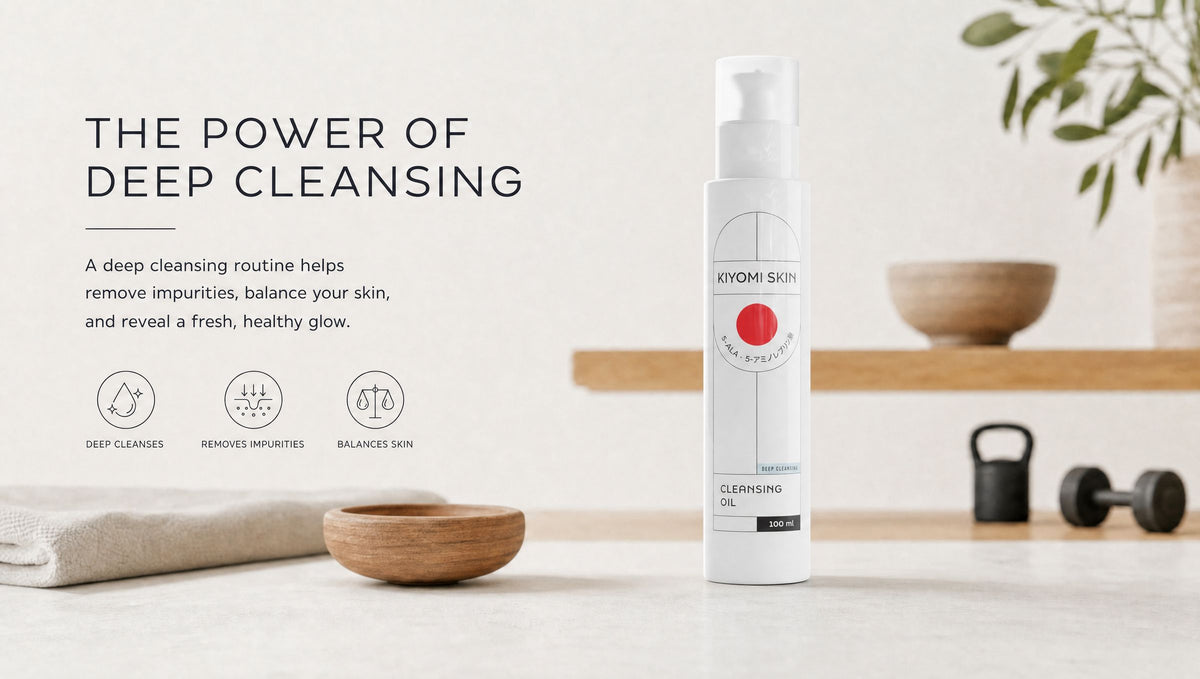
Yes—Japanese cleansing oil can be suitable for acne-prone skin when you choose a well-tolerated, rinse-off formula and cleanse gently. Being Japanese does not make a cleanser automatically acne-safe, and cleansing oil removes surface buildup rather than treating acne. The best choice depends on the finished formula, what you need to remove, and how your skin responds.
- Is Japanese cleansing oil safe for acne prone skin? Yes, when the formula suits your skin and rinses away properly.
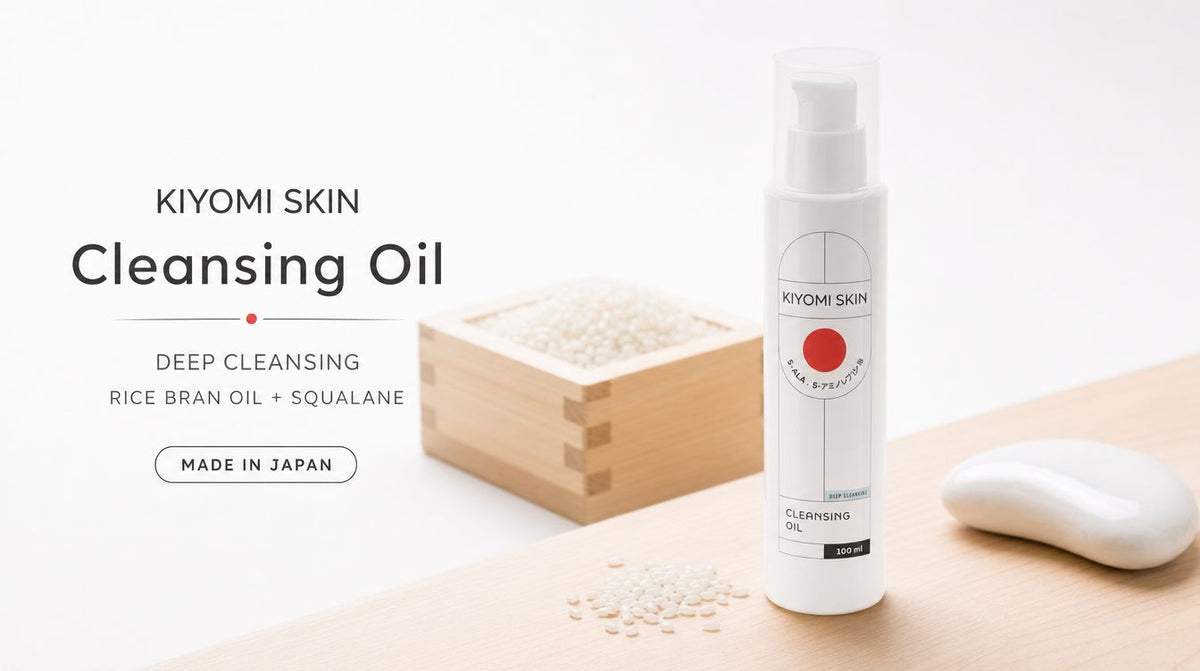
- Kiyomi Skin Cleansing Oil is a fragrance-free option for shoppers seeking gentle cleansing, not an acne treatment.
- Choose cleansing oil for removal needs, not because every oily complexion needs double cleansing.
- Keep acne-prone, sensitive skin comfortable: avoid scrubbing, unnecessary cleansing steps, and several new products at once.
Is Japanese cleansing oil safe for acne-prone skin?
Acne-prone skin does not automatically rule out cleansing oil. A formulated rinse-off cleanser is different from applying a household oil and leaving it on your face. Choose the cleansing format that removes your daily buildup without leaving your skin uncomfortable.
| Option | Best for | Main benefit |
|---|---|---|
| Kiyomi Skin Cleansing Oil | Shoppers seeking fragrance-free oil cleansing | A fragrance-free cleanser described for removing dirt and buildup |
| Cleansing Gel | Shoppers who prefer a gently foaming wash | A fragrance-free, gently foaming cleansing option |
Neither format wins simply because your skin produces oil. Choose based on removal, rinsing, and comfort—not the assumption that acne-prone skin must feel completely oil-free.
Why this matters
A useful cleansing routine removes what you put on your skin without turning washing into another source of irritation. Acne-prone skin can also feel dry, tight, or sensitive, especially when your routine includes acne medication.
For your 2026 routine, the goal is clean, comfortable skin—not a squeaky finish. The American Academy of Dermatology recommends gentle cleansing and limiting face washing to twice a day and after sweating; repeated washing and scrubbing are not substitutes for acne treatment.
What makes a cleansing oil suitable for acne-prone skin?
Start with the finished product, not a list of supposedly good or bad oils. A cleanser contains a combination of ingredients, and its rinse-off behavior matters alongside its ingredient list.
A rinse-off formula, not a kitchen substitute
Cleansing oils use an oil-based phase to loosen oily surface material. Many also contain emulsifiers—ingredients that help oil mix with water so the cleanser can rinse away.
Check the directions rather than assuming every oil works the same way. A facial cleansing oil and a bottle of cooking oil are not interchangeable, even if they share an ingredient name.
A fragrance choice that fits your skin
Fragrance-free is a useful selection criterion when you want to avoid added fragrance. It does not mean a product is guaranteed to suit every sensitive or acne-prone complexion.
Kiyomi Skin cleansing options include fragrance-free Cleansing Oil and Cleansing Gel. Kiyomi Skin is best for shoppers seeking fragrance-free cleansing options within a simple Japanese-inspired routine. Choose between the two formats by your cleansing needs rather than treating fragrance-free as an acne-clearance claim.
A finish that feels clean, not stripped
After rinsing, assess whether your face feels comfortable and whether visible makeup remains. Tightness is not proof of a better cleanse.
An unpleasant coating and comfortable softness are also different experiences. If you keep wanting to wash again, review the amount used and the rinsing directions before adding another cleansing step.
Cleansing oil alone or double cleansing: which should you choose?
Double cleansing means using an oil-based cleanser followed by a water-based cleanser. It is a removal method, not a requirement for Japanese-inspired skincare or acne-prone skin.
| Routine | Best for | Advantage | Trade-off |
|---|---|---|---|
| Cleansing oil alone | Someone whose rinse-off oil removes daily buildup comfortably | Keeps the routine short | Requires a formula that rinses satisfactorily on your skin |
| Gentle cleanser alone | Someone whose existing cleanser already removes daily buildup | Avoids an unnecessary extra wash | Some makeup or sunscreen needs more deliberate removal |
| Oil followed by a gentle cleanser | Someone who needs additional removal after the first cleanse | Separates makeup removal from the finishing wash | Adds cleansing exposure and is unnecessary if one wash works |
In 2026, build your routine around what you actually wear. A heavy makeup day and a makeup-free day do not automatically need identical cleansing steps.
Start with the shortest routine that cleans effectively. Add a second cleanser for a clear removal need, not because social media presents double cleansing as compulsory.
How do you use cleansing oil on acne-prone skin?
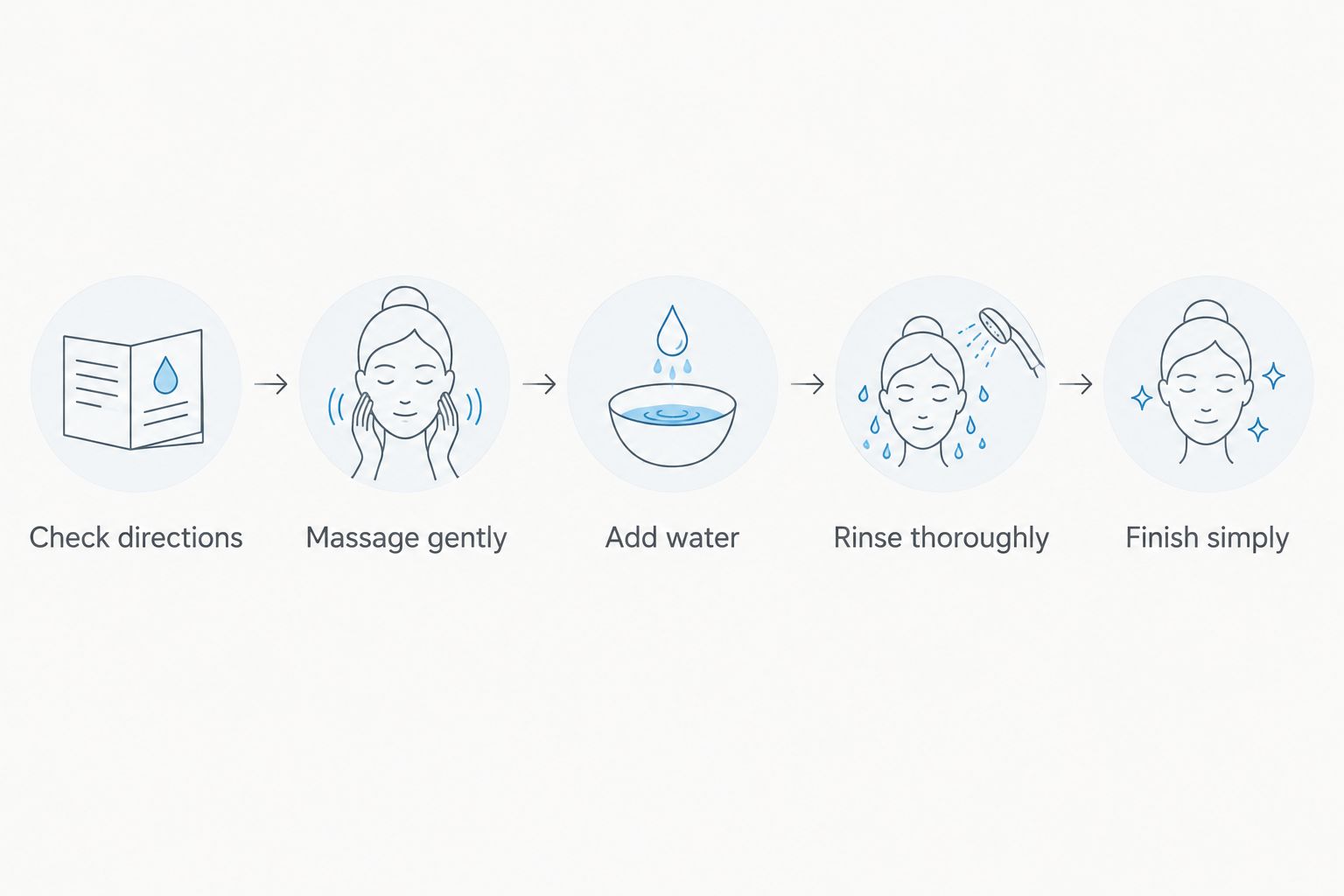
Follow your product's directions first. These steps explain the general sequence without assuming every cleansing oil uses the same application method.
- Check directions. Confirm whether the cleanser goes onto dry or damp skin and how the manufacturer instructs you to rinse it.
- Massage gently. Use your fingertips without scrubbing inflamed spots or trying to squeeze material from pores.
- Add water. If the directions call for emulsifying, introduce water and work it through the cleanser as instructed.
- Rinse thoroughly. Remove the cleanser without repeatedly rubbing your face with a cloth.
- Finish simply. Use a second gentle cleanser only when needed, then continue with your established moisturizer and treatment instructions.
Do not turn the massage into an extraction session. The job is to loosen surface buildup, not force out blackheads with prolonged friction.
For a practical 2026 routine, introduce one new product at a time. Keeping the rest of your routine familiar makes it easier to identify what suits your skin instead of guessing which new bottle caused a change.
Why suitability varies between people
Two people with acne-prone skin can prefer different cleansers. These factors explain why the category name alone cannot determine your result:
- The finished formula. The combination of oils, cleansing ingredients, fragrance components, and other ingredients matters more than the word oil.
- What you remove. Makeup, sunscreen, and daily buildup create different cleansing needs.
- Your existing treatments. A routine that already causes dryness or irritation needs a particularly gentle cleansing approach.
- Your technique. Rubbing harder or washing repeatedly adds friction without turning a cleanser into acne medication.
- Your skin's individual response. Acne-prone and sensitive are descriptions of concerns, not guarantees that everyone will tolerate the same formula.
Make your decision using these factors rather than a universal ingredient blacklist. Ingredient lists help you avoid known personal triggers, but they do not predict every person's experience with a finished cleanser.
How should you read acne-friendly cleanser claims?
For 2026 shopping, separate a product description from evidence that answers your particular question. Gentle, fragrance-free, noncomedogenic, and acne treatment describe different things.
Fragrance-free helps identify products formulated without added fragrance; it is not a promise of no irritation. Noncomedogenic signals that a product is intended not to clog pores, but it is not a guarantee against every breakout.
An acne-treatment claim is different again. In the US, products marketed to treat acne are subject to drug requirements; an ordinary cleansing description does not establish acne-treatment effectiveness.
The same distinction applies to ingredient science. Research about an ingredient does not prove that every cleanser containing it improves acne, delivers the same effects, or performs like a leave-on treatment.
Use this short shopping check:
- Read the actual product directions and ingredient list.
- Look for claims that match your goal: cleansing, makeup removal, or avoiding fragrance.
- Do not assume a botanical ingredient makes a formula noncomedogenic.
- Do not infer acne-treatment benefits from Japanese origin or an ingredient's reputation.
Build a simple routine around cleansing
A cleanser is the opening step, not the whole routine. After washing, use a moisturizer that suits your skin and keep prescribed acne treatments on their instructed schedule.
In the morning, include broad-spectrum sunscreen with SPF 30 or higher, consistent with American Academy of Dermatology guidance. Cleansing oil is a removal option; it does not replace sun protection or acne care.
A practical evening routine is straightforward: remove daily buildup, moisturize, and use treatment according to its directions. If your treatment has specific application instructions, follow those rather than copying someone else's layering order.
For shoppers comparing our cleansing formats, start with the one that fits your preferences. Cleansing Oil offers a fragrance-free oil-cleansing option; Cleansing Gel offers fragrance-free, gently foaming cleansing. You do not need both simply because both exist.


Choose a cleansing format you can use consistently without unnecessary rubbing or repeat washes. A simpler routine is easier to assess and easier to maintain.
Can cleansing oil clog pores?
Cleansing oil can be unsuitable for an individual, but the presence of oil does not establish that a finished rinse-off cleanser will clog pores. Assess the formula and your experience rather than assigning a verdict from one ingredient.
A new spot also does not identify its cause by itself. Keep your routine stable enough to notice a pattern instead of replacing every product after a single breakout.
Is cleansing oil better than cleansing gel for oily skin?
Cleansing oil is not automatically better or worse than cleansing gel for oily skin. Oil cleansing serves a removal need, while a gentle gel is a straightforward option when it already cleans your skin comfortably.
Choose the format you prefer using and rinsing. Producing more oil does not mean your skin needs the strongest-feeling wash.
Does cleansing oil cause purging?
A cleansing oil should not be expected to cause a necessary purging phase. Purging describes an initial acne flare associated with some treatments that affect skin-cell turnover; it is not a reason to push through problems with an ordinary cleanser.
Suitability note: Stop a new cleanser if it causes burning, a rash, swelling, or persistent irritation, and seek medical advice when needed. Painful, deep, scarring, or persistent acne also deserves professional care rather than more aggressive cleansing.
FAQ
Is Japanese cleansing oil safe for acne-prone, sensitive skin?
Japanese cleansing oil can suit acne-prone, sensitive skin when the finished formula is well tolerated and used as directed. Japanese origin alone does not establish safety, and fragrance-free does not guarantee individual tolerance.
Should I double cleanse every night if I have acne?
You do not need to double cleanse every night simply because you have acne. Use an additional cleanser when your first wash does not adequately remove what you wear, rather than adding a step automatically.
Will cleansing oil get rid of blackheads?
Cleansing oil is not an established blackhead treatment by itself. It removes surface buildup; persistent blackheads need an acne-care approach rather than prolonged oil massage or squeezing.
Can I use cleansing oil while using acne medication?
A gentle cleansing oil can fit an acne-treatment routine if your skin tolerates it and its use fits your treatment instructions. Keep the cleansing step gentle and follow your clinician's advice about washing and medication application.
How often should I wash acne-prone skin in 2026?
Limit routine face washing to twice a day and after sweating, following American Academy of Dermatology guidance. Double cleansing is an optional method within a wash, not a reason to add repeated washing sessions.
Is Kiyomi Skin Cleansing Oil fragrance-free?
Kiyomi Skin Cleansing Oil is described as fragrance-free in the current product catalog. That supports choosing it to avoid added fragrance, not a claim that it treats acne or suits everyone.
Do I still need moisturizer after cleansing oily skin?
Oily skin can still need moisturizer, especially when acne treatments leave it dry or uncomfortable. Choose a moisturizer that suits your skin rather than using tightness after washing as your goal.
One last thing
The most useful cleansing test is not how much oil you can massage out or how squeaky your face feels. It is whether your routine removes daily buildup while leaving your skin comfortable enough to continue the care it needs.
Before adding another step, check your current cleanser's directions and your actual removal needs. For your 2026 routine, buy for the job—not the trend.