Can Japanese cleansing oil clog pores?
Yes, Japanese cleansing oil can clog pores if a particular formula does not suit your skin, but oil-based cleansing does not automatically cause breakouts. The finished formula, how you remove it, and the rest of your routine matter more than its Japanese-inspired positioning. Choose a rinse-off cleanser, follow its directions, and judge it by clean, comfortable skin—not by how aggressively it removes oil.
- Can Japanese cleansing oil clog pores? Yes, but the finished formula matters more than the category name.
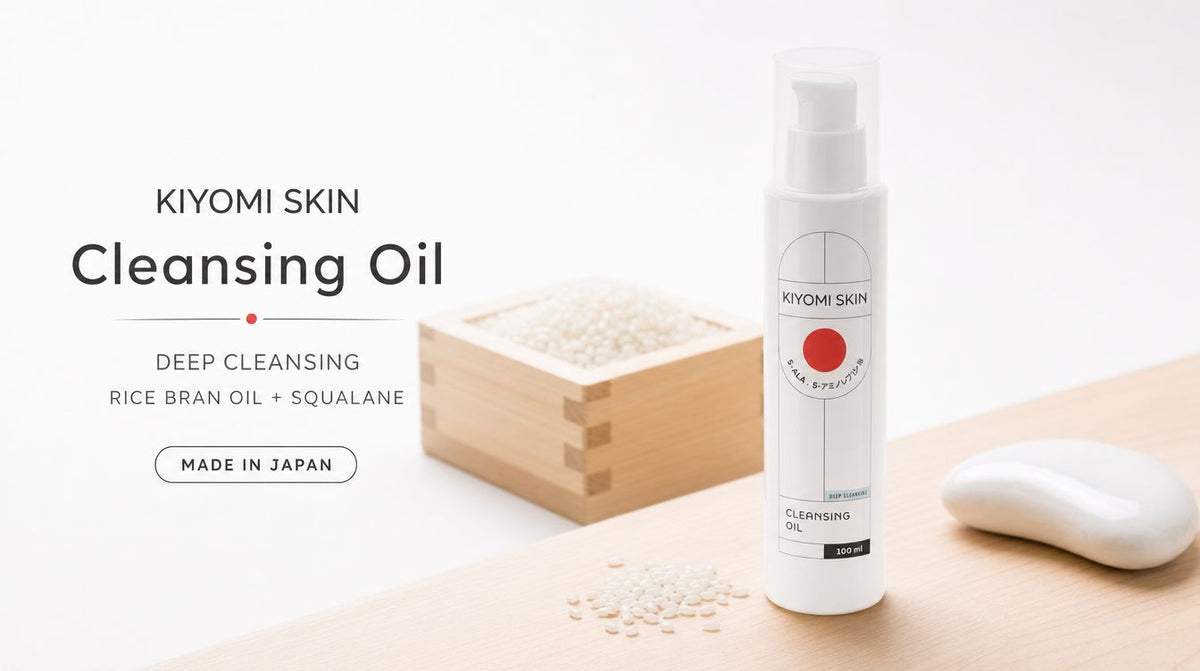
- Kiyomi Skin Cleansing Oil offers fragrance-free cleansing for shoppers who prefer an oil-based makeup-removal step.
- Double cleansing is optional; add a second cleanser only when your first cleanse leaves makeup or sunscreen behind.
- Emulsify and rinse as directed rather than extending your massage to chase blackheads.
Why this matters
If you have sensitive, breakout-prone skin, removing sunscreen and makeup without leaving your face tight is a useful starting point. More cleansing is not automatically better. Your goal is to remove what you applied without turning your evening routine into repeated washing.
For your 2026 routine, choose by cleansing needs rather than trends. Our fragrance-free Cleansing Oil is an option for removing dirt, buildup, and excess oil; whether you need another cleanser afterward depends on the result.
Can Japanese cleansing oil clog pores?
Yes, an individual cleansing oil can contribute to clogged pores, but Japanese cleansing oils are not inherently pore-clogging. A pore becomes clogged when material such as sebum and dead skin cells accumulates within the follicle. Feeling oil on your face during cleansing is not, by itself, evidence that this is happening.
A rinse-off cleansing oil is also different from a facial oil intended to stay on your skin. Cleansing formulas typically include emulsifiers—ingredients that help oil mix with water so it can wash away. Follow the specific product directions rather than treating every oil-based product as interchangeable.
| Cleansing option | Best for | Main advantage |
|---|---|---|
| Kiyomi Skin Cleansing Oil | Shoppers seeking fragrance-free, oil-based cleansing | Removes dirt, buildup, and excess oil |
| Kiyomi Skin Cleansing Gel | Shoppers who prefer a gently foaming, fragrance-free wash | Offers a gel cleansing option |
| Oil followed by gel | Makeup or sunscreen that remains after an initial cleanse | Separates initial removal from a finishing wash |
Kiyomi Skin Cleansing Oil is best for shoppers seeking a fragrance-free, oil-based cleansing step. Choose it for that practical role, not as an acne treatment or a promise that pores will never clog.
How do you use cleansing oil without overcleansing?
Build your evening cleanse around removal, not a fixed number of products. In 2026, a simple Japanese-inspired routine can mean one effective wash rather than automatically using every step associated with double cleansing.
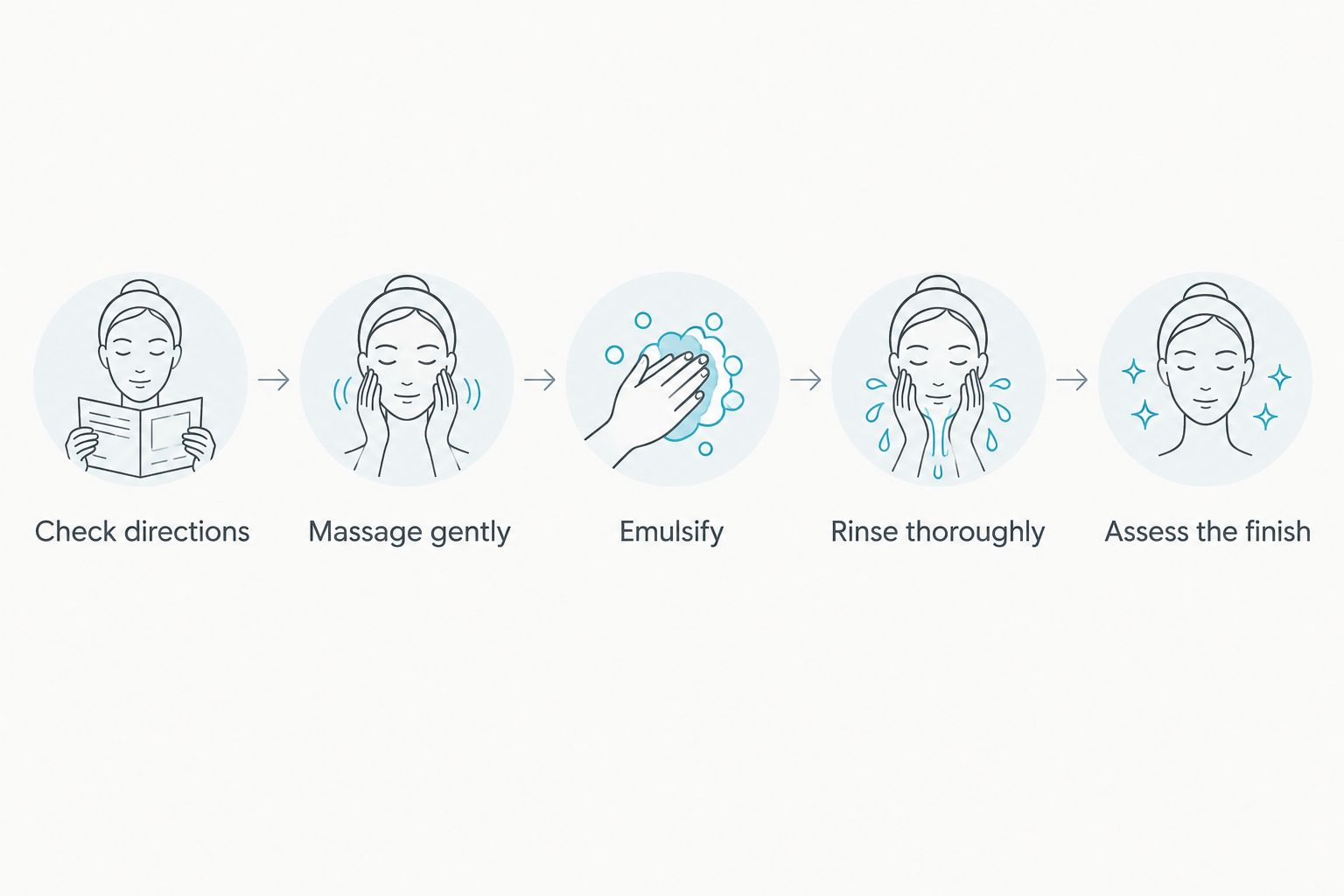
1. Check the product directions
Read whether the cleanser should go onto dry or damp skin. Many emulsifying oils start on dry skin, but the label—not a general skincare rule—should determine your method and amount.
Keep your technique consistent while you assess a cleanser. Changing the amount, massage pressure, and follow-up products every night makes the result harder to interpret.
2. Massage gently
Use your fingertips to distribute the cleanser and loosen makeup or sunscreen. Avoid vigorous rubbing, exfoliating brushes, or repeated passes over an area that already feels clean.
There is no universal massage time that guarantees clear pores. A longer massage is not a substitute for a formula that removes your products effectively.
3. Emulsify
If the directions call for emulsifying, add water and gently work it through the cleanser. Many cleansing oils turn milky as the oil disperses into the water.
That change helps explain why a cleansing oil behaves differently from plain household oil. It is designed to be removed, not simply spread around and left behind.
4. Rinse thoroughly
Rinse around the hairline, sides of the nose, and jaw as well as the center of your face. Use lukewarm water rather than scrubbing with a hot washcloth to chase a squeaky finish.
Check for visible makeup or sunscreen residue. A comfortable, softened feel alone does not prove that cleanser remains on your skin.
5. Assess the finish
If makeup remains, consider a gentle second cleanser. If your face is clean and comfortable after the oil, you do not need to add a gel purely because a routine is called Japanese double cleansing.
Follow with moisturizer suited to your skin. Keep the rest of the routine familiar while you decide whether the cleanser fits.
Why your response to cleansing oil varies
The word “Japanese” describes a skincare context, not a pore-clogging test. These factors are more useful when choosing and assessing your cleanser:
- The complete formula. Individual ingredient lists do not capture how the finished cleanser behaves during use and rinsing.
- Your existing skin pattern. Naturally oily skin, recurring acne, and sensitivity are different concerns; one label does not explain all three.
- What you need to remove. A day without makeup presents a different cleansing task from layered makeup and water-resistant sunscreen.
- Your technique. Rubbing pressure, rinsing, and following the directions affect the cleansing experience.
- Other routine changes. Starting a cleanser alongside a serum and moisturizer makes it difficult to identify which change affected your skin.
Use these factors to make a specific decision. “My mascara remains after rinsing” is more actionable than “oil must be bad for my pores.” The first observation tells you what your cleansing routine needs to do differently.
How do you choose a cleansing oil for sensitive skin?
Start with its intended use and full ingredient list. Look for a rinse-off facial cleanser, then check whether it contains ingredients you already know do not agree with your skin.
Fragrance-free is a useful selection preference for fragrance-sensitive shoppers, but it does not mean every person will tolerate the formula. Our Cleansing Oil and Cleansing Gel are both described as fragrance-free, so you can choose your preferred cleansing texture without adding fragrance as a selection requirement.
Choose the cleansing format you need, not the largest routine. Cleansing Oil comes in a 100 ml format, and Travel Size Cleansing Oil comes in a 30 ml format. Bottle size changes how much you buy, not whether your skin will tolerate the cleanser.
When shopping in 2026, separate three questions: Does it remove what you wear? Do you like using it? Does your skin remain comfortable with continued use? A product name or ingredient trend cannot answer those questions for you.
A brief suitability note
Introduce one new product at a time and test it on a small area before wider use; a home spot test cannot rule out later breakouts. Stop a product that causes persistent burning, swelling, or a worsening rash, and seek professional advice for persistent, painful, or scarring acne. Do not keep using an uncomfortable cleanser on the assumption that irritation proves it is working.
Should you choose cleansing oil or cleansing gel?
Choose oil when you prefer an oil-based removal step; choose gel when a gently foaming cleanser meets your needs. Neither texture is automatically better for every oily, dry, or sensitive face.
For a makeup-heavy evening, an oil-first approach is a practical option. For a simpler evening, a gel alone can be enough if it removes what is on your skin. Judge the outcome rather than treating either texture as a required identity for your skin type.
If you already own both, they do not have to appear together at every wash. Keep your 2026 routine flexible enough to match what you wore that day, without adding repeated cleansing just to finish a checklist.
Shop the cleansing texture that fits your evening routine:


Does cleansing oil cause purging?
New breakouts after starting a cleansing oil should not automatically be called purging. Purging generally refers to an initial acne flare associated with treatments that affect skin-cell turnover. Oil-based cleansing alone is not a reason to expect that process.
Instead, look at the timing of the change and everything else you started. A new cleanser, sunscreen, serum, and makeup product introduced together create several possible explanations—not proof that one category is responsible.
Keep a brief record of product changes and where bumps appear. This does not diagnose acne, but it gives you a clearer history to discuss with a dermatologist if the problem continues.
Can cleansing oil remove blackheads?
Cleansing oil can remove surface oil and makeup, but it is not a guaranteed blackhead treatment. Blackheads are open comedones: clogged follicles whose exposed contents darken through oxidation. They are not simply dirt that needs harder washing.
The small dots visible on your nose can also include sebaceous filaments, normal structures that help carry sebum toward the skin surface. A cleansing massage does not permanently remove those structures.
Avoid turning cleansing into extraction. Chasing every dot with prolonged rubbing adds friction without establishing that you have treated the underlying concern.
Do you need a second cleanser after cleansing oil?
A second cleanser is useful when the first cleanse leaves something you need to remove; it is not compulsory. Follow the oil's directions, rinse, and assess the result before adding another wash.
If the combination leaves your face tight, reconsider the extra cleansing step rather than assuming you need a stronger moisturizer to compensate. A routine should solve your removal needs without creating a new comfort problem.
Keep daily sun protection separate from this decision. For daytime care, the American Academy of Dermatology recommends broad-spectrum, water-resistant sunscreen with SPF 30 or higher; cleansing decisions concern removing it later, not reducing daytime protection.
FAQ
Can Japanese cleansing oil clog pores if I already have oily skin?
Yes, an individual formula can contribute to clogged pores, but oily skin does not automatically rule out cleansing oil. Choose a rinse-off facial cleanser and assess the complete routine rather than avoiding every oil-based texture.
Is cleansing oil better than cleansing gel for sensitive skin?
Neither texture is universally better for sensitive skin. Choose according to what you need to remove, your ingredient preferences, and how your skin responds to the finished formula.
Do I have to double cleanse every night?
No, double cleansing is not necessary every night. Add a gentle second cleanser when the initial cleanse leaves makeup or sunscreen behind, rather than using two washes by default.
Does a milky rinse mean my cleansing oil is working?
A milky rinse usually shows that an emulsifying cleansing oil is mixing with water. It helps explain removal, but the color change alone does not prove that all makeup or sunscreen has washed away.
Should my face feel squeaky clean after cleansing oil?
No, a squeaky finish is not the goal of cleansing oil. Aim for skin without visible residue that still feels comfortable after rinsing.
Is fragrance-free cleansing oil also non-comedogenic?
Fragrance-free and non-comedogenic describe different things. A fragrance-free statement does not establish that a finished cleanser has undergone pore-clogging testing.
Can I use plain kitchen oil instead of facial cleansing oil?
Plain kitchen oil is not equivalent to an emulsifying facial cleansing oil. A facial cleanser is formulated for cleansing and removal, while plain oil does not provide the same rinse-off system.
One last thing
The most useful cleansing check for 2026 is not how much oil you can remove. It is whether you can remove your makeup and sunscreen without needing to keep washing.
Start with one suitable cleanser, follow its directions, and add steps only to solve an actual removal problem. That gives you a simpler foundation for hydration, comfortable skin, and consistent care.