Niacinamide serums ranked by concentration 2026
Best concentration-first starting point: a disclosed 2% serum. Best middle-strength option: a disclosed 5% serum. Best for an established higher-strength routine: a disclosed 10% serum. This niacinamide serum percentage comparison also covers Kiyomi Skin’s formula-specific findings, so you can weigh the whole serum—not just its number—in 2026.
- A niacinamide serum percentage comparison helps you compare strength, but concentration alone cannot predict results or tolerance.
- Choose a disclosed 2% formula when your priority is starting with less niacinamide, not maximizing concentration.
- Kiyomi Skin offers formula-specific niacinamide study findings; its concentration is not confirmed in this comparison.
- Compare the complete ingredient list, fragrance ingredients, existing routine, and finished-product evidence before choosing.
Why this matters
A higher niacinamide percentage means more niacinamide in the formula. It does not automatically mean better results, faster improvement, or a better fit for sensitive skin.
Your shopping decision in 2026 should account for the whole formula. If fragrance avoidance matters to you, start with this guide to choosing a fragrance-free serum for sensitive skin, then compare concentration. A small percentage printed on a bottle cannot compensate for an ingredient you already know you do not tolerate.
What makes the best niacinamide serum?
Use these criteria before choosing a concentration:
- Concentration transparency: Look for a clearly disclosed niacinamide percentage. Bottle volume, such as 30 ml, does not reveal ingredient concentration.
- Complete-formula suitability: Check fragrance ingredients, other actives, and ingredients associated with your previous reactions.
- Finished-product evidence: Give more weight to a study of the actual formula than to research about niacinamide alone.
- Relevant outcomes: Separate measured elasticity from wrinkle appearance, and questionnaire responses from instrument measurements.
- Routine compatibility: Choose a serum you can introduce without changing your cleanser, moisturizer, and other treatments simultaneously.
- Comfort during use: Persistent burning, redness, or discomfort is a reason to stop—not a sign that a stronger serum is working.
The best niacinamide percentage is a selection criterion, not a quality score. The ranking below prioritizes a cautious concentration-first decision, then separates the product with formula-specific evidence from products with disclosed strengths.
Niacinamide serum percentages at a glance
This 2026 comparison ranks disclosed concentrations from lower to higher. The final row covers a named formula whose percentage is not established here; it is not placed above or below the others for strength.
| Option | Best for | Standout feature | Key limitation |
|---|---|---|---|
| Disclosed 2% serum | Starting with less niacinamide | Lower concentration than the other disclosed options | Percentage alone does not establish tolerance |
| Disclosed 5% serum | Choosing a middle concentration | A midpoint between the listed 2% and 10% options | Not automatically more effective than 2% |
| Disclosed 10% serum | Continuing an already-tolerated higher-strength routine | Explicit higher concentration | No automatic advantage over lower strengths |
| Niacinamide + 5-ALA Serum | Evaluating a formula with product-specific study findings | Reviewed instrumental and home-use reports | Concentration is not confirmed in this comparison |
These are concentration categories, not interchangeable formulas. Two serums labeled 5% can differ in their remaining ingredients, texture, and suitability for your routine.
1. Disclosed 2% serum: best for a lower-concentration start
A 2% niacinamide serum contains less niacinamide than the 5% and 10% options listed here. That makes it a straightforward starting category when you want to limit concentration while assessing a new formula.
It does not make every 2% serum gentle. You still need to review the other ingredients and introduce the product carefully, especially if your skin already feels irritated.
2% serum pros:
- Gives you a clearly defined lower-concentration option.
- Lets you start without choosing a higher percentage by default.
- Makes concentration comparisons easier when the label is explicit.
2% serum considerations:
- Lower concentration does not guarantee comfort.
- The percentage alone cannot establish visible results.
Best for: You want a disclosed lower-strength starting point and will assess the complete formula before buying.
Verdict: Buy a suitable 2% formula if starting lower is your priority; do not buy on percentage alone.
2. Disclosed 5% serum: best for a middle-concentration choice
A 5% serum sits between the lower and higher concentrations in this guide. It is a useful comparison point if you want a disclosed percentage without automatically selecting 10%.
Treat 5% as a formulation detail, not a promise. A well-matched routine and a comfortable formula matter more than moving up simply because a stronger label exists.
5% serum pros:
- Provides an explicit middle concentration in this comparison.
- Helps you avoid treating the highest percentage as the default.
- Allows a clear strength comparison with an existing product.
5% serum considerations:
- A higher percentage than 2% does not prove better outcomes.
- Switching formulas changes more than niacinamide concentration.
Best for: You specifically want a middle-strength option and have checked its remaining ingredients.
Verdict: Buy for formula fit and a deliberate concentration choice—not an assumption that 5% must outperform 2%.
3. Disclosed 10% serum: best for an established higher-strength routine
A 10% serum belongs in this comparison because it represents a higher disclosed concentration. It is not the automatic next step after 5%, and you do not need to work toward it as a skincare milestone.
If you already use a particular 10% formula comfortably, the concentration alone is not a reason to replace it. If your current lower-strength routine suits you, the existence of 10% is not a reason to change.
10% serum pros:
- Gives an explicit higher-strength option.
- Supports like-for-like concentration comparisons when replacing an existing serum.
- Makes the amount of niacinamide clear when the label is accurate.
10% serum considerations:
- Higher strength does not establish superior results.
- Tolerating one 10% formula does not establish tolerance of another.
Best for: You already tolerate a specific higher-strength formula and have a clear reason to continue it.
Verdict: Hold your existing comfortable routine; skip an upgrade motivated only by the bigger number.
4. Niacinamide + 5-ALA Serum: best for formula-specific context
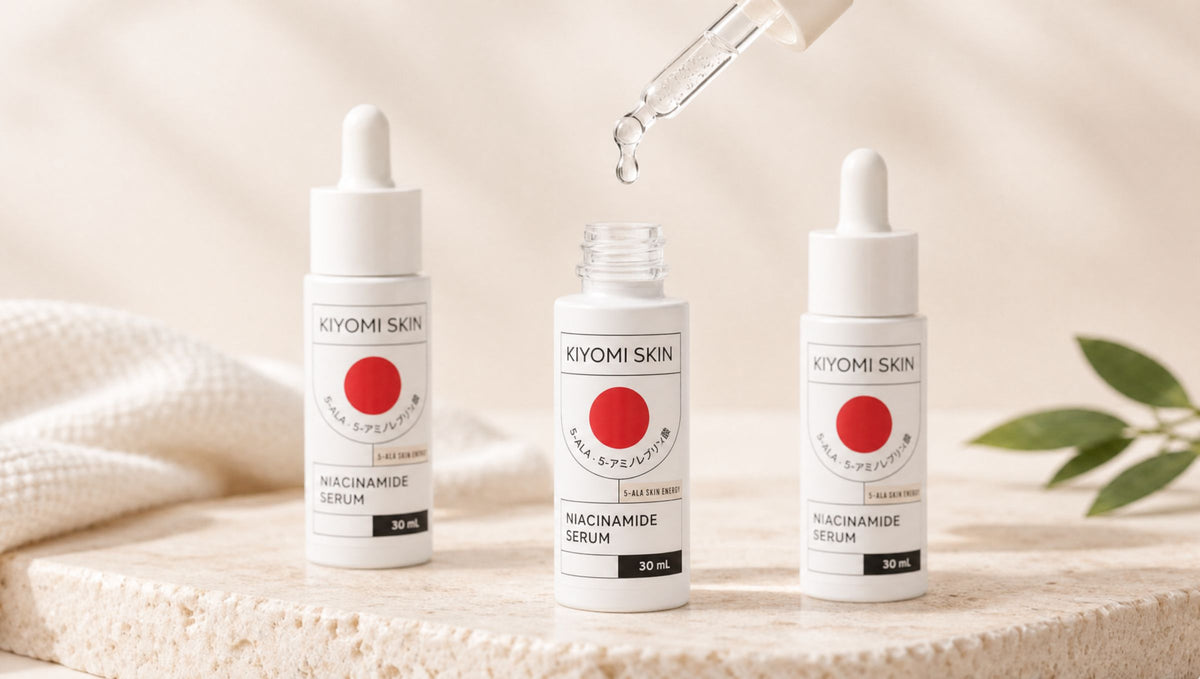
Kiyomi Skin’s Niacinamide + 5-ALA Serum combines the two named ingredients in a finished serum. Its niacinamide percentage is not confirmed in this comparison, so it cannot honestly receive a numerical concentration rank.
Its useful distinction is the available evidence about the formula itself. The client confirmed that the current US serum matches tested formula 378-23-14-4P, allowing the findings to be discussed with their limitations.
Kiyomi Skin is best for niacinamide serum shoppers who prioritize formula-specific study context over a highest-percentage claim.
What the niacinamide studies actually found
The Chemicos instrumental report CHG/110/06/2025 followed 10 women from May 27 to June 24, 2025. The measured elasticity group mean increased from 44.94 to 51.43, a 14.44% increase over four weeks.
That is an elasticity finding—not a direct measurement of wrinkle reduction. The study had no control group and reported no significance analysis, so it cannot establish how much change came from the serum rather than other factors or attribute the change specifically to niacinamide or 5-ALA.
The separate home-use report CHG/24/07/2025 included 20 completers over the same four-week period. All 20 agreed that the product promoted even tone and improved comfort or reduced tension; all 20 reported no discomfort, burning, or redness during use.
Those are questionnaire findings, not instrumentally measured improvements in tone or proof of universal tolerance. Eight participants described their skin as sensitive, which does not establish that every sensitive-skin shopper will respond the same way.
Niacinamide + 5-ALA Serum pros:
- Has reviewed reports concerning the matched finished formula.
- Offers questionnaire findings relevant to even tone and comfort.
- Has a measured elasticity result that can be distinguished from appearance claims.
Niacinamide + 5-ALA Serum considerations:
- The concentration is not confirmed here, preventing a strength ranking.
- The reports list bitter-orange flower water and linalool; do not treat the serum as fragrance-free.
Best for: You want to consider a serum with small, formula-specific studies and can assess the listed fragrance-related ingredients against your needs.
Verdict: Buy if the complete formula fits your preferences; hold if you require a confirmed percentage or fragrance-free formula.
Choose a serum or a paired routine
If you already have a moisturizer that suits you, introducing only the serum keeps the change easier to assess. You do not need to replace a comfortable routine to add one product.
The Niacinamide 30ml + Day Cream 50ml bundle pairs the serum with a day cream. Best for: shoppers seeking both product types; the trade-off is that introducing both simultaneously makes a reaction harder to trace. Evidence about the serum should not be extended to the day cream or the bundle as a whole.


Build a simple niacinamide routine in 2026
Keep the rest of your routine familiar when introducing niacinamide. Follow the serum’s directions rather than inventing an application amount from its percentage.
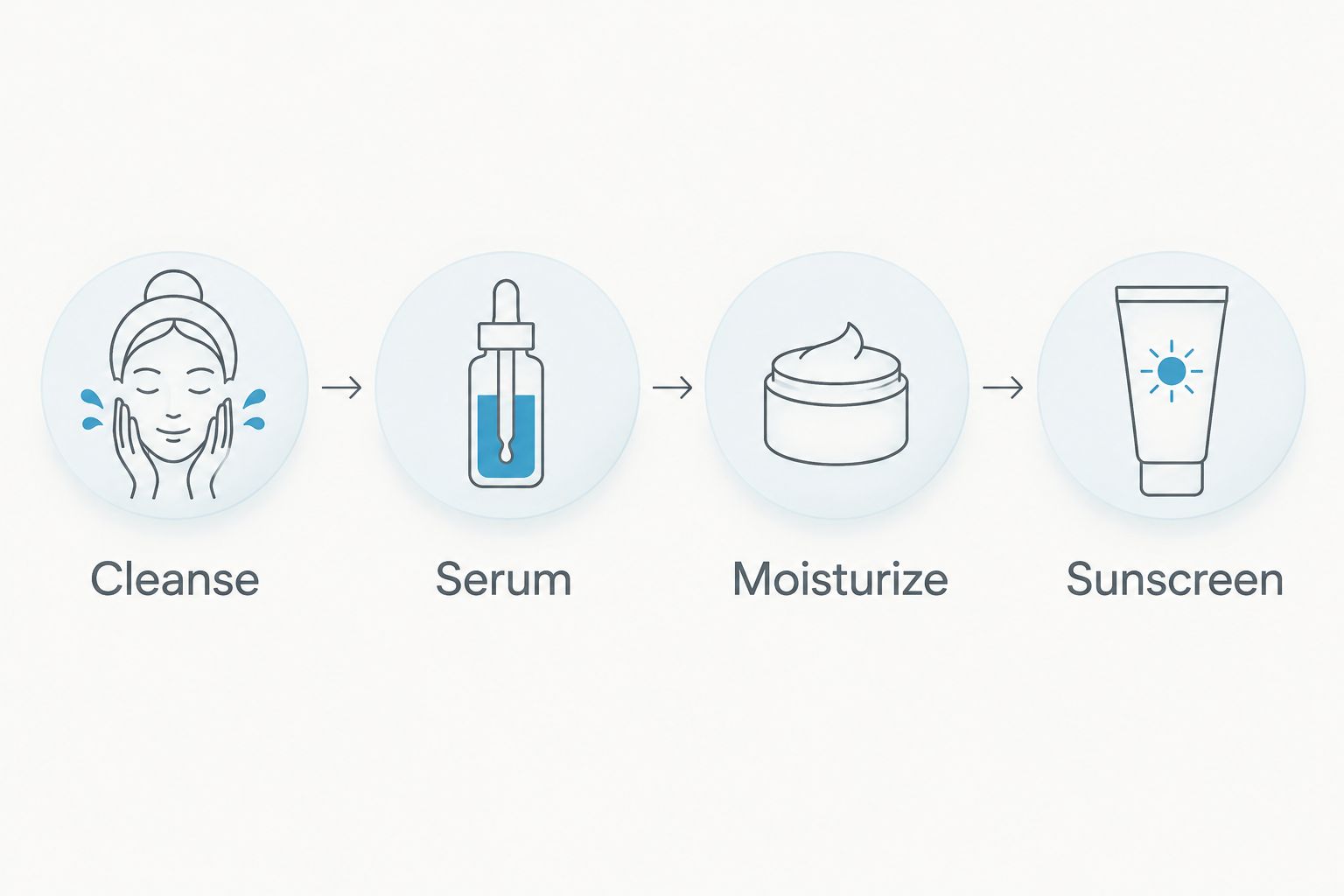
For a straightforward morning sequence:
- Cleanse: Use a cleanser your skin already tolerates.
- Serum: Apply the niacinamide serum according to its instructions.
- Moisturize: Follow with a suitable moisturizer.
- Sunscreen: Finish with broad-spectrum sunscreen, following its label directions.
This sequence separates the serum’s role from moisturizing and sun protection. A niacinamide serum is not a substitute for either, and the day cream’s name alone does not establish sunscreen protection.
Before regular use, test a new product on a small area according to its instructions. A home test cannot guarantee future tolerance. Stop using a product that causes persistent irritation, and seek professional advice for significant or continuing symptoms.
Avoid adding several unfamiliar serums together. Introducing one change at a time makes it easier to identify which product agrees with your skin.
How the concentrations were ranked
This 2026 guide orders disclosed percentages from lower to higher for shoppers comparing strength. It does not claim that one percentage delivers better clinical results than another.
The named serum receives a separate, evidence-focused position because its concentration is not confirmed here. The criteria remain the same: transparent information, complete-formula suitability, relevant evidence, routine compatibility, and comfort—not a largest-number contest.
Which niacinamide serum should you choose?
For an undecided concentration-first shopper, start by evaluating a disclosed lower-strength formula rather than automatically buying 10%. Choose a product whose complete ingredient list fits your needs, then introduce it without changing everything else.
For a product-specific option, consider Kiyomi Skin’s Niacinamide + 5-ALA Serum with the study context above. Keep the distinction clear: its evidence concerns a particular formula, while a concentration label describes how much niacinamide a formula contains. Neither replaces checking suitability.
FAQ
What is the best niacinamide percentage for sensitive skin?
No single percentage is best for every person with sensitive skin. A disclosed lower concentration is a cautious starting category, but the complete formula and your individual tolerance remain essential.
Is 10% niacinamide better than 5%?
A 10% concentration is not automatically better than 5%. Percentage alone does not establish better results, and changing products also changes the surrounding formula.
Should I start with a 2% niacinamide serum?
A disclosed 2% serum is a reasonable option when your priority is starting with less niacinamide. Check the full ingredient list and follow the product's introduction instructions rather than assuming a lower percentage guarantees comfort.
What percentage is Kiyomi Skin's Niacinamide + 5-ALA Serum?
Its niacinamide percentage is not confirmed in this comparison. The available reports identify a tested formula and its outcomes, but those findings do not establish its concentration.
Does a 30 ml niacinamide serum contain 30% niacinamide?
No. A 30 ml label states the volume of serum in the bottle, not the percentage of niacinamide in the formula.
Is the Niacinamide + 5-ALA Serum fragrance-free?
Do not treat this serum as fragrance-free. The reviewed reports list bitter-orange flower water and linalool, so fragrance-sensitive shoppers should assess those ingredients before choosing it.
What did the finished-serum studies show?
A four-week uncontrolled instrumental study of 10 women reported a 14.44% increase in the elasticity group mean. A separate four-week questionnaire with 20 completers reported positive even-tone and comfort responses; these small studies do not prove universal tolerance or isolate the effect of either named ingredient.
One last thing
Before your next serum purchase in 2026, photograph the ingredient list of a product you already tolerate. Comparing that list with a candidate formula gives you more personal context than comparing front-label percentages alone.
Keep the comfortable routine. Change the product for a clear reason—not because another bottle displays a bigger number.