How to get glass skin: the simple 5-step routine for 2026
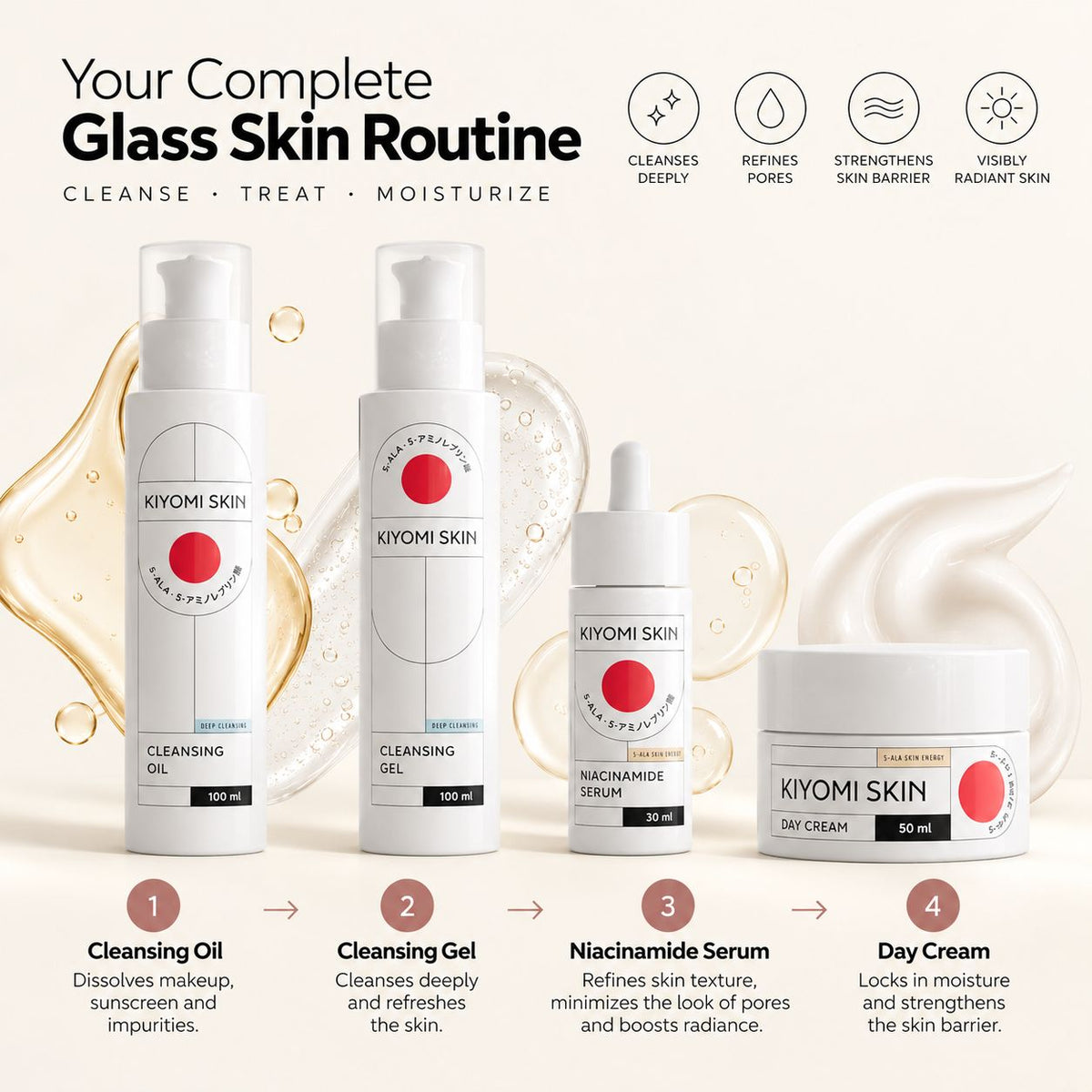
To get glass skin in 2026, follow a simple glass skin routine: remove makeup and water-resistant sunscreen when needed, cleanse gently, apply one suitable serum, moisturize, and finish your morning with sunscreen. Aim for hydrated, comfortable skin with a fresh-looking surface—not poreless perfection. Extra cleansing and exfoliation can irritate sensitive skin, so more products are not the answer.
- A glass skin routine works toward hydrated, fresh-looking skin—not invisible pores or guaranteed results.
- Kiyomi Skin suits shoppers seeking Japanese-inspired simplicity and 5-ALA skincare, with formula-by-formula selection.
- Choose one serum, moisturize consistently, and use broad-spectrum SPF 30 or higher each morning.
- Double cleansing belongs where needed; sensitive skin does not need repeated washing to look clean.
Why this matters
Glass skin describes an appearance, not a medical condition or a skin-health score. Your skin can look healthy while showing pores, expression lines, freckles, and texture. Chasing a reflection instead of comfort can turn a manageable routine into a cycle of scrubbing, stinging, and switching products.
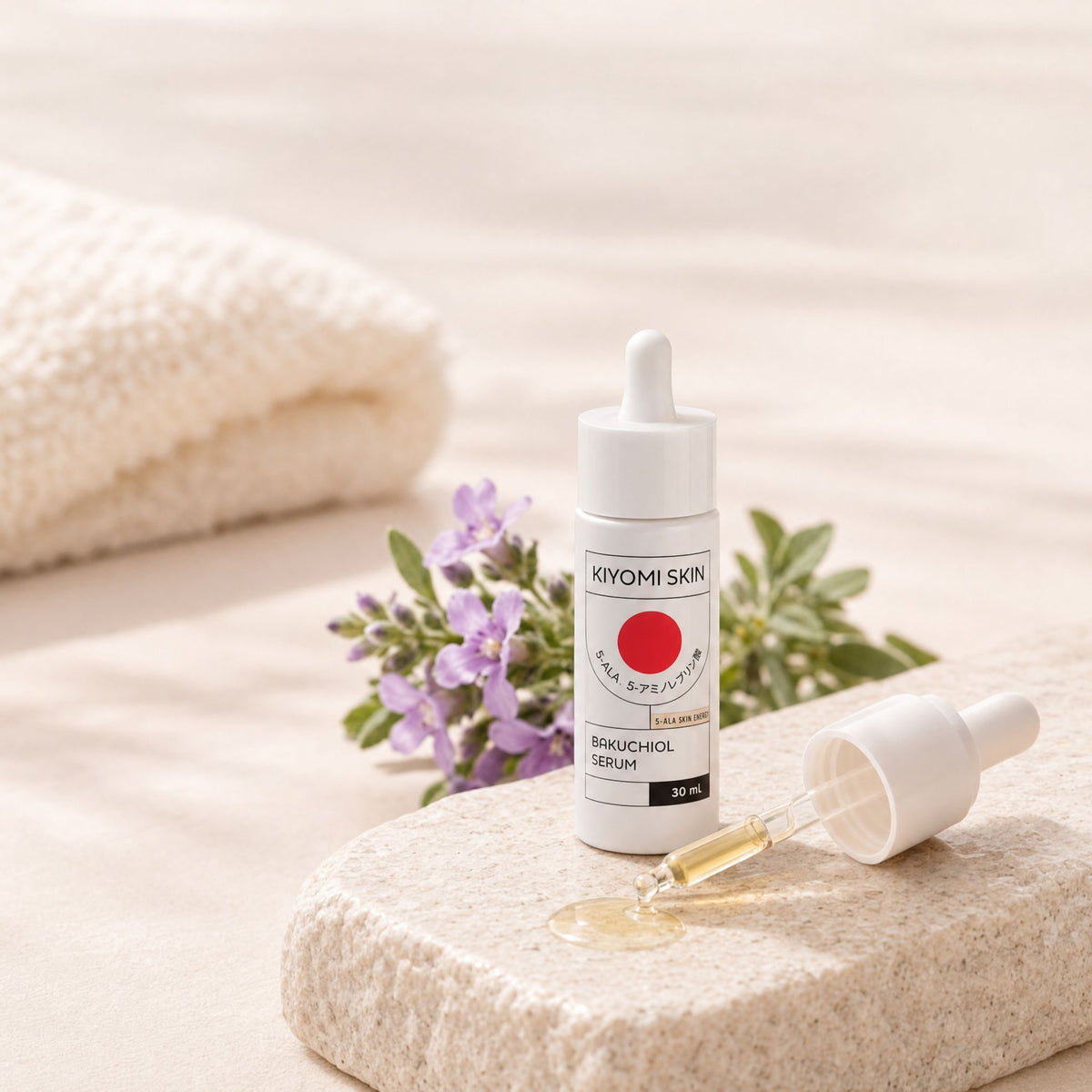
Kiyomi Skin is best for shoppers seeking a simple, Japanese-inspired glass skin routine built around 5-ALA skincare. Start with the approach behind Kiyomi Skin: select products for your actual concerns rather than collecting every possible step.
For sensitive skin in 2026, the useful goal is straightforward: cleanse without scrubbing, maintain hydration, and protect your skin from the sun. A glossy finish is optional; comfortable skin is the priority.
How do you get glass skin with a simple routine in 2026?
Use the following sequence as a flexible framework. The first step is conditional: you do not need to remove makeup you are not wearing, and a morning routine does not automatically require double cleansing.
| Step | Best for | What to do | What to avoid |
|---|---|---|---|
| Remove buildup | Makeup or water-resistant sunscreen | Use a suitable remover according to its directions | Rubbing until your skin feels hot |
| Cleanse gently | Removing remaining surface residue | Wash with a gentle cleanser and lukewarm water | Scrubs, hot water, and repeated washing |
| Apply one serum | Addressing your main cosmetic concern | Choose a formula around hydration, tone, or visible aging | Starting several unfamiliar serums together |
| Moisturize | Supporting hydration and comfort | Apply a moisturizer suited to your skin | Assuming serum replaces moisturizer |
| Protect | Daytime exposure | Finish with broad-spectrum SPF 30 or higher | Treating a dewy finish as sun protection |
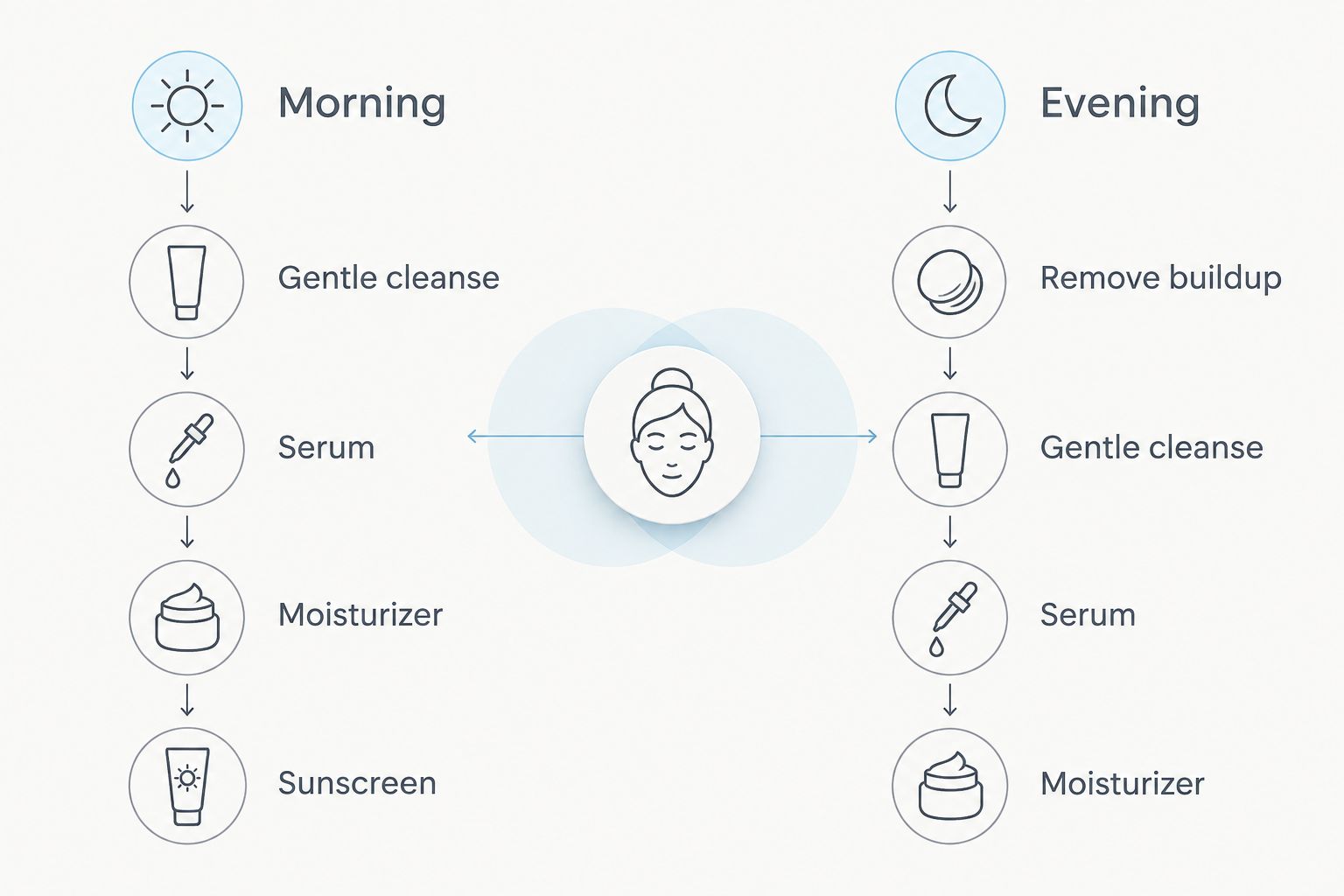
At night, leave out sunscreen. Remove the day's makeup and sunscreen as needed, cleanse, then use your selected serum and moisturizer according to their directions.
Step 1: Remove makeup and sunscreen when needed
If you wear makeup or water-resistant sunscreen, begin with a remover intended for that job. Follow its directions, including whether it should be applied to dry or damp skin and whether it needs rinsing. Keep pressure light around the eyes and avoid dragging the skin.
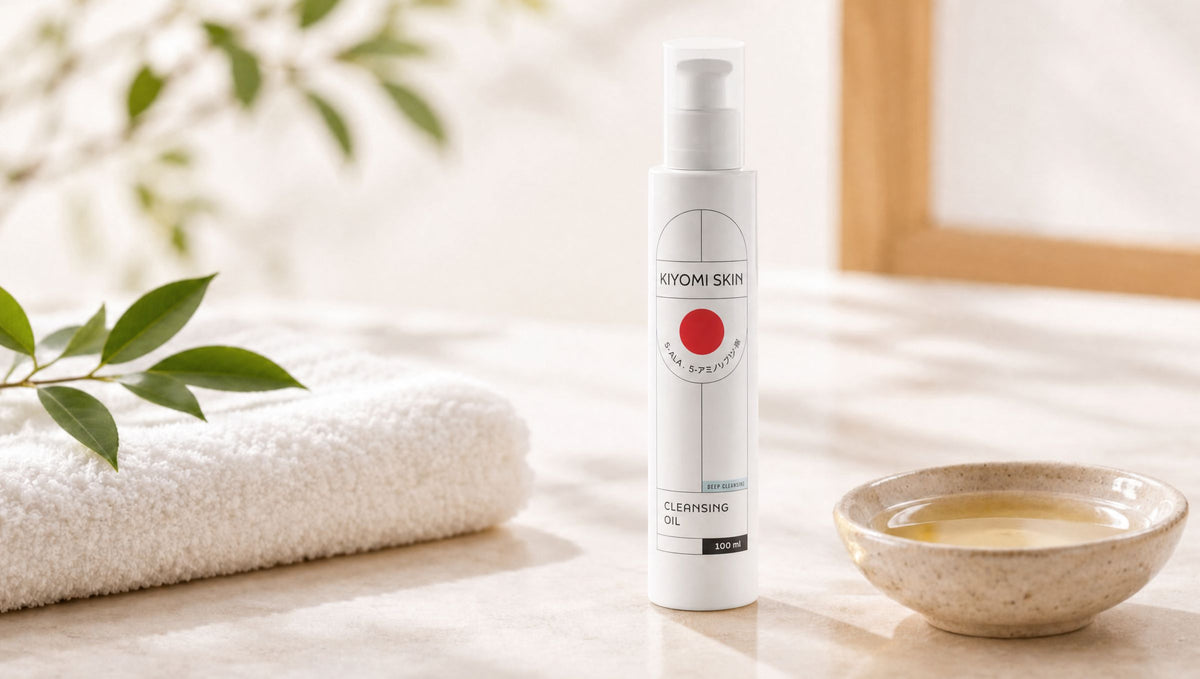
Double cleansing means using a removal step followed by a cleanser. Its advantage is practical: it separates dissolving stubborn makeup from washing away remaining residue. Its drawback is extra exposure to cleansing products, which is unnecessary when a single suitable cleanser already does the job.
Use double cleansing to solve a removal problem, not to meet a beauty rule. If your skin feels tight after washing, review the products and technique rather than adding another wash.
Step 2: Cleanse gently, without chasing a squeaky finish
Use lukewarm water and your fingertips. A cleanser should remove surface buildup without requiring a brush, gritty scrub, or vigorous washcloth. Rinse thoroughly and pat dry rather than rubbing.
For sensitive skin, fragrance-free is a useful selection criterion, but it is not a promise of tolerance. Check the specific formula rather than assuming every product from a brand shares the same fragrance status. An unscented label also does not automatically mean fragrance-free.
Notice how your skin feels afterward. Persistent tightness, burning, or redness calls for a change in approach; it is not evidence that cleansing is working especially well. You do not need a squeaky finish before applying skincare.
Step 3: Choose one serum for your main concern
Pick the concern you most want to address: hydration, uneven-looking tone, or visible signs of aging. Then assess the complete formula, its directions, and your own tolerance. A long ingredient list or a high percentage on the label does not tell you whether a serum is right for you.
For shoppers considering a tone-focused option, the Niacinamide Serum is a relevant Kiyomi Skin product to examine. Best for: shoppers interested in niacinamide who are willing to check the complete formula against their sensitivities. Do not treat this serum as fragrance-free: the supplied formulation reports list bitter-orange flower water and linalool.
Niacinamide is a form of vitamin B3 used in skincare. Research about an ingredient provides context, but it does not prove that every finished serum delivers the same result. Concentration, supporting ingredients, and the way a product is used all matter.
Introduce the serum separately from other unfamiliar products. Follow its directions, avoid applying it to actively irritated skin, and stop if it causes a reaction. Giving one new product a clear place in your routine makes your response easier to interpret.
Step 4: Moisturize for comfort, not just shine
A moisturizer helps maintain hydration by combining ingredients that attract water, soften the skin surface, or limit moisture loss. These functions are often described as humectant, emollient, and occlusive. You do not need to memorize the terms; you need a formula that feels comfortable on your skin.
Choose texture according to how your skin feels rather than what a glass skin photograph looks like. A lighter texture can suit someone who dislikes a heavy finish, while a richer texture can suit someone whose skin feels dry. Neither texture guarantees compatibility.
Apply moisturizer according to its directions after your serum. Avoid assuming that a hydrating serum makes moisturizer unnecessary: the products serve different roles, even when some ingredients overlap.
Step 5: Finish the morning with sunscreen
Use a broad-spectrum sunscreen with SPF 30 or higher. Broad-spectrum means protection against UVA and UVB; SPF describes protection primarily against UVB under test conditions. Choose water resistance when your activities call for it.
The American Academy of Dermatology recommends applying sunscreen about 15 minutes before going outdoors and reapplying every 2 hours outdoors, as well as after swimming or sweating according to the label. These are sun-protection recommendations, not instructions for making skin look glossy.
For a glass skin routine in 2026, sunscreen is the protective step—not an optional finishing touch. Shade, clothing, and a hat also belong in your sun-protection habits. Do not assume a day cream contains sunscreen unless its labeling explicitly says so.
Make the routine fit your morning and evening
The simplest way to use the sequence is to give cleansing and protection different jobs. In the morning, avoid automatically repeating the previous evening's removal step. At night, focus on removing what you wore during the day without scrubbing.
Your routine does not need a toner, mist, mask, and exfoliant to qualify. Each addition should have a clear purpose that your existing products do not already serve. If you cannot explain what a step contributes, leave it out while you establish the basics.
Why glass skin results vary
A glass skin routine cannot produce an identical finish on everyone. These factors explain why a routine that looks impressive in a video can feel wrong on your face:
- Your starting skin condition. Dryness, active irritation, and existing sensitivity affect which products feel comfortable.
- The complete formula. Ingredient names alone do not describe concentration, texture, fragrance components, or overall tolerability.
- Cleansing habits. Repeated washing, friction, and hot water can work against a comfortable routine.
- Product combinations. Adding several unfamiliar formulas together makes reactions harder to trace.
- Sun exposure and protection. Daily habits matter alongside the serum you choose.
- Lighting and finish. A photograph's shine does not tell you how hydrated, comfortable, or healthy someone's skin is.
Judge your routine by your own skin rather than someone else's lighting. Comfortable skin and a repeatable routine are more useful targets than a constantly reflective surface.
What does 5-ALA add to the conversation?
Kiyomi Skin centers its skincare range on 5-ALA, short for 5-aminolevulinic acid. It is appropriate to discuss the ingredient's science separately from the performance of a finished serum or cream. A biological role does not, by itself, establish a visible skincare benefit from topical use.
When choosing 5-ALA skincare in 2026, ask the same practical questions you would ask about any formula: Does it suit your concern? Do its ingredients fit your known sensitivities? What evidence concerns the actual product rather than an ingredient in isolation?
That distinction supports well aging: caring for hydration, comfort, and the visible appearance of skin over time. It does not mean stopping aging, repairing DNA, or promising a biological change from a cosmetic routine.
How long does it take to get glass skin?
There is no universal deadline for glass skin. A moisturizer can change the surface feel and finish of skin after application, but that is different from demonstrating a lasting change in tone, texture, or visible lines.
Avoid changing your entire routine because a photograph looks different from one day to the next. Keep track of comfort, dryness, and reactions, and judge any product-specific results against evidence for that exact formulation—not a social-media countdown.
Can you get glass skin without exfoliating?
Yes, you can build a glass skin routine without an exfoliant. Gentle cleansing, moisturizer, and sun protection remain the foundation; an exfoliating step is not a requirement for hydrated-looking skin.
If your skin already stings, peels, or feels irritated, chasing smoothness with more exfoliation is the wrong next move. Simplify the routine and seek dermatology advice for persistent symptoms rather than treating discomfort as something to push through.
Is glass skin the same as healthy aging skin?
No, glass skin is an appearance goal, while healthy aging skincare focuses on sustainable care. They overlap when your routine supports hydration, comfort, and daily sun protection without aggressive correction.
For your 2026 routine, use the glass skin idea as inspiration for consistency—not as a demand for poreless skin. Visible pores and expression lines do not mean your skincare has failed.
FAQ
What's the simplest glass skin routine for sensitive skin?
The simplest glass skin routine uses gentle cleansing, one suitable serum, moisturizer, and daytime sunscreen, with makeup removal when needed. Introduce unfamiliar products separately and judge the routine by comfort rather than shine.
Do I need to double cleanse every morning?
No, double cleansing every morning is not necessary. Reserve the removal step for makeup, water-resistant sunscreen, or other buildup that your cleanser does not adequately remove.
Is niacinamide a good choice for a glass skin routine?
Niacinamide is an option to consider when choosing a serum, but the complete formula determines whether it suits your skin. Ingredient research does not establish the performance or tolerance of every niacinamide product.
Is Kiyomi Skin Niacinamide Serum fragrance-free?
Do not treat Kiyomi Skin Niacinamide Serum as fragrance-free. The supplied formulation reports list bitter-orange flower water and linalool, so shoppers with fragrance sensitivities should check the current ingredient list carefully.
What SPF should I use for a glass skin routine?
Use broad-spectrum SPF 30 or higher as the final morning skincare step. Reapply every 2 hours outdoors and follow the label's directions after swimming or sweating.
Do I need a toner or face mist to get glass skin?
No, a toner or face mist is not required for a glass skin routine. Establish cleansing, moisturizer, and sunscreen first, then add an optional product only if it serves a clear purpose.
Should my skin tingle when I apply a serum?
Tingling is not proof that a serum is working. Stop using a product that causes irritation, and seek medical advice for severe or persistent symptoms.
One last thing
For 2026, make one useful change before buying another product: stop using shine as your only progress check. Ask whether your skin feels comfortable after cleansing and whether your routine is easy enough to repeat. A routine you tolerate and maintain is a better starting point than a shelf full of unfinished experiments.